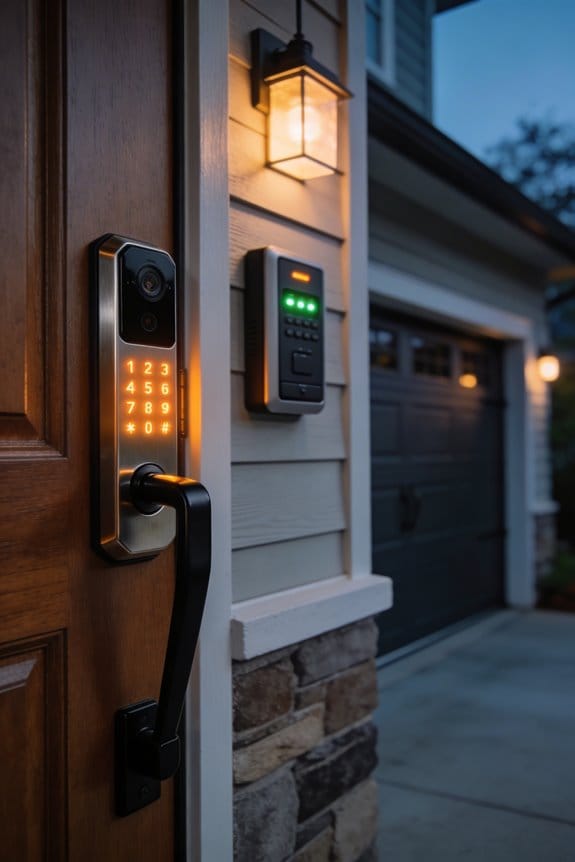

Vein recognition technology’s rise stems from its 99.9% accuracy rate and 0.17-second access speed, scanning infrared-mapped blood vessel patterns that can’t be forged like fingerprints. Market leaders—Lockin V7 Max with wireless optical charging, TCL D2 Pro offering eight-month battery life, and Anker eufy FamiLock E34 at accessible pricing—integrate Matter protocol compatibility for seamless smart home connectivity. Each brand addresses specific priorities: charging convenience, battery longevity, or budget constraints. The selection process requires weighing access speed against power consumption, battery maintenance, and integration needs to match your environment’s demands.
Key Takeaways
- Vein recognition uses infrared light to scan unique blood vessel patterns, achieving 99.9% accuracy and unlocking doors in just 0.17 seconds.
- Unlike fingerprints, vein patterns are nearly impossible to forge and remain consistent throughout life without requiring cloud connectivity for security.
- Leading brands like Lockin, TCL, and Anker offer specialized features including wireless charging, smart home integration, and cost-effective solutions.
- Smart locks now support Matter protocol and voice assistants, enabling seamless integration with Google Home and Amazon Alexa ecosystems.
- Battery life varies significantly across models, ranging from eight months to solar-powered options, allowing users to choose based on convenience and environment.
Vein Recognition vs. Fingerprint Locks: Why the Technology Matters
Vein Recognition vs. Fingerprint Locks: Why the Technology Matters
So you’re standing at your front door, hands full of groceries, and your smart lock won’t read your fingerprint because your fingers are wet. Sound familiar? That’s just one reason people are looking beyond fingerprint technology for their home security.
Let’s break down what’s actually happening with these two systems. Fingerprint locks have been around forever, so they feel safe and familiar. But here’s the problem: they’re surprisingly easy to fool. A lifted print, some dirt on the sensor, or even just dry skin can lock you out. Meanwhile, vein recognition uses infrared light to map the blood vessels under your skin—something that’s basically impossible to fake.
The numbers back this up. Vein systems work with 99.9% accuracy and can unlock your door in just 0.17 seconds. That’s legitimately fast. Fingerprint technology simply doesn’t match those stats, and it gets worse when you factor in real-world conditions like weather, age, or manual labor that changes your prints over time.
Why does this matter for your home? Because your front door shouldn’t be a security gamble. Vein recognition doesn’t need the cloud to work—the data stays on your device, which means no external servers to hack. The Lockin Venokey™ technology handles everything locally, so you’re not crossing your fingers and hoping some company’s database doesn’t get breached.
There’s also the touch-free angle. You don’t actually have to touch anything. Just place your hand near the sensor, and you’re in. In my experience, that convenience adds up fast, especially when you’re juggling keys, kids, or a coffee cup.
Frankly, if you’re investing in smart lock security, the vein option is worth the consideration. You get better accuracy, faster access, stronger protection against forgery, and genuine peace of mind. So what’s holding you back from making the switch?
Recommended Products

Advanced Biometric Unlock: Lockin Veno Pro smart lock features palm vein and fingerprint recognition for fast, contactless access; 0.17s instant unlock with 99% accuracy, even with wet or worn hands
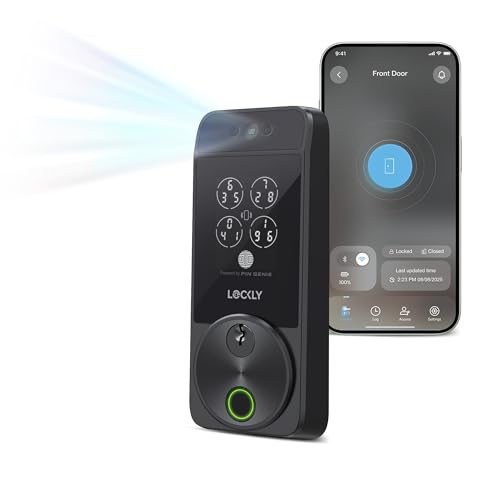
Your Face is Your Key: Unlock your smart lock for front door effortlessly with Lockly Visage’s advanced facial recognition technology - just walk up, and the lock detects your face to open automatically. Dual infrared sensors ensure accuracy in any lighting, even at night. Your facial data is encrypted and stored securely on the device, ensuring privacy and safety for your home.

【8-in-1 Unlock】This smart deadbolt offers 8 unlocking methods: palm vein, 3D face recognition, voice control, fingerprint, PIN, IC card, mobile app, and physical key. It supports up 300 user profiles. Versatile access, keyless convenience.
How Infrared Vein Mapping Defeats Forgery and Spoofing
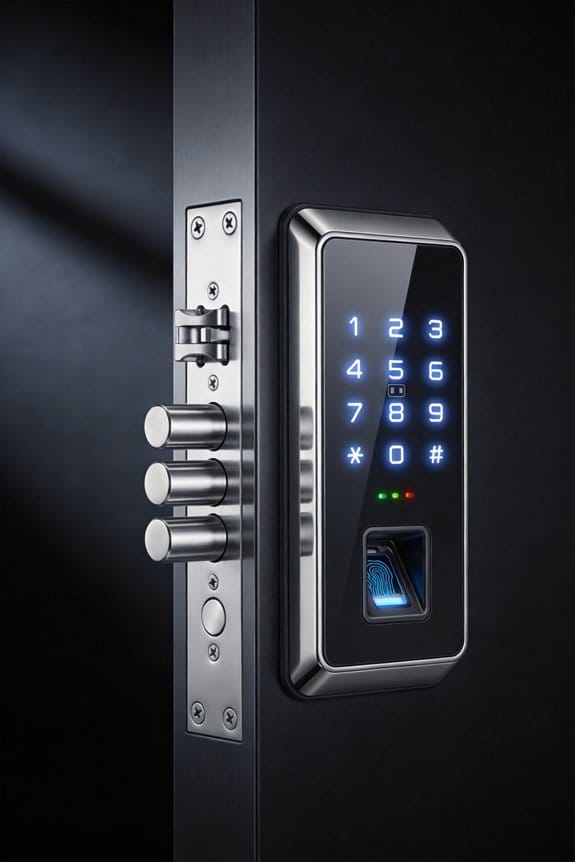
Tired of worrying that someone could steal your fingerprints and use them to unlock your devices? That’s a real problem with traditional fingerprint locks—they leave evidence everywhere, and that evidence can be lifted and faked. Infrared vein mapping sidesteps this issue entirely by scanning patterns that exist under your skin, where no one can reach them.
Here’s what makes vein scanning different: your veins are invisible to the naked eye and impossible to photograph. They can’t be lifted off a surface or recreated in a lab. The technology reads the unique network of blood vessels beneath your skin—something that’s completely anatomical and completely yours.
The Venokey™ palm vein recognition system uses this approach and comes certified by TÜV Rheinland. It identifies you in just 0.17 seconds with 99.9% accuracy. The Anker eufy FamiLock E34 works similarly, scanning your vein pattern in 0.6 seconds and keeping your data stored locally on the device, not in the cloud. So why does this matter? Because your vein pattern stays exactly the same throughout your entire life, and it only exists in living tissue—meaning forgery isn’t just difficult, it’s theoretically impossible.
Frankly, this is the kind of security that actually lets you sleep at night. You’re not just trusting a company’s marketing claims; you’re relying on biology itself.
What would it feel like to never worry about your biometric data being compromised again?
Lockin, TCL, and Anker: Market Leaders by Unit Sales and Innovation
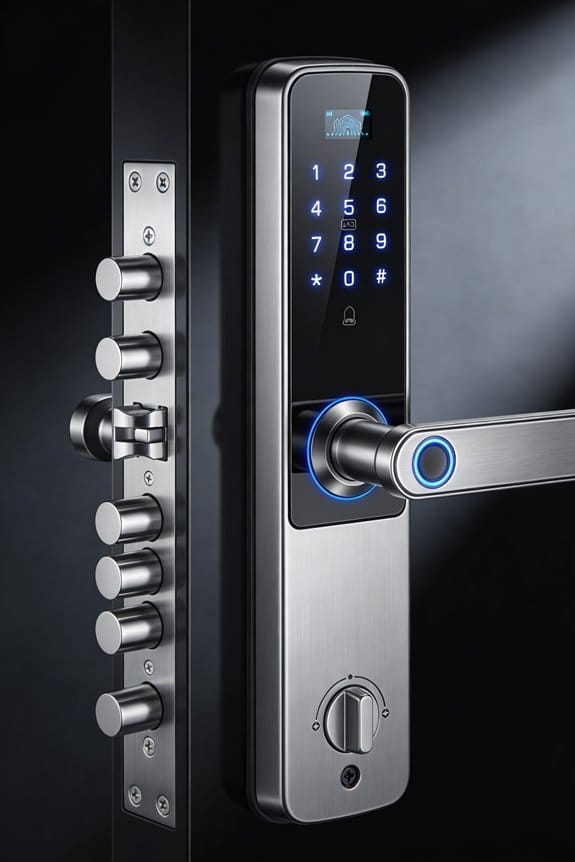
Vein Recognition Smart Locks: What You Actually Need to Know
So you’re shopping for a smart lock and you keep seeing “vein recognition” everywhere. What’s the deal, and which brands actually matter?
Right now, three companies are seriously competing for your attention: Lockin, TCL, and Anker. Each one’s taking a different approach, and that’s actually good news for you—it means there’s probably an option that fits what you care about.
Recommended Products

Palm Vein Unlocking: Advanced Security with 99.9% Accuracy. Achieve recognition in just 0.6 seconds with cutting-edge, forgery-proof palm vein recognition. This next-gen security feature relies on the unique vein patterns in your palm, ensuring top-tier protection. Plus, your palm vein data is stored securely on the device, keeping your privacy intact.

Palm Vein Unlocking: Advanced Security with 99.9% Accuracy. Achieve recognition in just 0.6 seconds with cutting-edge, forgery-proof palm vein recognition. This next-gen security feature relies on the unique vein patterns in your palm, ensuring top-tier protection. Plus, your palm vein data is stored securely on the device, keeping your privacy intact.

Versatile Unlocking Options - Lockly Smart Locks offer a range of access methods, including the patented PIN Genie keypad, 3D biometric fingerprint sensor, mobile app control, voice commands and traditional physical keys. The Lockly Deadbolt is designed for durability with an IPX4 rating, making it suitable for both residential and commercial use.
Lockin: The Power Innovation Leader
Lockin earned the top spot as the world’s No. 1 vein recognition brand (according to Frost & Sullivan in 2022) because they’re obsessed with solving one problem: battery life and charging hassle. Their V7 Max comes with wireless optical charging built right in. They’re also experimenting with the Aeon, which uses perovskite solar cells to keep your lock powered longer.
Why does this matter? If you hate replacing batteries or dealing with dead locks at inconvenient times, Lockin’s focus on power solutions is worth paying attention to.
TCL’s Smart Home First Approach
TCL’s playing a different game. They’re betting that you don’t just want a lock—you want it to work seamlessly with your other smart home stuff. Their locks prioritize Matter protocol integration and extended battery performance. If your home’s already connected (smart speaker, smart lights, the works), TCL makes it easier to tie everything together.
Anker eufy: Keep It Simple
Frankly, not everyone wants cutting-edge solar tech or complex smart home setups. That’s where the FamiLock E34 from Anker eufy steps in. It focuses on accessible palm vein recognition—straightforward, affordable, and easy to install.
So Which One’s Right for You?
Think about what actually frustrates you most:
- Charging and power worries? Lockin’s innovations address that directly.
- Smart home compatibility? TCL’s your pick.
- Simplicity and affordability? Anker eufy keeps things uncomplicated.
The best part is you’re not stuck with one vision of how a smart lock should work. These companies are targeting different priorities, which means you can find what matches your actual needs instead of settling for whatever’s trendy. What matters most to you in a smart lock—convenience, integration, or something else entirely?
Recommended Products

Advanced Biometric Unlock: Lockin Veno Plus smart lock features palm vein and fingerprint recognition for fast, contactless access; 0.17s instant unlock with 99% accuracy, even with wet or worn hands

Palm Vein Unlocking: Advanced Security with 99.9% Accuracy. Achieve recognition in just 0.6 seconds with cutting-edge, forgery-proof palm vein recognition. This next-gen security feature relies on the unique vein patterns in your palm, ensuring top-tier protection. Plus, your palm vein data is stored securely on the device, keeping your privacy intact.
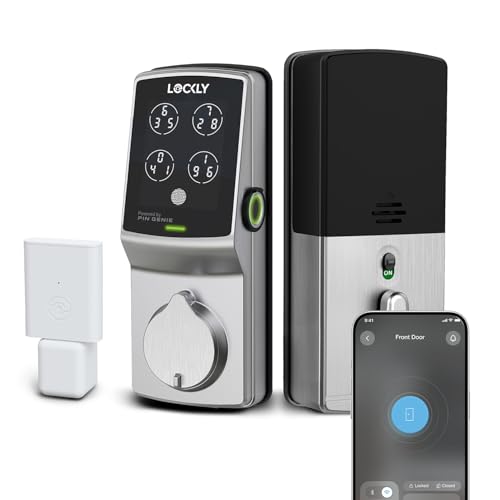
CODES THAT CHANGE THEMSELVES: The Patented PIN Genie Keypad shuffles its digits every single time — so even if someone watches you punch in your code, what they saw won't work tomorrow. Up to 33 free PIN codes, including one-time guest codes, with zero subscription required.
Comparing Battery Life, Wireless Charging, and Solar Power Models
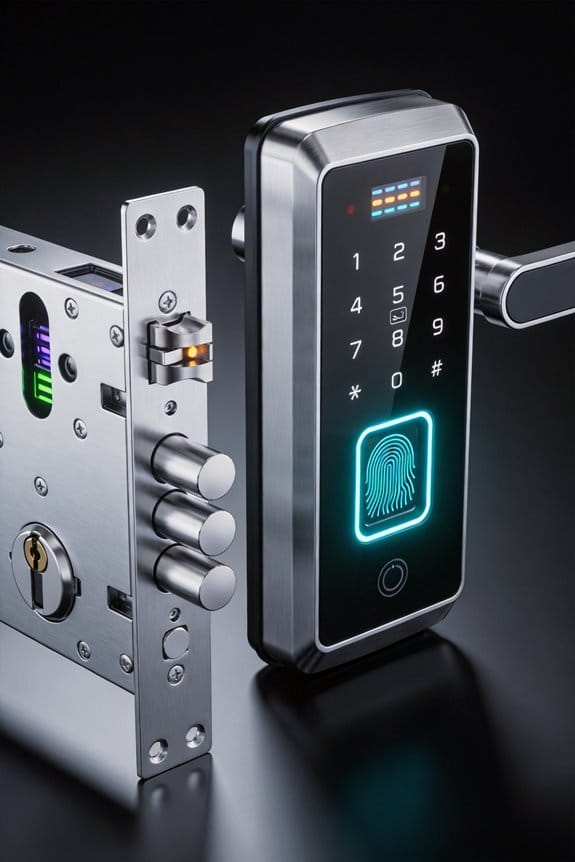
Tired of constantly charging your devices? It’s time to figure out which power solution actually fits your life. You’ve got three main options now—traditional batteries, wireless optical charging, and solar cells—and each one works pretty differently depending on where you live and how much fussing around you want to do.
TCL’s D2 Pro is solid if you like the simplicity of batteries. It’ll run for up to eight months on a single charge thanks to Matter over Thread optimization, which means you’re not hunting for a charger every other week. That’s legitimately convenient for most people.
Then there’s Lockin’s V7 Max with its AuraCharge wireless optical charging. Honestly, this one’s a win if you hate the idea of swapping batteries or dealing with traditional chargers. The thing about wireless optical tech is it doesn’t need sunlight—it works indoors just fine. So why does this matter? Because you’re not locked into a specific location or dependent on good weather.
The Aeon model takes a different approach altogether. It uses perovskite solar cells to pull power straight from available light, which means you never have to think about maintenance again. Here’s the trick: if your installation spot gets decent light exposure, this setup basically takes care of itself. No batteries to replace, no charging cables to remember.
Try this: ask yourself what actually bugs you most about your current setup. Are you tired of remembering to charge? Do you live somewhere with consistent sunlight? Is convenience worth more to you than simplicity? Your installation environment and personal maintenance tolerance should drive your decision, not the marketing hype around any particular model.
The bottom line is straightforward—pick what fits your actual life, not what sounds impressive on paper. What does your typical day look like when it comes to managing device power?
Recommended Products

Total Property Coverage with Revolutionary 2-In-1 Design: Secure every corner of your property with zero blind spots. In this 4-camera bundle, every single device does the work of two. The innovative Triple-Lens system combines an upper 4K bullet lens (130° wide view) with a lower 2K PTZ lens that locks on, tracks, and zooms. Get both the complete scene and crucial close-ups at the same time. It’s the perfect all-in-one security solution for large estates, sheds, rental.

Enhanced Dual-Camera Clarity at Up to 40 ft (12 m): Capture every event around your home in ultra-clear 3K resolution. Enjoy sharp, detailed visuals with 8× zoom to see what matters most.

All-in-One Home Security Camera System-Build a complete home security camera system with 2 or 4 wireless outdoor cameras working seamlessly together. This scalable security system enables coordinated monitoring, simplified control, and reliable protection for both single-family homes and larger properties.
Vein Lock Smart Home Integration: Matter, Google Home, and Alexa Support
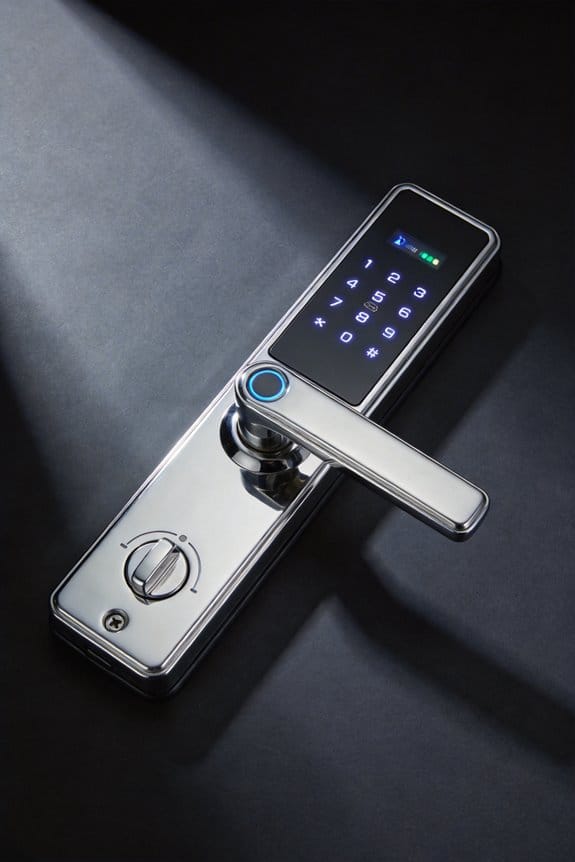
Smart home integration fundamentally transforms vein recognition locks from standalone security devices into interconnected ecosystem components. If you’re tired of juggling different apps and proprietary systems just to control your doors, you’re not alone—and there’s good news.
Modern vein lock manufacturers now support industry-standard protocols like Matter, Google Home, and Amazon Alexa. This means you can control your lock through whatever smart home setup you already have, without buying a bunch of extra gadgets or getting locked into one company’s ecosystem.
Let’s look at what’s actually available right now:
Lockin X connects directly to your smartphone, Google Home, and Amazon Echo. You get vein lock compatibility across multiple platforms without any headaches.
TCL D2 Pro implements Matter over Thread protocol, which is honestly a big deal. It supports Apple Home, Google Home, and Amazon Alexa all at the same time. So why does this matter? Because you’re not forced to choose sides anymore.
Anker eufy FamiLock E34 includes Matter support for unified smart home automation. Lockin AI Smart Lock adheres to Matter protocol standards too.
Truth is, these integrations do the heavy lifting for you. You get remote access so you can lock or unlock from anywhere. Automated notifications let you know when someone enters or leaves. And you can set up coordinated home automation scenarios—like having your lights turn on when the door unlocks—all without needing extra hardware or monthly subscriptions to some proprietary service.
The best part? You’re not forced into a specific ecosystem. Whether you’re all-in on Google, prefer Amazon, or use Apple Home, there’s a vein lock that’ll work with what you’ve already got.
How to Pick Between Speed, Price, and Power: Your Vein Lock Selection Guide
When you’re shopping for a vein recognition lock, you’re basically choosing between three things: how fast it opens, what you’ll pay upfront, and how much power it’ll drain. Problem is, you can’t have all three at their best. You have to pick what matters most to your situation.
The Lockin V7 Max is the speed demon. It recognizes your vein in just 0.17 seconds using Venokey™ technology, and it charges wirelessly so you’ll never deal with a dead battery. Honestly, it’s impressive tech—but that premium price tag reflects the innovation costs. Is spending extra on the fastest option worth it for your front door?
Then there’s the TCL D2 Pro, which takes a different approach. You get a battery that lasts eight months and Matter integration for your smart home setup. The trade-off? No wireless charging, and the recognition speed isn’t quite as lightning-fast. For most people, though, this hits the affordability sweet spot without cutting corners on reliability.
The Anker eufy FamiLock E34 sits right in the middle. Recognition takes 0.6 seconds—fast enough for daily life—and it stores your data locally instead of relying on cloud servers. You’re not overpaying for bleeding-edge speed, but you’re not sacrificing performance either.
Here’s the real talk: each lock balances these trade-offs differently. Your job is figuring out which variable you actually care about most. Do you need the fastest unlock? Are you watching your budget closely? Or would you rather just not think about batteries? That answer will point you toward the right choice for your home.
Recommended Products

Secure Your Home, Office, or Rental Property with Ease - Lockly Secure Plus smart door lock offers high security and reliability for all your needs. We offers detailed...
Frequently Asked Questions
What Is the Warranty Coverage and Return Policy for Vein Recognition Smart Locks?
I’ve found that just when you’re ready to commit to upgrading your security, companies like Lockin offer reassurance. They’re providing 30-day returns with free US shipping, though specific warranty limits and detailed return processes aren’t fully outlined in their current documentation.
Are Vein Recognition Locks Compatible With Existing Smart Home Devices From Other Brands?
Yes, I’d say you’re in luck with vein compatibility! Modern locks like Lockin X and TCL D2 Pro offer smart integration through Matter protocol, connecting seamlessly with Google Home, Amazon Alexa, and Apple Home—so they’ll work great with your existing devices.
How Does Local AI Processing Improve Lock Performance Over Extended Usage Periods?
I’ll explain how local intelligence boosts your lock’s capabilities. Your device learns your unique vein patterns through repeated use, enabling performance optimization that speeds up recognition and improves accuracy over time—all without relying on cloud processing or external servers.
What Are the Installation Requirements and Costs for Vein Recognition Smart Lock Systems?
I’ll paint you a picture of seamless security: vein recognition locks don’t require complex installation—they’re designed for standard doorways. You won’t need special system requirements; they integrate directly with your existing smart home setup, making setup surprisingly straightforward.
Can Vein Recognition Locks Function During Power Outages or System Failures?
I’d say yes—most vein recognition locks include battery backup systems for power outages. You’ll find emergency access options like mechanical keys or alternative authentication methods, ensuring you’re never locked out during system failures or electrical disruptions.