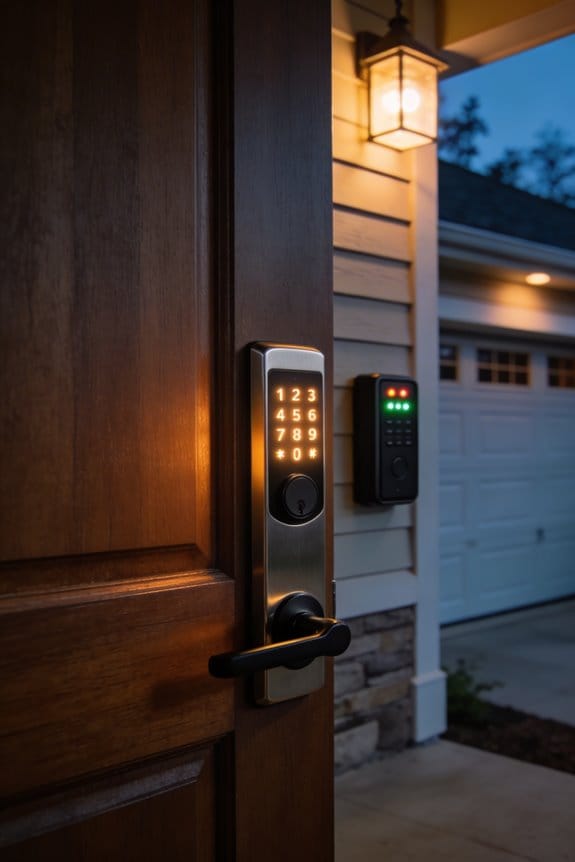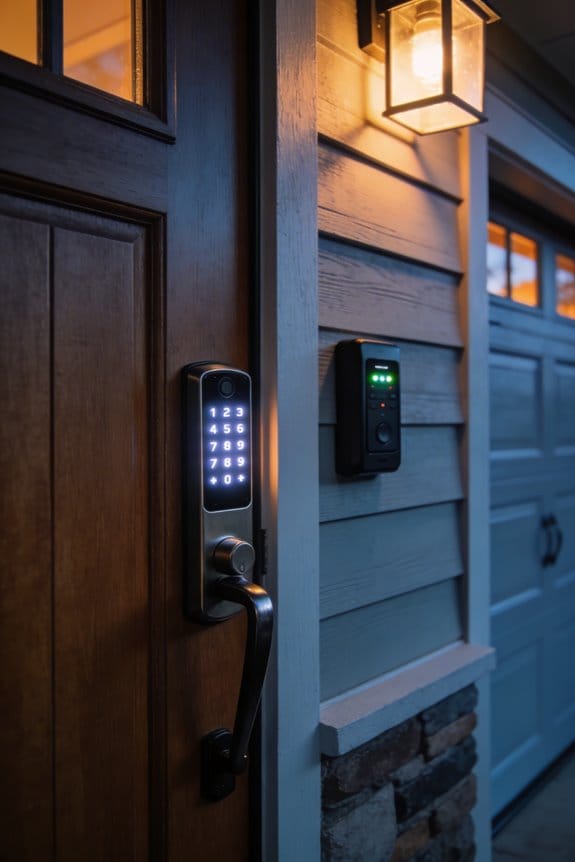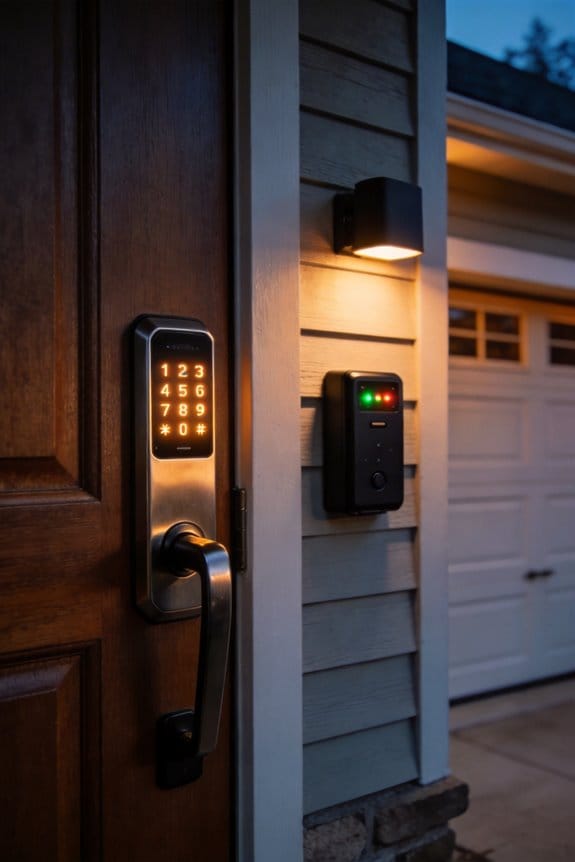


Your landlord can legally access smart lock entry logs in California, viewing timestamps of your entries and exits, but only with your informed consent documented in writing. Unauthorized monitoring violates California Civil Code §1954 and the California Consumer Privacy Act, exposing landlords to statutory damages up to $7,500. You can negotiate removal of remote access features, disable app notifications, or request lock removal entirely. If tracking occurs without consent, document instances systematically and contact housing authorities—understanding your specific situation requires examining the details of your lease agreement and local ordinances.
Key Takeaways
- Smart locks log all entries with timestamps and methods, allowing landlords to view your access history and daily movement patterns.
- California Civil Code §1954 prohibits landlords from monitoring exclusive rental areas without explicit tenant consent to protect your privacy rights.
- Landlords must obtain informed consent before installing surveillance technology; unauthorized tracking can result in civil lawsuits and CCPA penalties.
- Tenants can negotiate smart lock removal, disable remote monitoring features, or request landlord access restrictions through lease modifications.
- Document unauthorized tracking with timestamps, contact housing authorities, and send certified letters to landlords to enforce your privacy rights.
The Privacy Trap Hidden in Your Smart Lock: How Access Logs Expose You
Your Smart Lock Might Be Spying on You—And Your Landlord Can See It All
You walk in the door after work, kick off your shoes, and grab a snack. Your landlord, sitting at home with their phone, just got a notification. They know exactly what time you arrived. They know when your partner left this morning. They know everything.
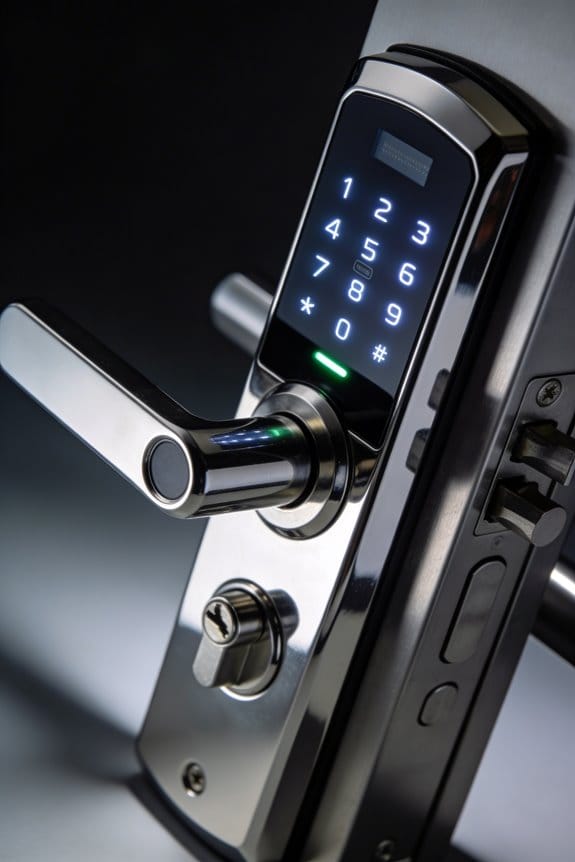
Smart locks like the August Smart Lock Pro ($199), Yale Assure Lock 2 ($249), and Level Lock+ ($299) are supposed to make life easier. No more fumbling for keys. No more getting locked out. Remote access means your landlord can check in without bothering you, right? That’s the pitch, anyway.
But here’s what actually happens: every single time you open that door, a timestamp gets logged. The system records *how* you opened it—code, app, physical key. It even records *who* opened it. Your landlord can pull up your access history whenever they want. So, why does this matter? Because suddenly your private schedule isn’t private anymore.
What data are we talking about here?
Your smart lock is basically a diary that keeps talking. It’s recording your comings and goings, your overnight guests, whether you’re home at 2 a.m., and how often you’re actually there. Landlords see all of this. Some might just be curious. Others might use it to justify raising rent or deciding not to renew your lease.
Security vulnerabilities make things worse. Honestly, not all smart locks are built equally. Weak encryption or poor authentication means hackers could potentially access those logs too—not just your landlord.
What does the law actually say?
California takes this seriously. Civil Code §1954 prevents landlords from monitoring spaces you have exclusive possession of—which includes your rental unit. That lock data? It could violate your rights depending on how it’s being used.
Try this: before you sign a lease with a smart lock already installed, ask your landlord directly about access. Get their answer in writing. Know what they’re seeing and what they plan to do with that information. It’s not paranoia—it’s protecting yourself.
The best part is, you have options. Some tenants negotiate having the landlord remove remote access features. Others choose rentals without smart locks altogether. And some push back and win.
Pay attention to what’s watching you. Your privacy in your own home is worth the conversation.
Why Your Landlord Can’t Track When You Come and Go (California Law)
Why Your Landlord Can’t Track When You Come and Go (California Law)
Got a smart lock on your apartment door? Your landlord probably can’t legally check those access logs to see what time you’re coming home—and that’s a good thing.
California law actually has your back on this one. Under Civil Code §1954, landlords get pretty strict limits on what they can monitor in spaces where you have exclusive control. Your entry and exit times aren’t something they’re allowed to dig into. So why does this matter? Because tracking your movement patterns is basically surveillance, and that crosses a line the law takes seriously.
Here’s where it gets concrete: Your comings and goings count as personal behavioral data. Monitoring that stuff violates the implied covenant of quiet enjoyment that’s built into every California lease (Civil Code §1927). In plain terms, you’re entitled to privacy in your own home—and that includes when you’re there.
Frankly, landlords don’t have legal permission to pull timestamped access logs from smart devices. If they try to justify it as part of a “property inspection,” they’re stretching the rules way too far. Accessing that data without your clear consent crosses into illegal surveillance territory.
What happens if your landlord ignores this?
- They open themselves up to civil lawsuits from you
- CCPA (California Consumer Privacy Act) violations can hit them with fines up to $7,500
- Housing authorities take these complaints seriously
If you suspect your landlord’s been accessing your lock data without permission, start keeping records. Write down dates, what happened, and any evidence. Then report it to your local housing authority or tenant rights organization.
The bottom line: Your landlord can show up for inspections, but they can’t use your smart lock to build a profile of your habits. That’s your business, not theirs.
When Landlords Legally Can Monitor Entry: and What That Actually Means
When Landlords Legally Can Monitor Entry: and What That Actually Means
Your landlord’s got keys to your place, but that doesn’t mean they can watch your every move. Let’s break down what’s actually legal under California law—and what crosses the line.
Recommended Products

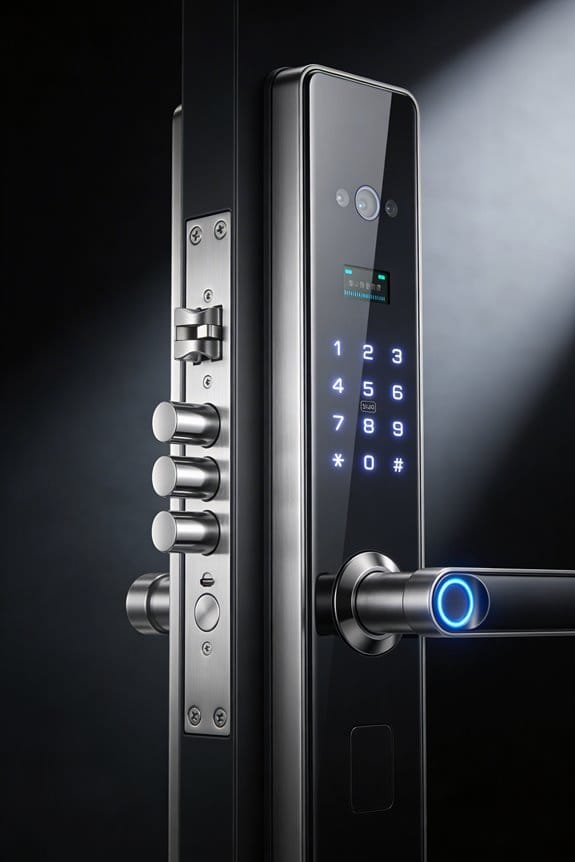
Electronic digital lock leverset is programmable through the keypad for 100 user entry codes for secure keyless entry

ANYWHERE ACCESS: With built-in WiFi compatibility, you can easily and securely connect your Schlage Encode Deadbolt to your home WiFi network to control and monitor your home from anywhere with the Schlage Home app

ANYWHERE ACCESS: With built-in WiFi compatibility, you can easily and securely connect your Schlage Encode Smart WiFI Lever to your home WiFi network to control and monitor your home from anywhere with the Schlage Home app
What Landlords CAN Do
Landlords have real responsibilities. They need to keep common areas safe, which means surveillance cameras in hallways, entrances, and parking lots are fair game. But here’s the critical part: those cameras stop at the threshold of your unit or patio. Private spaces are off-limits, period.
If you signed a lease that allows annual inspections with advance written notice, your landlord can enter for legitimate reasons:
- Repairs and maintenance
- Safety checks
- Genuine emergencies
The key word? Legitimate. They can’t just wander through your place whenever they feel like it.
Recommended Products

Ultra High Definition 12MP (4000x3000) SIX TIMES the resolution of 1080P! 64 Channel H.265+ 12MP NVR Security Camera System with (32) H.265+ 12MP 4K @ 30fps Real-Time Weatherproof 2.8mm Wide Angle PoE IP Dome Cameras (Built-in Microphone)

Ultra High Definition 4K (3840x2160) FOUR TIMES the resolution of 1080P! 64 Channel H.265+ 12MP NVR Commercial-Grade Security Camera System with (48) H.265+ 4K (8MP) @20FPS Weatherproof 2.8mm Wide Angle PoE IP Full-Time Color Night Vision Bullet Cameras (Built-in Microphone)
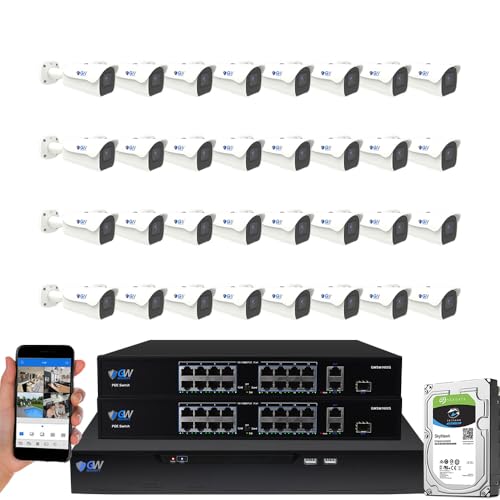
8-Megapixel with 3840x2160 Ultra High Resolution 4K Video & Audio 32 Channel 6K 12MP NVR Security Camera System with (32) 4K (8MP) Weatherproof 2.8-12mm Motorized Zoom H.265+ PoE IP Bullet Camera
The Smart Lock Question
You might worry that your landlord can access your smart lock’s timestamp history to see when you’re coming and going. Frankly, they can’t—at least not legally in California. Even if they own the property, using that data to track your personal behavior crosses into territory the courts have repeatedly shut down.
Why does this distinction matter so much? Because monitoring a common hallway is totally different from tracking your individual movement patterns. One keeps everyone safe. The other invades your privacy.
Recommended Products
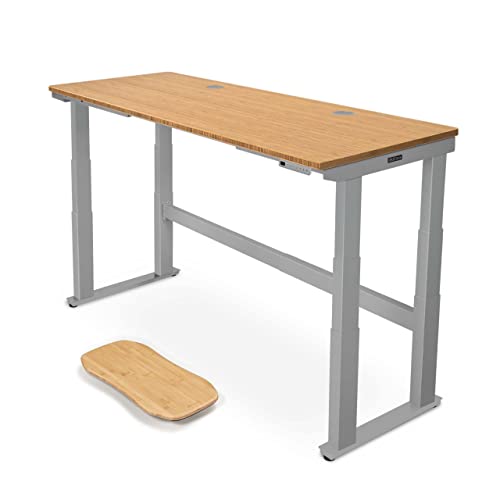
STRONG, FAST, SMART, DURABLE, & SAFE: German-made motors in each leg provide stable, quiet, & smooth movement; 535 lb lifting capacity; 3-stage legs (33% faster movement & 33% greater height range); advanced anti-collision system; included wire management tray keeps cords tidy

All-Weather Fortress for 4-Season Adventures: Built for any climate. The rigid aluminum shell, combined with sound & thermal insulating honeycomb structure and premium weather-proof fabric, shields you from wind, rain, and extreme temperatures. Connect a heater or cooler to the dedicated vent for perfect climate control inside

Strong, Fast, Smart, Durable, & Safe: 355 lb lifting capacity; dual German-made motors; 3-stage legs (33% faster movement & 33% greater height range); advanced anti-collision system; included wire management tray keeps cords tidy
What “Consent” Actually Means
Here’s where a lot of tenants get confused. Consent isn’t just a checkbox on a form. It requires full transparency: your landlord needs to tell you exactly what devices they’re installing, where they’re recording, and what they capture.
If surveillance goes beyond those designated common areas, they need your actual agreement—not just a buried clause in page 12 of your lease.
The Bottom Line
California courts have been pretty clear on this: surveillance technology cannot capture your private habits, no matter what security justification a landlord throws out. You’ve got protections built in. The trick is knowing where your rights end and your landlord’s responsibilities begin.
What’s your biggest concern about landlord monitoring—is it cameras, access logs, or something else?
How to Disable or Block Your Landlord’s Smart Lock Access Logs
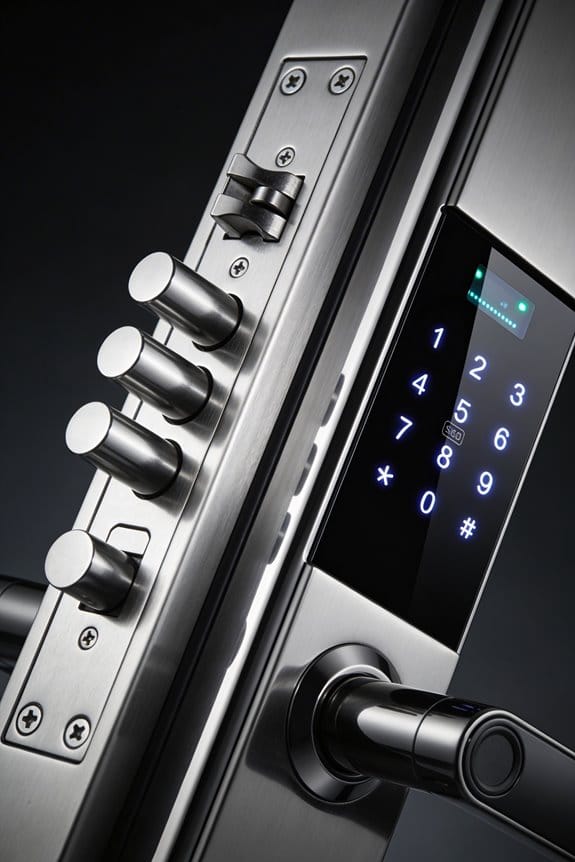
How to Disable or Block Your Landlord‘s Smart Lock Access Logs
Want to know if your landlord can actually see every time you come and go through that smart lock on your door? The short answer is yes—but you might have more control than you think.
It really depends on who owns the device and what your lease says. If you’re the one who bought and installed the smart lock, you’ve got full control over the privacy settings. Log into your lock’s app, find the activity log or history section, and look for options to turn off remote monitoring or notifications. Devices like the Level Lock ($315–$400) and Schlage Encode Plus ($249) let you get pretty granular with these controls—you can pick and choose what gets logged without compromising security.
What if your landlord owns it?
This is trickier, but not hopeless. Request that your landlord put in writing what they’re doing with the access data and how long they keep it. Then ask them to disable any logging features that aren’t actually necessary for security. Frankly, most landlords just want to make sure the property’s secure—they don’t really care about tracking your schedule.
Here’s the trick: many smart lock manufacturers let you restrict who gets notifications about entries. So your landlord can still unlock the door remotely if there’s an emergency, but they won’t get a ping every time you step outside. You keep your privacy. They keep their peace of mind.
Truth is, this comes down to communication. Have an honest conversation with your landlord about what data they actually need versus what’s just surveillance creep. You might be surprised how willing they are to compromise.
Recommended Products

Automatic Filter Cleaning — Industry-first cleaning station automatically rinses the filter and empties the debris bin by itself in just 3 minutes — for hands-free maintenance.Note: The cleaning station and robot are shipped separately.

Revolutionary OmniGrip Mechanical Arm – A Robotic Cleaner & Helper: Experience the robotic vacuum with a five-axis mechanical arm. The OmniGrip arm moves obstacles, lifts objects, and even organizes small household items like socks and tissues. Equipped with dual cameras, LED lighting, and precision sensors, it ensures accurate object handling. The arm features a gentle-grip design and a built-in weight sensor to prevent excessive squeezing, capable of handling objects up to 300g with ease

Storage Capacity & Organization: Efficiently store ingredients and prepared foods with 20 cubic feet of storage capacity.18 1/6 plastic food trays with a logical layout for quick access to ingredients and reduced prep time. Includes 3 shelves, each holding 150 lbs. and height adjustable
If Your Landlord Is Tracking Your Entry and Exit: Your Next Steps
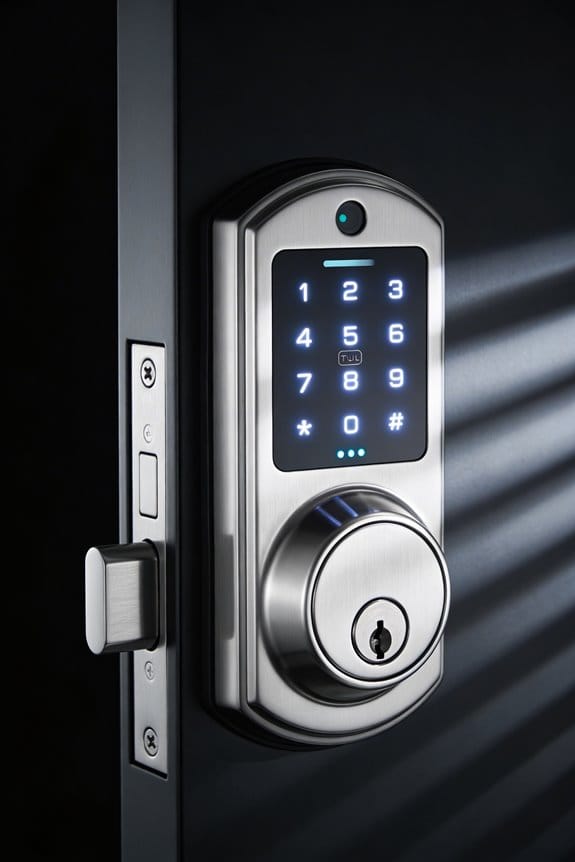
If Your Landlord Is Tracking Your Entry and Exit: Your Next Steps
So you’ve figured out your landlord’s been keeping tabs on when you come and go—and it’s beyond what you agreed to in writing. That’s a violation, plain and simple. The question is: what do you do about it?
Start by documenting everything systematically. Take screenshots of access logs, note the timestamps, and keep track of when you received notifications about monitoring. Write down the dates and times when you realized tracking happened without your consent. This paper trail matters more than you might think.
Next, contact your local housing authority. File a formal complaint that spells out exactly how your landlord broke the rules around tenant privacy. Be specific about what they monitored and when.
Send your landlord a written notice—email works, but certified mail is better because you have proof they got it. Tell them to stop the illegal surveillance immediately. Keep a copy for yourself.
Honestly, this is where a tenant rights attorney comes in handy. California Civil Code §1954 and the state constitution both protect your right to privacy in your rental. A lawyer can walk you through what civil remedies you might have and whether you’ve got a case.
Why does documentation matter so much? Because when you eventually talk to a lawyer or go to court, evidence is everything. Hold onto every screenshot, every dated note, every piece of communication. It strengthens whatever legal action you might pursue.
You deserve to live somewhere without feeling like you’re being watched. Getting legal help isn’t overkill—it’s protecting your rights.
Recommended Products

Ample Quantities to Use and Share: the package you will receive comes with 24 pieces of privacy boards for student desks in black, and 24 pieces of labels; The abundant quantity can satisfy your use and replacement needs in your daily life, and you can share them with your family, friends and coworkers
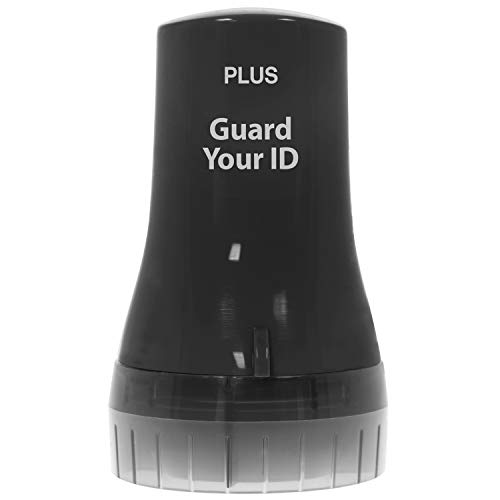
GUARD YOUR ID PASSION: Guard Your ID (GYID) is the ORIGINAL ID roller with our proven patent pattern designed to hide the text underneath it, keeping your personal information safe from prying eyes and identity thieves. We were the first to introduce Identity Rollers more than a decade ago, testing over 100 stamp patterns and inks with a focus on protecting and safeguarding your personal information on printed materials in an Eco-Friendly manner.
What Access Logs Reveal About Your Privacy
What Access Logs Reveal About Your Privacy
Ever wonder what your landlord actually knows about your daily life? If you’ve got a smart lock, they might know more than you think.
Access logs aren’t just timestamps. They’re a complete record of your comings and goings—and they paint a detailed picture of who you are. Your landlord can see when you leave for work, when you come home, how long you stay out, and how often friends crash at your place. That’s a lot of information to hand over without realizing it.
Smart locks like the August Pro ($199) and Level Lock+ ($299) collect surprisingly detailed data. We’re talking exact entry times, how long you’re inside your unit, and even records of remote access attempts. Think about what that reveals: whether you’re home during typical work hours, your guest patterns, when you’re away on vacation. These aren’t vague details—they’re specific behavioral facts.
So, why does this matter? Because your home is supposed to be your private space. You have a reasonable expectation that your landlord respects that boundary. But with access logs, you’re essentially broadcasting your daily routine to someone who holds power over your housing situation.
Frankly, this gets into murky legal territory. California Civil Code §1927 protects tenants’ right to quiet enjoyment—meaning landlords can’t invade your privacy or interfere with your use of the rental. Access logs without your explicit consent arguably cross that line. You never agreed to behavioral surveillance, and yet it’s happening automatically every time you unlock the door.
The best approach? Ask questions before agreeing to a smart lock system. Find out what data gets recorded, who has access to it, and how long it’s stored. If your landlord insists on a smart lock, request details in writing. You deserve to know what you’re signing up for.
What would make you feel more comfortable about the technology in your rental?
What to Do If Your Landlord Is Monitoring Your Comings and Goings?
What to Do If Your Landlord Is Monitoring Your Comings and Goings
So you found out your landlord’s been tracking when you come and go. That’s a violation of your privacy, and honestly, it’s unsettling. The good news? California law actually has your back here, and you’ve got real options to fight back.
Start by gathering proof
Walk through your rental and look for the tech. Smart locks that log entries, thermostats recording occupancy patterns, motion sensors—take photos of everything. Document what you find and when you noticed it. This evidence matters more than you’d think when things get legal.
Your next move is direct communication. Draft a letter to your landlord via certified mail that outlines exactly what you’ve discovered and tells them to stop. Be specific about which devices or monitoring practices violate your privacy. Keep a copy for yourself.
Know your legal foundation
California Civil Code §1954 is your strongest tool here. It protects tenants from intrusive surveillance without consent, and violations can lead to real consequences for landlords. Why does this matter? Because you’re not just complaining—you’re citing actual law.
Beyond that, the California Consumer Privacy Act (CCPA) can get you statutory damages up to $7,500 if your landlord’s monitoring crosses into illegal data collection. Truth is, many landlords don’t even realize how far they’ve stepped over the line.
Get outside help if you need it
Your local housing authority or legal aid organization can walk you through your options. They’ll help you understand if what’s happening is actually illegal in your specific situation. An attorney consultation is worth it if monitoring doesn’t stop after your written notice.
If your landlord ignores your demands, filing a lawsuit becomes your path forward. You could recover actual damages plus those statutory penalties.
Keep every piece of documentation—emails, photos, your certified letter, everything. A strong paper trail makes the difference between a weak case and a solid one.
You deserve privacy in your own home. Don’t let this slide.
Frequently Asked Questions
Can a Landlord Require Smart Locks as a Condition of Tenancy in California?
Like a key turning in a lock, I’ll be straightforward: your landlord can’t require smart locks as a tenancy condition in California. Smart lock requirements violate tenant privacy protections under Civil Code §1954, which safeguards your exclusive possession and shields you from invasive surveillance systems.
What Damages Can Tenants Recover for Unauthorized Access Log Monitoring Violations?
You can recover monetary compensation for actual damages like emotional distress and lost privacy, plus punitive damages if your landlord intentionally violated your rights. You may also claim statutory damages up to $7,500 under California’s privacy laws for egregious monitoring violations.
Do Roommates Have Equal Privacy Rights Regarding Shared Smart Lock Access Data?
Your roommate privacy rights regarding shared access data depend on your lease agreement. While you’ll both access the smart lock, I’d recommend clarifying who can view logs—ideally, shared access shouldn’t reveal individual entry times without explicit consent from all roommates involved.
How Long Can Landlords Legally Retain Tenant Access Log Information?
I can tell you that California law doesn’t specifically define a retention period for access logs. However, legal guidelines suggest landlords shouldn’t keep data longer than necessary for legitimate purposes. You’re entitled to request deletion of unnecessary information.
Can Tenants Sue for Emotional Distress From Continuous Landlord Entry Tracking?
Like a bird trapped in a cage watching every movement, you’re entitled to sue for emotional distress from continuous entry tracking. California law protects your tenant privacy, allowing damages when landlords’ intrusive monitoring causes genuine psychological harm.