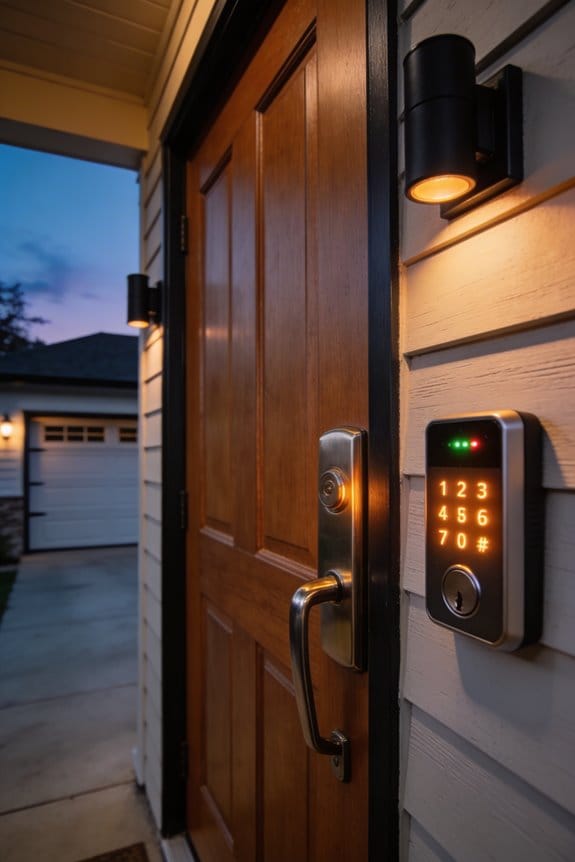

Your fingerprint stored on cloud servers presents irreversible privacy risks. Unlike passwords you can reset after breaches, stolen biometric data remains compromised indefinitely—criminals exploit it for identity theft and financial fraud across multiple accounts. Centralized databases amplify exposure: one successful hack compromises thousands simultaneously. GDPR and CCPA classify fingerprints as sensitive data requiring explicit consent, yet enforcement gaps leave protection inconsistent. Dark web markets actively trade compromised biometric profiles. Local AES-256 encryption and disabled cloud syncing substantially reduce vulnerability, though vulnerabilities persist. Understanding specific protection strategies reveals what truly safeguards your identity.
Key Takeaways
- Fingerprint data stored in centralized cloud databases creates mass exposure risks, as a single breach compromises thousands of permanent biometric records simultaneously.
- Unlike passwords, stolen fingerprints cannot be reset or changed, enabling ongoing identity theft, fraud, and continuous exploitation of compromised individuals indefinitely.
- Fingerprints can be covertly collected without consent using forensic techniques, raising serious privacy concerns about unauthorized data possession in centralized systems.
- GDPR and CCPA require explicit consent for biometric collection, but inconsistent enforcement allows many companies to operate with lax compliance standards.
- Local device encryption with AES-256 and disabled cloud syncing significantly reduce privacy risks by keeping sensitive biometric data offline and inaccessible.
Why Your Fingerprint Is Permanent and Cannot Be Reset Like a Password
Why Your Fingerprint Is Permanent and Cannot Be Reset Like a Password
Ever locked yourself out of an account and just reset your password? Problem solved, right? Well, your fingerprint doesn’t work that way.
Here’s the fundamental difference: passwords are temporary tools you control. Your fingerprint is locked into your biology for life. Once someone steals it, you can’t just generate a new one like you would with a compromised password. That’s the hard truth about biometric security.
Think about what happens when criminals get their hands on your fingerprint data. They’ve got permanent access to your identity. A stolen password? Annoying, but fixable in minutes. A stolen fingerprint? That’s a problem you’ll carry forever across every system that uses your biometrics.
The numbers back this up. Deloitte’s 2023 survey found that 67% of people worry about cloud biometric misuse—and for good reason. When your fingerprint gets pulled from a cloud database during a breach, there’s no reset button. No way to invalidate it. No mechanism to replace it with something new.
Why does this matter so much? Because traditional credentials give you an escape hatch. Criminals leverage stolen biometric data indefinitely, using permanent access to commit fraud across multiple applications and systems. You’re left without the remediation options that come with a simple password change.
The takeaway: biometric data isn’t just another form of security—it’s fundamentally different and carries risks we’re still learning to manage. What’s your comfort level with storing something irreplaceable in the cloud?
Why Cloud Servers Attract Biometric Theft
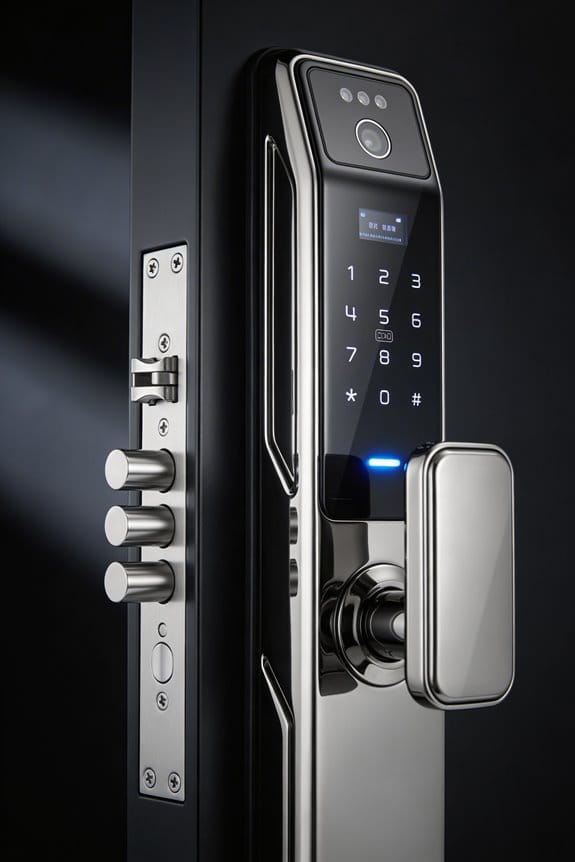
Why Cloud Servers Attract Biometric Theft
Your fingerprints are with you for life—literally. Unlike a password you can change after a breach, your biometric data can’t be reset or replaced. That’s what makes it so dangerous when stored on cloud servers, and why criminals are actively hunting for it.
Centralized biometric databases are basically treasure chests for cybercriminals. When millions of fingerprint records sit on the same servers, one successful hack exposes thousands of people at once. Frankly, that’s the whole appeal for attackers—they get maximum payoff from a single breach instead of targeting individuals one by one.
So, why does this matter to you specifically? Cloud platforms are built on interconnected infrastructure, which means weaknesses in one area can cascade across the entire system. Attackers exploit gaps in platform security, transmission protocols, and access controls all at the same time. It’s not just external hackers either—employees with access to sensitive data don’t always follow proper oversight rules, and policy changes can accidentally open new exposure pathways you’d never expect.
Here’s the trick: stolen biometric templates have serious staying power. Once criminals get your fingerprint data, they can use it for years—for unauthorized system access, identity fraud, and surveillance operations. These stolen templates sell well on dark web marketplaces precisely because they keep working. You can’t revoke them the way you’d cancel a compromised credit card.
The bottom line? Biometric data stored on cloud servers creates permanent, irreversible risk. Are you checking where your biometric information is stored and who can access it?
Recommended Products

COMPACT AND POWERFUL WORKSTATION — Lenovo’s lightest mobile workstation combines portability and performance in a 14.5″ design. Powered by an Intel Core Ultra 7 155H processor (16 cores, 22 threads, up to 4.8 GHz), it handles demanding tasks effortlessly. The AI Engine unites the power of CPU, NVIDIA RTX 500 Ada graphics(4GB GDDR6), and a dedicated neural processor NPU to accelerate AI workloads like Microsoft Copilot. Comes with 64GB DDR5 RAM and a 2TB PCIe NVMe SSD — ensures fast storage and quick access to files.

ThinkPad E16 Gen 2 business laptop with AI-accelerated Intel Core Ultra processors: Intel Core Ultra 7 155H (24 MB cache, 16 cores, 22 threads, up to 4.8 GHz, 28W). High-end processor of the Meteor Lake series that has 16 cores (6 + 8 + 2) and 22 threads at its disposal. This 1st Gen Core Ultra chip has come to replace 13th generation Core chips; its 16 cores are comprised of 6 HT-enabled Performance cores running at up to 4.8 GHz and 10 Efficient cores running at up to 3.8 GHz.

NEXT-GEN COPILOT AI PERFORMANCE - Powered by AMD Ryzen 5 200 Series processor with integrated Copilot AI technology for intelligent productivity assistance. Automate workflows with AI-powered features built directly into Windows 11 Pro.
The Cascade of Harm After Fingerprint Data Is Breached
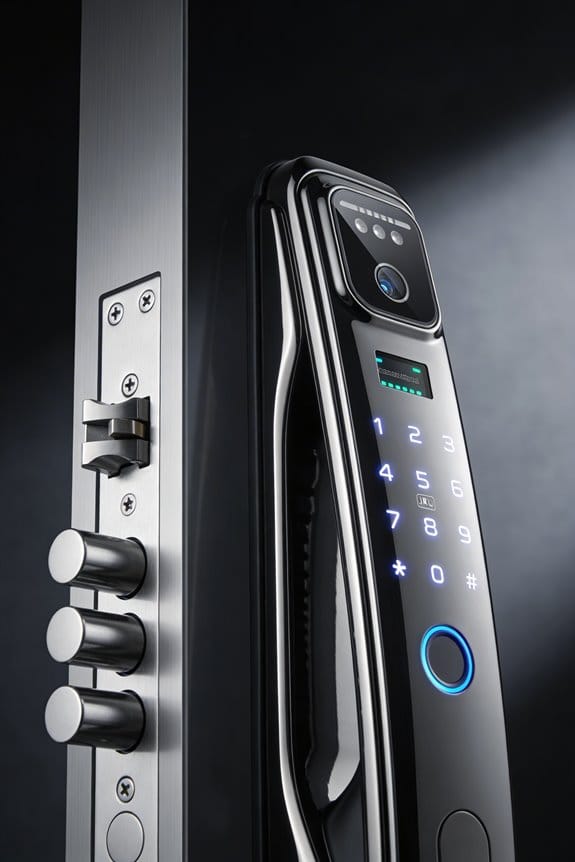
The Cascade of Harm After Fingerprint Data Is Breached
What happens when your fingerprint ends up in a criminal’s hands? Unlike a password you can change in five minutes, your fingerprint is yours for life. Once it’s stolen in a breach, you’re dealing with permanent identity theft—and that’s just the beginning.
The damage spreads fast. Criminals don’t just steal your identity once and call it a day. They use your biometric data to access financial accounts, get approved for credit lines, and compromise multiple systems at the same time. Your stolen fingerprint profile sells for $100–$500 on dark web marketplaces, which means your information becomes a commodity that keeps getting used and re-used.
So, why does this matter more than a typical data breach? Because the consequences don’t stop. Law enforcement databases now have your data. Healthcare records are compromised. Employment systems are vulnerable. These aren’t things you can fix by calling a bank and requesting new account numbers.
Here’s the real problem: recovery isn’t an option. You’re stuck dealing with ongoing surveillance risks, unauthorized people accessing systems with your biometric ID, and ransomware attacks targeting you specifically. A single breach transforms into lifetime exposure. Frankly, that makes fingerprint theft fundamentally different—and far more serious—than getting your credit card number stolen.
Think about what you’d do tomorrow if your fingerprints were already out there. What safeguards do you have in place right now to protect your biometric data?
Recommended Products
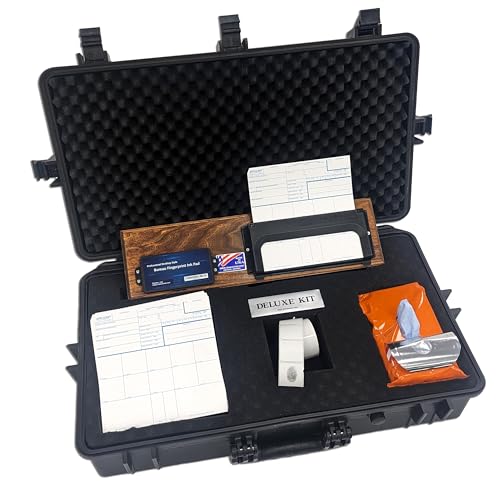
The primary component of the deluxe kit is the wooden portable fingerprinting station. It consists of a standard fingerprint cardholder and an extra large ink pad, mounted on a hand-crafted wooden platform. The deluxe fingerprint kit is a sturdy portable fingerprint solution.

|ULTIMATE PROTECTION, TRULY OFFLINE| Air-gapped QR signing and wireless charging keeps keys off the internet and hack. Built with 4× EAL 6+ secure elements for banking-grade defense.

EAL5+ CERTIFIED SECURE ELEMENT + FINGERPRINT PROTECTION — Your private keys stay encrypted offline on a certified EAL5+ chip, the same security tier used in EMV bank cards. Built by D'CENT, securing crypto since 2018. Fingerprint authentication adds a second layer no PIN-only wallet can match.
Covert Collection: Privacy Before Your Data Reaches the Cloud
Covert Collection: Privacy Before Your Data Reaches the Cloud
Ever wonder what happens to your fingerprints after you touch a doorknob at a coffee shop or hand your phone to a friend? Law enforcement, private security firms, and surveillance operators are lifting your latent prints without your knowledge or consent—and it’s happening long before anything hits the cloud.
Forensic technicians have the tools to extract ridge patterns from surfaces you’ve already forgotten about. They use fingerprint powder, cyanoacrylate fuming, and advanced imaging to pull those patterns off abandoned doorknobs, glasses, phones, and countertops. Once they’ve got your prints, they’re building databases without ever asking your permission.
So, why does this matter? Because you never signed up for any of it.
The consent problem doesn’t stop at collection. You haven’t authorized these third parties to possess your biometric data, store it, or share it with anyone else. Once your fingerprints are harvested, they become permanent records sitting in centralized systems. That creates a surveillance vulnerability that sticks around indefinitely.
Here’s what makes fingerprints different from a password: you can’t change them. If someone compromises your fingerprints, there’s no reset button. You can’t revoke access or update your security settings. Those prints are out there for good, cementing privacy erosion from day one—before your data even touches any cloud system.
The best part is understanding that this erosion starts at the collection phase, not downstream. Once you know that, you can start thinking about what you can actually control.
What steps do you take right now to protect your biometric data from being collected in the first place?
Biometric Privacy Laws: GDPR, CCPA, and Enforcement Gaps
Biometric Privacy Laws: GDPR, CCPA, and Enforcement Gaps
Your fingerprint data is supposed to be protected. The EU’s General Data Protection Regulation and California’s Consumer Privacy Act both treat biometric information as sensitive—the kind that needs your explicit permission before anyone collects it. So why does it still feel like no one’s really watching?
The truth is, these laws exist on paper, but enforcement is all over the place. GDPR requires companies to get clear consent before they touch your biometric data, but how strictly member states actually enforce this varies wildly. It’s like having a speed limit that different police departments decide to enforce differently depending on the day.
California gives you deletion rights under the CCPA—that’s good. But here’s the catch: third-party databases that store your fingerprints often slip through the cracks. Companies can hand your data off to contractors, and suddenly the oversight disappears.
What does real enforcement look like?
Texas’s $100 million penalty against Meta shows that regulators *can* hit companies hard when they mess up. The problem? Penalties are inconsistent globally. Some companies face huge fines; others barely get a slap on the wrist.
Legal enforcement agencies are stretched thin. They simply don’t have the resources to audit all the cloud providers storing your fingerprint data. That means noncompliant systems stay in place longer than they should. And it gets worse—violators exploit the gaps. When one country tightens rules, companies just shift operations across borders to somewhere with looser oversight.
The bottom line: laws are only as good as their enforcement. Right now, your biometric data has protection in theory, but the cracks in the system are real. What would actually make you feel confident about where your fingerprints are stored?
Encrypting Biometric Data Locally: Protection and Limits
Encrypting Biometric Data Locally: Protection and Limits
Your fingerprints are basically your skeleton key to every account that matters—your phone, your bank, maybe your office. So what happens when that data gets stolen from some company’s cloud server? GDPR and CCPA sound impressive on paper, but let’s be real: regulations don’t stop breaches. They just create lawsuits after the damage is done.
This is where storing encrypted biometric data directly on your device actually makes a difference. Instead of sending your fingerprint or face scan to the cloud, you keep it locked down right there in your pocket. Local encryption uses math-heavy algorithms like AES-256 to turn your biometric template into unreadable code. Without the decryption key, hackers see only gibberish. You’re not betting on regulators to catch criminals—you’re making your data worthless to them in the first place.
Why does this matter? Because transmission is where most vulnerabilities hide. Every time your data travels across the internet, it’s exposed. Every server it touches is a potential target. With local storage, you cut that risk dramatically. The attack surface shrinks.
But let’s talk about what doesn’t work:
- Device compromise still happens. If someone gets physical access to your phone or laptop, encryption keys can be extracted.
- Spoofing attacks bypass sensors regardless. A high-quality fake fingerprint or facial replica can fool biometric readers, encrypted or not.
- Scaling across organizations gets expensive. Managing local encryption for hundreds or thousands of employees requires serious infrastructure investment.
Honestly, local storage isn’t a perfect solution—nothing is. But it’s the strongest realistic defense you have against permanent biometric theft right now. It forces attackers to do the hard work rather than letting them grab your data and move on.
Biometric Spoofing: Why Fake Fingerprints and Deepfakes Bypass Sensors
Biometric Spoofing: Why Fake Fingerprints and Deepfakes Bypass Sensors
Your phone’s fingerprint scanner feels secure, right? Unfortunately, that sense of safety might be false. While encryption locks down your data sitting on your device, attackers have figured out a smarter move—they’re going after the sensors themselves, and no amount of encryption can protect you from that angle.
Fingerprint recognition sounds foolproof on paper. The technology scans your ridge patterns and should be unique to you alone. But here’s the problem: researchers have successfully fooled optical and capacitive sensors using silicone replicas, gelatin molds, and even high-resolution printed images. Laboratory tests show that 2D fingerprint spoofs defeat 40-60% of commercial sensors when manufacturers don’t build in anti-spoofing measures. Three-dimensional printed replicas? They bypass even more systems.
Facial recognition opens up a whole new attack surface. Deepfake technology can generate synthetic biometric data that slips past liveness detection protocols—the checks meant to confirm you’re actually there and not just a video. So, why does this matter? Because your face and fingerprint are things you can’t change the way you’d change a password.
Manufacturers aren’t sitting idle, though. Many now use multi-spectral imaging and pressure-detection algorithms to catch fakes. But honestly, it’s an ongoing battle. Determined attackers keep developing new workarounds, creating what feels like an endless technological arms race.
The takeaway? Don’t rely on a single biometric method as your only defense. Layer your security with PINs, passwords, or two-factor authentication alongside fingerprint or facial recognition. What security measures do you currently use to protect your most sensitive accounts?
What You Should Actually Do About Cloud Biometric Risks
Honestly, if you’re storing your fingerprints and face data in the cloud, you’re basically handing your identity to hackers on a silver platter. So why does this matter? Because once biometric data gets stolen, you can’t just change your fingerprint like you’d change a password.
The smartest move is to keep your biometric info on your device instead. Your phone or computer has what’s called a “secure enclave”—think of it as a locked safe inside your device that stores fingerprint templates and facial data without sending them anywhere. Modern phones like the iPhone 15 Pro and Samsung Galaxy S24 Ultra come with this built in, which means you don’t need cloud storage for biometrics at all.
Try this: Go into your Settings > Biometrics and turn off automatic cloud syncing. This gives you full control over where your data lives.
If you’re still using any cloud services, add a second layer of protection. Use two-factor authentication alongside your biometric login. It sounds like extra work, but it’s really just entering a code when prompted—and it stops attackers even if they somehow got your biometric data.
For the encryption side of things, make sure any data that does leave your device is protected with AES-256 encryption. This scrambles everything so thoroughly that intercepting it in transit becomes pointless. Check your cloud provider’s encryption standards every few months to ensure they’re still meeting GDPR requirements for sensitive personal data.
The bottom line: Keep biometrics local, add two-factor authentication, and stay on top of your provider’s security. What’s stopping you from making these changes today?
Recommended Products

Full Size Design can securely hold 2 full-size handguns, magazine(s), passport, cash, and is easily mountable to a nightstand, desk, or vehicles using the pre-drilled holes and included hardware or steel security cable. Designed to safely protect valuables and provide quick access. Fits handguns up to 13.5” in overall length.

🌟 Perfect for College Dorms & Apartment Security – Peace of Mind for Parents. This Viking Security Safe VS-38BL extra wide laptop biometric fingerprint safe is ideal for students living away from home. With upgraded biometric access, it keeps electronics, passport, documents, and medications safe from theft in shared spaces. Parents can rest easy knowing their child has a personal secure storage solution—no more worrying about lost keys or roommates snooping.

Biometric Gun Safe: The biometric fingerprint safe use semiconductor fingerprint reader which provide a wide range of finger placement and provide rapid and accurate fingerprint recognition and identification so you could quick access to your valuables. This biometric quick access safe supports the storage of up to 20 fingerprints with a fingerprint response time of less than 0.5s
Frequently Asked Questions
How Do Biometric Templates Differ From Raw Fingerprint Images in Security?
I’ll explain how biometric templates enhance your security. Templates convert your raw fingerprint into encrypted mathematical patterns, eliminating identifiable images. This approach reduces exposure if breached, since you can’t reconstruct actual fingerprints from templates. They’re harder to spoof and offer superior template accuracy with advanced security features.
What Percentage of Consumers Actively Worry About Cloud-Stored Biometric Misuse?
I’ll tell you that 67% of consumers actively worry about cloud-stored biometric misuse, according to Deloitte’s 2023 survey. Your consumer confidence hinges on robust data protection measures, yet many cloud platforms haven’t adequately secured biometric systems against breaches.
Can Silicone Fakes or Deepfakes Successfully Fool Fingerprint Recognition Systems?
Yes, I’ll tell you that digital deception through fake fingerprints is definitely possible. Silicone fakes and deepfakes can successfully bypass many fingerprint recognition systems, exploiting sensor vulnerabilities and creating serious security gaps you should know about.
Which Companies Have Faced Penalties for Biometric Data Misuse Violations?
I’ll share companies that’ve experienced “compliance adjustments.” Meta faced Texas penalties for biometric regulations violations. These cases underscore why you should care about data privacy—they’re cautionary tales showing enforcement is real and consequences matter for your protection.
What Are the Cost Implications of Implementing Local Biometric Storage Systems?
I’d tell you that implementing local storage demands substantial upfront investment in infrastructure and security hardware. However, you’ll gain significant security benefits and reduce data management expenses long-term by avoiding cloud vulnerabilities and potential breach costs.