

We’re witnessing a critical change from single fingerprint scanners—which generate 0.08% false positives in large databases and fail with wet or damaged fingers—toward multimodal systems combining fingerprint, facial, and iris recognition. This integration drops false match rates below 0.01% while requiring attackers to breach multiple biological traits simultaneously. Healthcare facilities report 94% error reductions, law enforcement achieves 99.2% suspect identification accuracy, and airports process passengers swiftly with enhanced security. Initial deployments range from $500,000 to $2 million for medium-scale setups. Understanding implementation specifics and emerging technologies like palm vein recognition reveals why organizations across sectors are making this strategic change.
Key Takeaways
- Single fingerprint systems have a 0.08% false positive rate; multimodal systems combining fingerprints, facial recognition, and iris scanning reduce this below 0.01%.
- Multimodal biometric systems require breaching multiple biometric traits simultaneously, making spoofing attacks significantly more difficult than attacking single-method fingerprint sensors.
- Combining multiple biometric technologies improves accuracy in critical sectors: hospitals reduced medication errors by 94%, law enforcement achieved 99.2% suspect identification accuracy.
- Initial multimodal biometric implementation costs $500,000 to $2 million for medium-scale setups, but modular design enables phased deployment without overwhelming budgets.
- Emerging technologies like palm vein recognition and gait analysis enable continuous passive authentication, representing the next evolution beyond traditional fingerprint-only systems.
Why Fingerprints Alone Fall Short in Modern Security
Have you ever struggled to unlock your phone with your fingerprint because your fingers were wet, dirty, or even just a bit scratched? It happens. Despite being around for ages, relying only on fingerprint recognition for security can leave you wide open to issues that today’s tech-savvy criminals are ready to exploit.
Here’s the deal: fingerprint sensors aren’t perfect. They can misread damaged fingers, can struggle in poor lighting, and they’re easy targets for spoofing attacks using fake fingerprints. The truth is, if you’ve ever worn gloves or had a tiny cut, chances are you’ve experienced a false rejection when trying to access something important. It’s frustrating — you just want your device to recognize you.
Take a moment to consider this: when it comes to large fingerprint databases, the chances of a false positive increase significantly. This is a real problem, especially for large organizations that rely solely on fingerprints. With just one method of verification, they’re left vulnerable to fraud.
Try this: mix things up with different types of biometrics. By using facial recognition or iris scans along with fingerprints, you create a more reliable security system. These complementary technologies can back each other up, which means fewer errors and a stronger overall security measure.
So, why does this matter? Simple. In today’s digital world, you need security that works. Relying on just one method can expose you—and your organization—to unnecessary risks.
What Multimodal Biometric Systems Actually Do
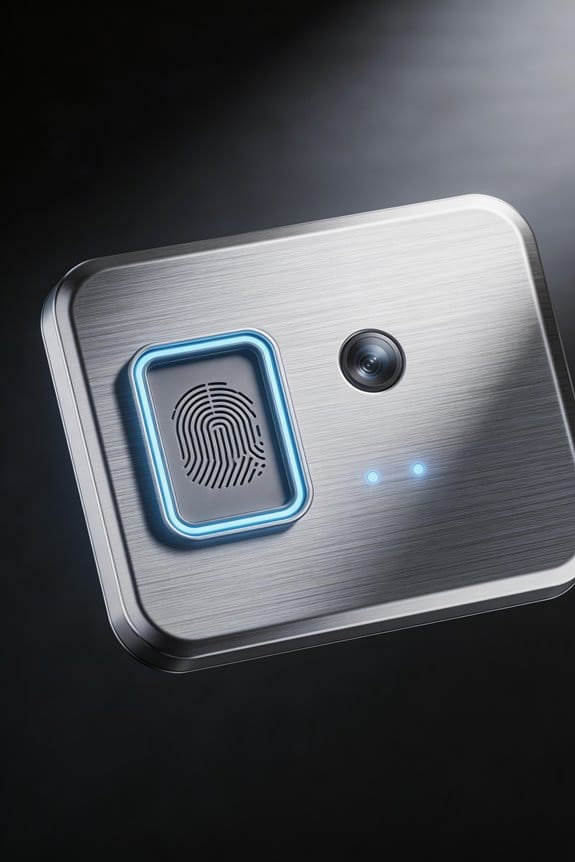
Have you ever felt uneasy about using just one biometric system for security? It’s understandable, especially when a simple fingerprint scan or facial recognition just doesn’t cut it. That’s where multimodal biometric systems come into play, combining different biometric technologies like fingerprint sensors, facial recognition cameras, and iris scanners into one reliable security setup.
Here’s the trick: these systems don’t just slap different technologies together randomly. They use something known as multimodal fusion, which merges the data from various methods. This means that even if one fails—say, facial recognition struggles in low light—your system can switch to something else, like iris scanning, without missing a beat.
A big win here is the strength of authentication. By needing to compromise multiple traits at once, it’s significantly harder for someone to trick the system compared to using just one method. You get fewer false positives and negatives, which keeps things running smoothly—most systems can authenticate in under two seconds.
So, where is this nifty tech used? Facilities that prioritize security, like healthcare centers and government buildings, are perfect for multimodal systems. They can ensure that only authorized individuals gain access.
Truth is, with security being more important than ever, these advanced systems are worth considering. Who wouldn’t want to make their space a little safer?
Recommended Products

WiFi Enabled with ViSN (Vaultek Intelligent Safe Network): The ViSN platform uses WiFi technology to manage the safe and send live alerts of safe activity such as tampering, impacts, and temperature/humidity changes. ViSN delivers the full smart safe experience with all new features and an exclusive iOS/Android smartphone app that provides intuitive programming, guided setup, and real time safe monitoring. Stay informed and in control at all times.

Modern upgrades with a top mounted wireless charging pad, USB/USB-C accessory charging ports, and a sleek customizable LED display showing time/temperature/humidity make the ultimate modern home safe. Low profile safe design blends into its environment, great for RVs or nightstands. The auto-open safe drawer can secure a full size pistol (up to 9"), jewelry, small documents, and other personal belongings. INTERIOR DIMENSIONS: 9" x 7.5" x 1.5"
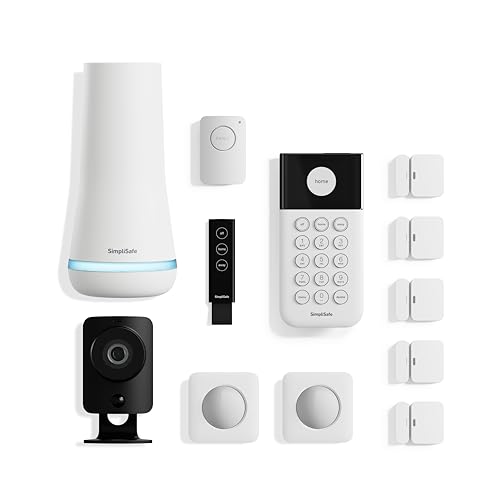
Simple to set up. Seriously secure. Get ready to protect right out of the box. Just plug in the Base Station and camera, place your sensors, and start protecting your home. No wiring or drilling required. The SimpliSafe App will walk you through the details, or contact SimpliSafe directly for professional installation.
How Fingerprint, Facial, and Iris Recognition Work Together
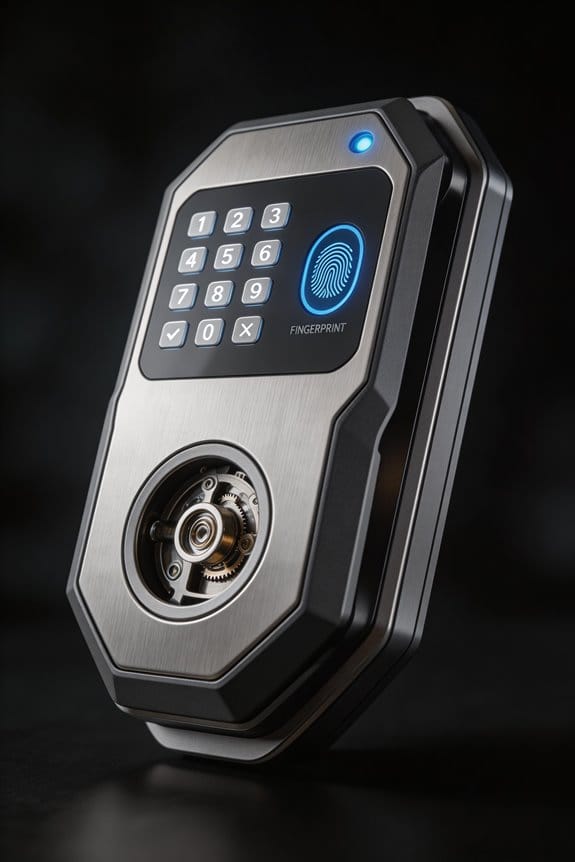
Have you ever struggled with keeping your personal info safe online? With so many ways to verify who you are, like passwords and security questions, it can be tough to find something that really works. This is where biometrics come in handy. These systems, which capture unique physical traits, can offer a more secure solution for authentication.
Let’s break this down. Each type of biometric does its job using different tech:
- Fingerprint sensors capture ridge patterns, usually through optical or capacitive methods.
- Facial recognition looks at distances between facial landmarks — think about where your eyes and ears are.
- Iris recognition dives into the unique patterns of your iris using algorithms and specialized image techniques to create secure templates.
So, why does this matter? When you combine these different types of biometrics, you create a much stronger verification system. It’s like having backup plans for your backup plans. By merging all these characteristics, we can achieve better accuracy and give hackers a much harder time. After all, trying to alter multiple physical traits at once? That’s not going to happen easily.
What’s even cooler is that if one method runs into trouble, like bad lighting messing with facial recognition or a finger that’s hurt, the other systems can keep things rolling. That means you’ll still be able to get authenticated without hiccups.
The best part is, this layered approach works so quickly that it usually takes just seconds to verify you while cutting down on mistakes. Given how important security is these days, it’s definitely worth considering a biometric setup for your needs.
Why Combining Traits Cuts False Matches
Have you ever worried about the security of your personal information? If so, you’re not alone. Many people are concerned about identity theft and the possibility of getting falsely identified by security systems. Let’s dive into why combining different biometric traits, like fingerprints, facial recognition, and iris scans, can help keep you safer.
When it comes to security systems, relying on just one type of trait can lead to problems. For example, a fingerprint scan alone has a false positive rate of about 0.08%. That might sound low, but compare it to facial recognition, which can have error rates anywhere between 2% to 5% due to different lighting conditions. Not exactly ideal, is it? So, here’s the trick: when you combine all three—fingerprint, facial features, and iris patterns—you can drop the false match rates to below 0.01%. That’s pretty impressive!
Why is this the case? Think about it—if a would-be impostor wants to trick the system, they have to mimic three different and unique traits all at once. That’s a massive challenge. Imagine trying to perfectly replicate not just someone’s fingerprint but also their facial structure and the details of their iris. It’s quite a tall order, and the chances of pulling it off are incredibly slim.
So, when you think about security measures, remember that using more than one biometric trait creates a solid layer of defense. It’s like having an extra lock on your door—though there’s still a key, it’s much tougher to break in.
How Multimodal Systems Stop Spoofing Attacks
As the tech world continues to evolve, so do the tactics of those looking to game the system. If you’re concerned about spoofing attacks—which are getting more crafty by the day—you’re not alone. People are using everything from high-res photos to silicone fingerprints to trick single-trait systems. So, what can you do about it?
Consider this: multimodal biometric systems might be the key to stepping up your security game. Rather than relying on just one method to verify identity, these systems use multiple biometric traits. This means that if a bad actor wants to get through, they need to breach multiple layers of security at once. That’s a lot tougher than just getting past a single method.
Let’s break down why this matters. When someone forges a fingerprint using advanced materials, a good facial recognition system can still identify them by looking deeper. It doesn’t just scan for a flat 2D image— it checks micro-expressions and the unique depth of a person’s face. Plus, how often do you hear about someone replicating iris patterns convincingly? With the Daugman algorithm technology at play, it’s practically impossible.
The beauty of this strategy is in its complexity. Attackers would have to master multiple fraud techniques all at once. Honestly, this makes it way less likely for them to pull off a successful attack. Think about it: the odds are stacked against them when they’ve got to break through multiple barriers instead of just one.
When to Choose Each Modality: A Decision Framework
When picking a biometric system, it’s crucial to think about your unique environment and the needs you have. Have you ever wondered which option would work best in your situation? Fingerprint systems shine when speed is the name of the game—often verifying identities in under two seconds. This makes them perfect for areas with a lot of foot traffic.
On the other hand, facial recognition is great for mobile apps and public areas where you want to avoid physical contact. Think about busy places like airports or malls. Then there’s iris scanning, which is all about precision. This option is ideal for critical areas like government buildings or healthcare facilities.
Here’s the trick: consider the following factors to make the best choice for you:
- Environmental lighting—Is it bright, dim, or constantly changing?
- User preferences—Do you want contact or contactless systems?
- Compatibility with existing tech—What systems are you already using?
- Type of application—Are you looking for basic security or top-notch authentication?
Truth is, the right choice needs to align with your security needs and what’s feasible to deploy. By taking the time to evaluate your operational environment, you ensure your selected biometric option fits perfectly with your goals.
Recommended Products

21.5" HD Touchscreen:Commercia Design and durable build for salons, spas, and aesthetic studios. No need for professional installation or professional training,Just use it according to the manual

DX1210 Duplex USB Optical Card Scanner for scanning and reading driver licenses. Scans BOTH sides of a driver license or ID card in a single pass.

【3 in 1 SMART TIME ATTENDANCE MACHINE】The presence machine supports 3 types of time cards, including facial recognition, finger scanning and password verification. It can quickly and sensitively identify within 0.5s, and supports 3,000 fingerprints, 1,000 passwords, and 300,000 sets of data storage.
Multimodal Biometrics in Healthcare, Law Enforcement, and Airports
Have you ever wondered how secure our healthcare, law enforcement, and airport environments really are? These sectors are stepping up their game by using multimodal biometric systems to beef up security without slowing everything down.
In a hospital setting, it’s all about getting medications right. By combining fingerprint scans with facial recognition, healthcare facilities are now able to control who accesses pharmaceuticals and verify patient identities. The results speak for themselves—this approach has cut down medication errors by an impressive 94%! That’s not just a number; it means patients are being treated safely and efficiently.
When it comes to law enforcement, we’re seeing iris scanning teamed up with facial recognition. This duo helps police identify suspects with mind-blowing accuracy rates of 99.2%. Why is this such a big deal? Well, it helps keep our communities safer. The more accurately they can identify a suspect, the quicker they can resolve cases without putting anyone at risk.
Airport security is also catching on to the benefits of this tech. Imagine breezing through immigration checkpoints where your fingerprint, face, and iris are all scanned quickly. They’re getting passengers processed in under two seconds while spotting potential threats 98.7% of the time. It’s efficiency at its best and definitely takes the stress out of travel.
So, you might be wondering what this means for everyday life. Well, it shows that integrating multiple biometric systems is a solid way to enhance security. Instead of relying on just one method, which is vulnerable to hacks or malfunctions, combining different forms of identification means that even if one part fails, the overall security remains intact. It’s like having backup plans in place.
Truth is, these innovations in biometrics are proving that better protection doesn’t have to come at the cost of speed or convenience. We all want to feel secure whether we’re in a hospital, at an airport, or in our communities. So, next time you go through airport security or check into a hospital, remember the sophisticated technology working behind the scenes to keep things running smoothly. Isn’t it reassuring to know that we’re investing in these ideas for a safer future?
Cost and Implementation: Deploying Multimodal Systems
Have you ever thought about how secure your workplace really is? Multimodal biometric systems, which blend different forms of identification like fingerprints, iris scans, and facial recognition, can seriously boost safety in places like hospitals, police stations, and airports. But here’s the catch: installing these systems isn’t just a plug-and-play situation; it comes with a hefty price tag and a bunch of logistical hurdles.
Let’s break it down. Depending on your organization’s size and needs, the initial investment can vary widely, often sitting between $500,000 to $2 million for medium-scale setups. This includes everything from hardware to necessary software and updates to your current infrastructure. You’ll also want to consider:
- System scalability: Can your new system grow with your needs?
- Legacy system integration: How do you mesh the new tech with what you already have?
- Sensor compatibility: Will everything communicate smoothly with your existing network?
These aren’t small things to overlook! A phased deployment over 12 to 18 months is usually a smart move, allowing you to train anywhere from 50 to over 200 staff members, based on how big your facility is. So, why does this matter? Proper training and gradual rollout can prevent chaos and confusion among your team when the system finally goes live.
Here’s the trick: using a modular design for these systems allows for multiple biometric methods to work together seamlessly. Streamlining fingerprint, iris, and facial recognition all at once means you get more security without recreating the wheel every time you want to add a new feature.
Truth is, with some solid planning around managing costs and implementation challenges, you can enhance security in your organization without breaking the bank. So, what’s holding you back from exploring this kind of upgrade?
Recommended Products

【Built-In Audio Speaker】 The only bedside gun safe with a built-in audio speaker, designed to blend into your nightly routine — music before sleep, white noise at night, or a podcast in the morning. This isn’t an add-on feature, but a speaker intentionally built into a nightstand gun safe, making it feel like a natural part of your bedroom setup instead of a cold security device. Note: Audio, wireless charging, and USB functions require connection to an external AC power source.

Secure Punching - Fingerprint, RFID, or PIN entry prevents buddy punching.

Advanced Time Tracking: The uAttend JP1000 makes employee time tracking effortless and accurate, powered by a cloud-based system designed for business efficiency.
Emerging Modalities: Palm Vein and Gait Recognition
Have you ever worried about how safe your personal information really is? With all the tech we have today for keeping our data secure, there are some newer and more fascinating options popping up that go beyond the usual fingerprints or facial scans. Palm vein recognition and gait recognition are two of these cool technologies that can boost your security.
Palm vein recognition works using near-infrared imaging to capture the unique pattern of veins under your skin. This method is great because those vein patterns can’t be easily faked or copied like traditional fingerprints can. Plus, because the veins are underneath the skin, cameras can’t pick them up, making this method harder to spoof. On the other hand, gait recognition looks at how you walk—like your stride length and body angles—using video analysis. What’s amazing here is that it can work from a distance without needing to touch anything.
The best part is that both methods can work alongside the other authentication systems you might already use. Instead of just a one-size-fits-all approach, these technologies provide continuous or passive authentication. Sure, palm vein detection needs specialized devices and gait recognition works best in certain environments, but combining them offers a layer of security that can be incredibly useful—especially for folks who might have issues with fingerprints or iris scans.
So, why should you consider these emerging technologies? They can make your authentication process smoother and safer, adapting to fit more users’ needs. Plus, as we move towards a more connected world, it’s exciting to see innovations like these that keep evolving to protect our information better.
In the end, it’s about finding ways to keep your personal information safe in a world that’s becoming increasingly digital. Are you ready to embrace new tech for better security?
Recommended Products

Veinlite LEDX is the leading vein access device in the field of sclerotherapy. LEDX was designed with the largest vein imaging area, allowing for fast and efficient treatment sessions.

❤1 treatment can reduce hair growth by 95-3%. Improves skin tone, texture and vitality. Remove skin bumps, milia, warts, fat particles Remove spots, age spots, sunburn, pigmentation, etc.

STOP FAILED IV ATTEMPTS - Clinical trials prove 93% first-attempt success vs 72% standard care and 45% infrared devices. Get the vein on the first stick, every time.
Frequently Asked Questions
How Long Does Multimodal Biometric Enrollment Typically Take Compared to Fingerprint-Only Systems?
We’ve found that multimodal enrollment typically takes 3-5 minutes versus fingerprint-only’s 1-2 minutes. However, we’re confident the enrollment duration’s worth it—you’ll get superior accuracy comparison results with fewer false rejections across diverse conditions.
Can Multimodal Systems Work Offline or Do They Require Constant Internet Connectivity?
Don’t we all wonder how secure systems function without connectivity? We’re pleased to confirm multimodal systems can work offline with local template storage. Their offline functionality reduces connectivity requirements, enabling authentication even during internet outages—ideal for critical access points.
What Happens if Someone Loses a Finger or Develops Iris Scarring Over Time?
We have you supported with multimodal systems. If you lose a finger, we’ll use alternative modalities like facial or iris recognition. For iris scarring, we offer finger replacement options and other biometric traits, ensuring you’re never locked out.
Are Multimodal Biometric Templates Compatible Across Different Manufacturers’ Hardware and Software?
Don’t we deserve systems that work seamlessly together? We’ve found that interoperability concerns persist since most manufacturers use proprietary formats, creating hardware compatibility challenges. However, standardized protocols like ISO/IEC are gradually bridging these gaps for better cross-platform integration.
How Are Stored Biometric Templates Protected From Theft or Unauthorized Database Access?
We protect stored biometric templates through robust biometric security measures and advanced data encryption techniques. We implement multi-layered access controls, secure databases, and regular security audits to safeguard against unauthorized access and theft of sensitive biometric data.