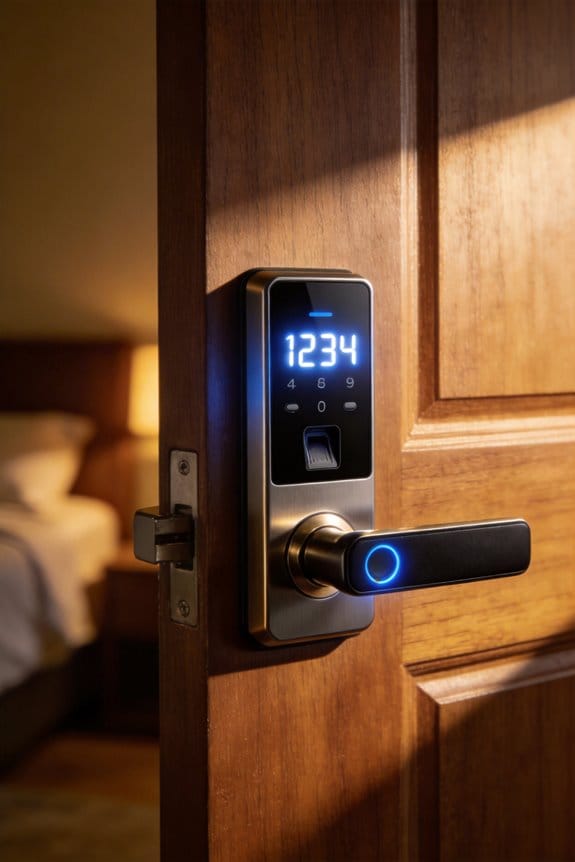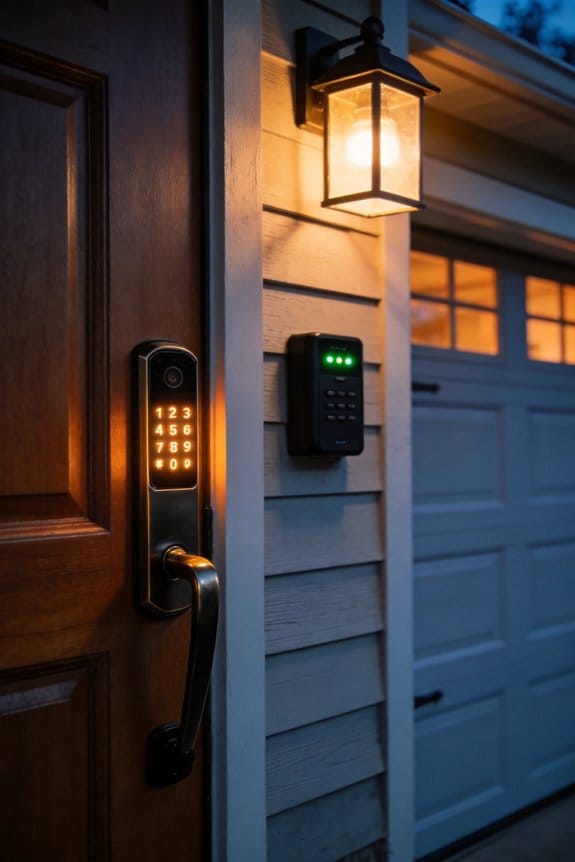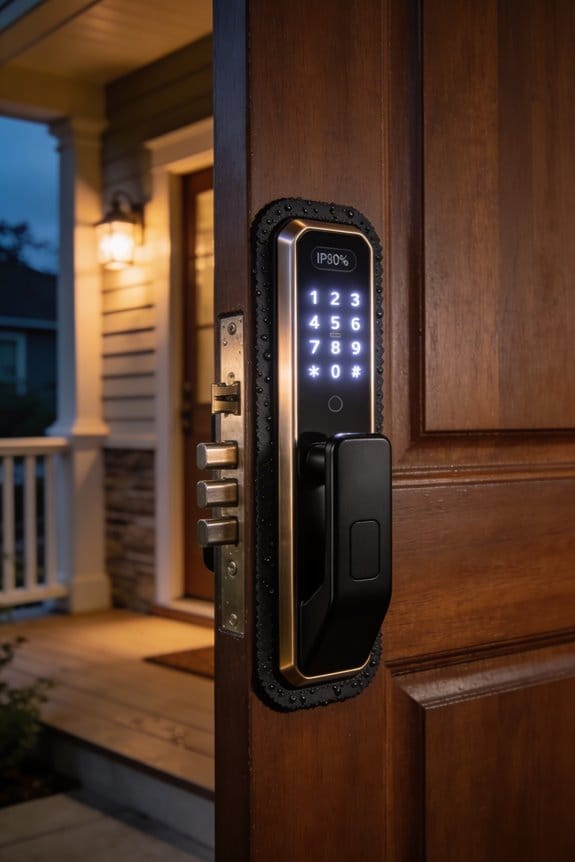
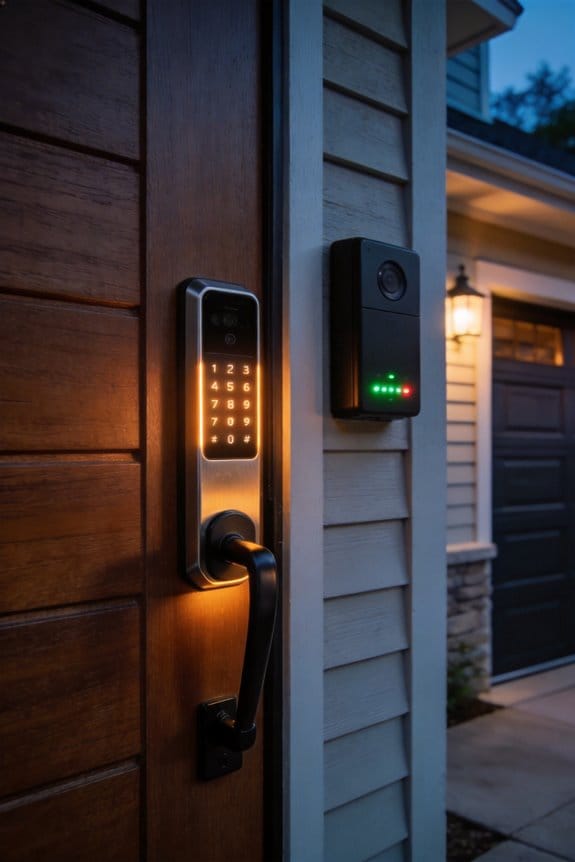

Hidden mechanical smart locks like the Level Lock ($249) and Level Lock Pro ($349) conceal their stainless steel and brass mechanisms within door frames, eliminating visible hardware while maintaining BHMA AAA security certification through rigorous drilling, picking, and forced-entry testing. These retrofit designs accommodate standard 1.75-inch door thickness, require no major renovations, and feature concealed keyholes for manual backup access. With approximately one-year battery life and magnetized strike plates providing door-status alerts, they deliver modern minimalism without compromising security. Explore the technical specifics that determine whether hidden frame locks suit your installation.
Key Takeaways
- Hidden mechanical smart locks like Level Lock ($249-$349) conceal hardware within door frames for aesthetic appeal without sacrificing security.
- BHMA AAA certification ensures these locks meet rigorous security standards through independent testing for drilling, picking, and forced entry resistance.
- Retrofit designs eliminate major renovations, allowing homeowners to upgrade existing deadbolts or install completely hidden mechanisms with minimal modifications.
- Concealed keyholes provide manual backup access during power failures, while battery life of approximately one year prevents unexpected lockouts.
- Minimalist design integration appeals to homeowners prioritizing modern aesthetics while maintaining advanced smart home technology and future UWB compatibility.
Why Invisible Smart Locks Are Replacing Bulky Deadbolts
Tired of staring at that massive deadbolt every time you walk through your front door? You’re not alone. More homeowners are ditching the chunky hardware that dominated security for decades, and it all comes down to one simple desire: smart locks that don’t look like an eyesore.
Invisible smart locks are filling this gap by hiding all the tech inside your door frame instead of slapping it on the outside for everyone to see. The Level Lock ($249) and Level Lock Pro ($349) are solid examples—they use stainless steel and brass construction to blend seamlessly with your existing door setup. Both retrofit onto standard doors without any major renovation headaches.
So, why does this matter? Because honestly, you shouldn’t have to choose between security and style. These locks use precision-geared motors backed by 10 electro-mechanical patents, which means they’re built tough. They carry BHMA AAA security ratings, so you’re getting legitimate protection, not just a pretty facade.
The best part is reliability during power outages. With emergency access features built in, you won’t get locked out if your system fails. Here’s the trick: the minimal footprint means your original door hardware stays intact, so upgrading your security doesn’t mean redesigning your entryway.
Bottom line? If you want smarter locks without the bulky appearance taking over your home’s look, these concealed options deserve a serious look. What’s holding you back from making the switch?
Recommended Products

[4-in-1, No Separate Base Required] Seamlessly combines palm vein & fingerprint smart lock, crystal-clear 2K 180° true panoramic camera, smart video doorbell with night vision, and built-in AI hub with 32GB local storage, no extra hub needed, no monthly fee

MULTIPLE UNLOCKING METHODS - Lockly smart door lock offers a variety of unlocking methods: video camera two-way audio, fingerprint, APP remote control, patented keypad, for Alexa/Google voice control and physical key, and it also comes with a doorbell feature. You don't need to worry about forgetting your keys anymore.

UNLOCKING METHODS - Lockly smart door lock offers a variety of unlocking methods: video camera two-way audio, fingerprint, APP remote control, patented keypad, Alexa/Google voice control and physical key, and it also comes with a doorbell feature. You don't need to worry about forgetting your keys anymore.
How Hidden Frame Locks Work Without Compromising Security
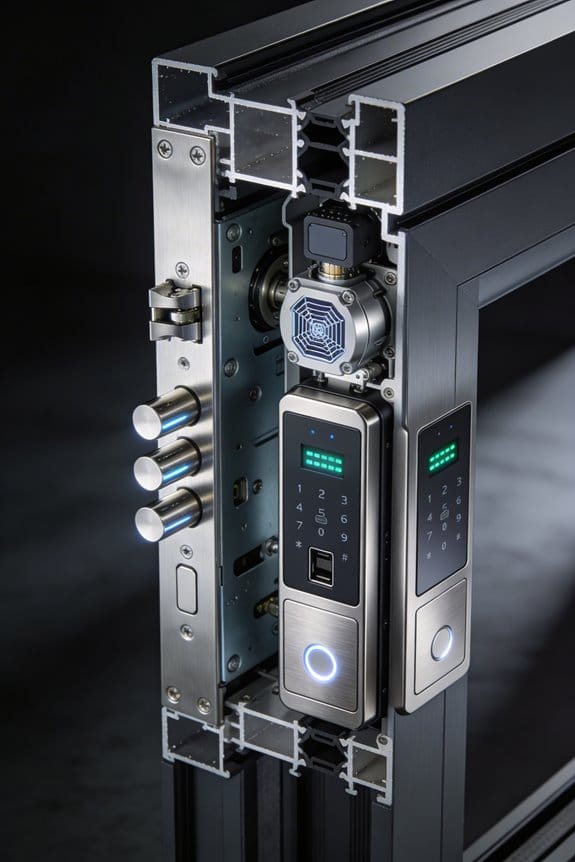
How Hidden Frame Locks Work Without Compromising Security
Ever worried that hiding a smart lock’s guts inside your door frame might actually make your home less secure? Honestly, it’s the opposite. When the mechanics live inside the door structure instead of sitting exposed on the surface, you’re eliminating the weak spots that thieves target—like exposed keyholes and external components.
Here’s how it works: the motor, gears, electronic parts, and battery all tuck neatly into your door frame. Nothing sticks out. Nothing tempts someone to pry. And the best part? This setup still hits BHMA AAA rating, which is the gold standard for security in the industry.
The technical side matters, but here’s what actually impacts your daily life:
The Level Lock Pro ($349) and Level Lock ($249) both use patented release mechanisms that operate smoothly without leaving security gaps. They include magnetized strike plates that detect whether your door is open or closed, so you always know the status. The motion sensors are smart too—they adjust battery drain based on activity, stretching battery life to about a year.
So why does internal placement actually strengthen security instead of weakening it? Complete mechanical concealment means criminals can’t see what they’re trying to bypass. There’s no obvious target, no visible lock body to manipulate. The engineering does the heavy lifting.
Try this: compare a hidden lock to a traditional deadbolt. With an exposed lock, someone knows exactly what they’re up against. With a concealed system, they’re facing blind uncertainty.
The bottom line? Your home’s security and original appearance don’t have to compete. Concealed locks deliver both. Does the idea of a cleaner-looking door while keeping your family safer sound worth exploring?
Will a Frame Lock Work on Your Door? Installation Requirements
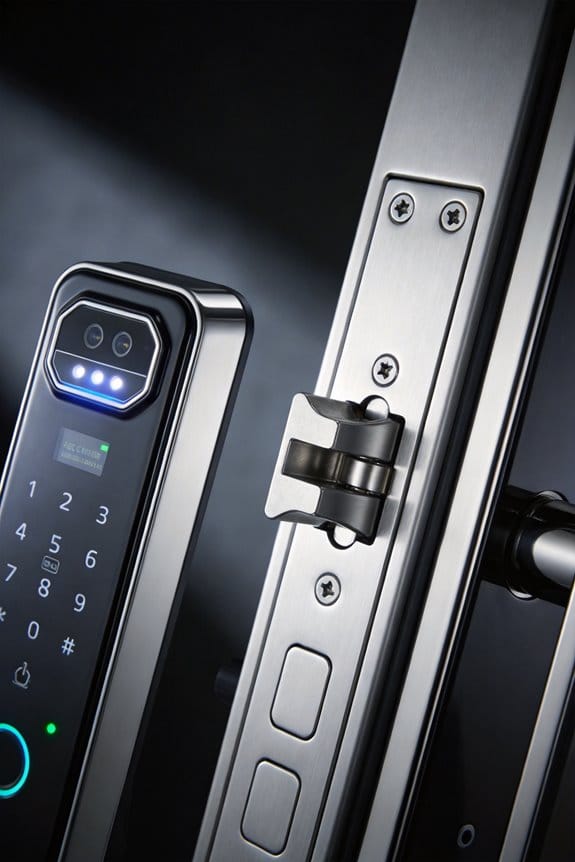
So you’re thinking about installing a smart frame lock, but you’re not sure if your door will actually work with one. That’s a smart question to ask before dropping $200 to $350 on something that might not fit.
The truth is, not every door plays nice with hidden frame locks like the Level Lock ($249) or Level Lock Pro ($349). These models need specific things from your door—certain dimensions, enough depth in the frame, and compatible hardware already in place. Before you buy, you’ll need to measure your frame depth and check if your door is the standard 1.75-inch thickness that works best for interior installation within the frame cavity.
Here’s what makes this tricky: local building codes vary depending on where you live, so what works in one state might not be allowed in another. Frankly, it’s worth checking your local regulations before you commit.
The good news? You’ve got options if your door doesn’t fit the mold:
Retrofit models like the Level Bolt ($199) work with your existing deadbolt, so you don’t have to worry about frame compatibility at all. Yale Smart Mortice Locks come with multiple mounting options, which means they’re flexible enough for most door styles. The Novas Smart Lock**** does demand complete frame integration, though—that one’s not a quick fix and might need professional help.
Why does this matter? Because a frame lock that doesn’t fit properly either won’t function correctly or won’t install at all, and that’s a waste of money and frustration.
Before you purchase anything, grab a measuring tape and check your frame depth. Then pull up the manufacturer’s specs for the lock you’re eyeing and compare them to your measurements. Takes 10 minutes, saves you a headache.
What’s your door situation—do you know if it’s a standard thickness, or is that something you’re about to find out?
Recommended Products

[High-Efficiency Cooling & Heating]: The DELLA ceiling cassette mini split AC provides 42,000 BTU/h, 208-230 V. UL/ETL listed and AHRI certified for safety and performance. With a 22 SEER2 rating, it delivers strong, consistent cooling and heating. The heat pump supports year round comfort, operating even in temperatures as low as -13F (-25C)
High-Efficiency Cooling & Heating: The DELLA ceiling cassette mini split AC provides 42,000 BTU/h, 208-230 V. UL/ETL listed and AHRI certified for safety and performance. With a 22 SEER2 rating, it delivers strong, consistent cooling and heating. The heat pump supports year round comfort, operating even in temperatures as low as -13F (-25C)

[High-Efficiency Cooling & Heating]: The DELLA ceiling cassette mini split AC provides 35,000 BTU/h, 208-230 V. UL/ETL listed and AHRI certified for safety and performance. With a 22.5 SEER2 rating, it delivers strong, consistent cooling and heating. The heat pump supports year round comfort, operating even in temperatures as low as -13 ℉ (-25 ℃).
Why Hidden Keyholes Offer Better Security
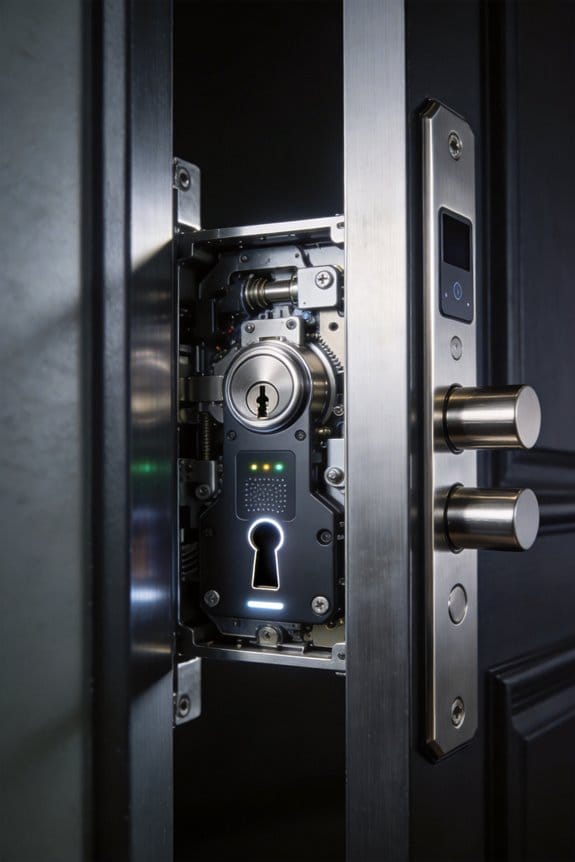
Ever wonder why burglars skip over some doors and target others? A lot of it comes down to whether they can actually see—and reach—the lock.
When a keyhole is hidden, criminals can’t use the usual tricks like picking, bumping, or drilling. They can’t target what’s not visible. The Level Lock Pro ($349) and Level Lock ($249) do this really well. Their design keeps the mechanical parts tucked away inside the door, which means there’s no exposed weak spot for someone to exploit. You get that physical backup access too, which matters when your battery dies or there’s a power issue during an emergency.
Here’s the thing about traditional deadbolts: the keyhole is right there, begging to be attacked.
Yale Smart Mortice Locks take a similar approach by embedding the keyhole directly into the door frame itself. So why does this actually matter? Because it shrinks the number of ways someone can break in. When the easy methods don’t work, intruders have to spend more time and make more noise trying less efficient approaches. That’s usually enough to send them looking for an easier target down the street.
The best part is you don’t lose anything in the trade-off.
Honestly, the mechanical integrity stays strong because there are no gaps or vulnerabilities baked into the design. Your manual override still works perfectly when you need it. You’re not sacrificing security for convenience—you’re actually getting both.
If you’re replacing an old lock, this is worth thinking about: would you rather have the strongest lock on the market, or one that doesn’t advertise its weaknesses?
Why BHMA AAA Certification Matters More Than Brand Name
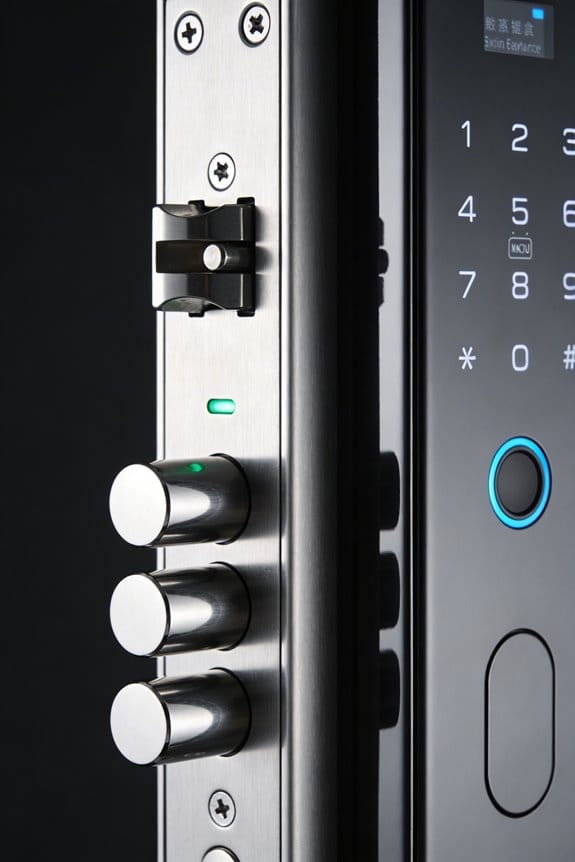
If you’re in the market for a smart lock, you’ve probably seen the big names plastered everywhere—Level, Yale, Novas—and assumed they’re what matters most. Truth is, the real thing that keeps your door actually secure has nothing to do with brand hype. It’s whether that lock has BHMA AAA certification, the highest security rating available. So why does this matter? Because it means the lock has been put through serious, independent testing for drilling, picking, and forced entry—not just marketing promises.
Both Level Lock Pro ($349) and Level Lock ($249) carry this certification. That’s not a selling point some company dreamed up; it’s proof they’ve survived standardized security tests that mimic real break-in attempts under extreme conditions. The certification comes from actual laboratory validation, not a press release.
Here’s the trick: stop chasing brand names and start asking for certification documentation instead. When you see BHMA AAA on the product details, you know what you’re getting—measurable protection backed by independent testing. That’s something you can actually count on, rather than just hoping a fancy brand name keeps you safe.
Frankly, I’ve noticed most people don’t even think to check for this stuff. They buy what looks sleek or what their friend recommended. But the moment you start looking for that certification, suddenly the marketing noise fades away, and you’re left with actual security data.
Your smart lock should prevent unauthorized access—not just look like it might. Does your lock’s certification matter more to you than its name?
Level Lock vs. Level Bolt vs. Novas: Which Fits Your Home?
So you’ve done your homework on security standards—now comes the harder part: actually picking a lock that works with your door and your wallet.
Let me break down what you’re really looking at here. The Level Lock Pro ($349) is built for Apple fans who want the full experience, including that fancy Home Key feature and the ability to see if your door’s open or closed from your phone. If you’re not into all the bells and whistles, the standard Level Lock ($249) does the basics just fine and it’s honestly the smallest option out there—barely noticeable once it’s installed.
Here’s where it gets practical: the Level Bolt ($199) is different because it doesn’t replace your whole lock. It slides into your existing deadbolt instead, which means your door hardware stays matched and looking intentional. That matters if you’re renting or if you care about how things look.
The Novas pull off something sleek—they embed completely into your door frame so you barely see them. Frankly, if aesthetics keep you up at night, that’s worth considering.
So, why does this matter? Because the “best” lock isn’t about fancy features—it’s about what actually fits your situation. Think about three things: Can it physically install on your door type? Do you need to keep your old hardware? Will you actually *use* the extra stuff like contact sensors or fingerprint access, or are you paying for features you’ll ignore?
The real move is matching the lock to your door setup and your real needs, not chasing specs you don’t need.
Recommended Products

The wall mount garage opener mounts discretely on the wall next to the garage door, increasing the functional space in the garage.Note: Measure your door's backset, cross bore and thickness to ensure you find the right fit.

Works with Amazon Alexa for voice control (hub required, Alexa device and hub sold separately)

Ultra-Quiet Garage Door Operation: Enjoy peaceful performance—near‑silent, low‑vibration operation is ideal for homes with attached garages or living spaces nearby. Built for long‑lasting reliability, it delivers powerful performance without the noise—perfect for refreshing an older garage system with a modern, quiet solution.
How Long Do Concealed Smart Lock Batteries Last?
How Long Do Concealed Smart Lock Batteries Last?
Ever wonder why your smart lock dies at the worst possible time? It turns out that battery life is one of those things you really need to understand before buying—because a dead lock is basically useless, no matter how fancy the technology is.
Level Lock makes some solid options here. Their Pro model ($349) and standard version ($249) both have batteries tucked inside the bolt tube that power a precision motor. In real-world use, you’re looking at roughly one year before you need a replacement. The $199 Level Bolt retrofit? Same battery performance. That’s actually pretty decent if you think about it—a year means you’re not constantly worried about power.
Yale Smart Mortice Locks take a similar approach, and honestly, they’ve figured out some smart power management tricks. Here’s the thing that makes the difference: motion sensors. Instead of constantly running, these locks only activate when they actually detect movement. So what does this accomplish? It cuts down on battery drain significantly.
Keeping tabs on your battery health is straightforward. Your companion app sends you alerts before things get critical, which means you won’t get locked out by surprise. Try this: set a calendar reminder every six months to check your app. That’s all it takes to stay ahead of problems.
The best part is that swapping out batteries isn’t complicated at all. When the time comes, replacement procedures are pretty quick and painless. Your security stays solid without any headaches.
What’s your biggest concern with smart locks—is it the upfront cost, or does battery maintenance feel like too much hassle?
What Happens If Your Frame Lock Loses Power: Backup Access Explained
What Happens If Your Frame Lock Loses Power: Backup Access Explained
Ever been locked out because your smart lock died at the worst possible time? Yeah, that’s a real concern—but here’s the good news: manufacturers like Level and Yale actually thought this through. They built mechanical backup systems right into their locks so you’re not stuck outside in the cold.
The hidden mechanical keyhole is your lifeline when the power goes out. You just use your physical key to get inside, simple as that. Level Lock Pro ($349) and Level Lock ($249) both have concealed keyholes that only you can access with your key—which means criminals can’t just pick a visible lock, and you still get emergency entry when you need it. Yale Smart Mortice Locks do something similar, combining their electronic smarts with solid mechanical backups.
So, why does this matter? Because real life happens. Circuit failures occur. Fires damage electronics. Batteries die at 2 AM. These backup systems make sure none of that leaves you locked out for good.
Try this: Before you install a smart lock, ask the manufacturer specifically about their backup access method. Make sure it’s actually accessible to you and that you understand how to use it. The best part is that most quality smart locks treat this redundancy seriously—it’s not an afterthought, it’s built in from the start.
Honestly, knowing you’ve got a mechanical fallback takes a lot of stress out of the smart lock experience. You get the convenience of keyless entry without gambling on battery life or technology glitches.
What’s your biggest worry about switching to a smart lock—is it the backup access, or something else entirely?
Install a Frame Lock Without Replacing Your Deadbolt
You don’t have to rip out your entire deadbolt to go smart. I know that’s what most people think, but it’s actually not true anymore.
Retrofit smart locks like Level Bolt ($199) and some Yale models let you keep your existing deadbolt right where it is. The installation is straightforward—you access the inside of your door, slide the retrofit mechanism into your current deadbolt housing, and you’re done. Your original hardware stays put.
Why does this matter? Well, frankly, it saves you money and keeps your door looking consistent with the rest of your home. You’re not dealing with mismatched hardware or that awkward gap where your old lock used to be.
Level Bolt’s design is what makes this work so smoothly. The battery sits inside the bolt tube itself, so there’s no mess of loose wires or connectors hanging around. Yale’s mortice lock options give you similar flexibility depending on your door setup. Here’s the trick: these systems were built with standard door frames in mind, so compatibility usually isn’t a headache.
The best part is what you actually get to do. You’ll still have app control, keypad entry, and fingerprint access—all the smart features you want. Your old deadbolt just sits there, doing its job, while the retrofit handles the heavy lifting.
Think about it this way: if you ever need to go back to a traditional lock, you can. That flexibility alone makes retrofit options worth considering before you start swinging a crowbar at your door.
Recommended Products

Guaranteed to fit on existing, standard pre-drilled doors

ANYWHERE ACCESS: With built-in WiFi compatibility, you can easily and securely connect your Schlage Encode Plus lock to your home WiFi network to control and monitor your home from anywhere with the Schlage Home app

【8-in-1 Unlock】This smart deadbolt offers 8 unlocking methods: palm vein, 3D face recognition, voice control, fingerprint, PIN, IC card, mobile app, and physical key. It supports up 300 user profiles. Versatile access, keyless convenience.
Making the Switch: When Hidden Frame Locks Make Sense for Your Home
Making the Switch: When Hidden Frame Locks Make Sense for Your Home
So you’re standing in front of your door wondering if a hidden frame lock is actually worth the hassle. The truth is, it comes down to three things: whether your door can handle it, what your home actually looks like, and where you’re heading with smart home stuff down the road.
Let me be honest—if you care about how your place looks, hidden locks do make a real difference. A visible smart lock can feel clunky on a sleek modern door, and it’s something you’ll notice every single day. The Level Lock ($249) and Level Lock Pro ($349) slip right into standard frame doors without any visible hardware sticking out. Your door stays clean. Your design stays intact.
Now, retrofitting isn’t some nightmare scenario. The Level Bolt ($199) keeps your existing keys working while adding smart features on top. That’s helpful if you’ve got a lock you already like but want to add modern convenience.
Here’s what matters most: your door’s guts. You need a frame that can fit precision motors and those magnetized strike plates. Not every door is built the same way, so you’ll want to check before you buy anything.
Frankly, this comes down to what bothers you less—seeing a visible tech gadget every time you walk in, or spending extra money to hide it. If you’re planning to use Apple Home Keys or you’re curious about future UWB support, then going the hidden route makes sense. You get solid security without the visual clutter.
Does your home lean toward minimalist design, or are you fine with smart tech showing? That answer pretty much tells you everything.
Recommended Products

【Spacious 9-Seat U-Shape Converts to a Large Sleeper】Ideal for generous entertaining. This 9-seat U-shaped sectional offers plush 33.5”D x 33.5”W x 18.5”H seats. It quickly converts into a generous 105" D x 111" W sleeper (using 9 seats, 9 backrests, 9 pillows), perfectly transforming your living room or dedicated home theater into an instant guest room

Fully Removable & Washable Covers for Easy Care: Designed to keep up with real life, all covers, including the armrests and base, are fully removable and machine washable. Whether you’ve got kids, pets, or just the occasional spill, this sofa is easy to keep fresh and clean

💡Sectional Modular Convertible Sofa: Detachable modules transform into L-shaped, U-shaped, or full-size sleeper beds. Lightweight for easy assembly and moving. Add/swap seats & ottomans any time. Perfectly fits any space, transitioning from chic lounge to overnight guest bed.
Frequently Asked Questions
Can Hidden Frame Locks Integrate With Existing Smart Home Systems Like Google Home or Alexa?
I’ll tell you what’s possible, what’s limited, and what’s coming next. While some hidden frame locks support Apple Home Keys, I’ve found Google Home and Alexa integration presents challenges. Most models don’t currently offer full smart home compatibility with these platforms.
Are Concealed Smart Locks More Expensive to Repair or Replace Than Traditional Deadbolts?
I’d say concealed smart locks typically cost more upfront than traditional deadbolts, but repair costs and replacement factors depend on your specific model. Level locks offer affordable retrofit options starting at $199, while higher-end models provide better long-term value through durability.
How Do Hidden Keyholes Prevent Moisture and Debris From Entering the Lock Mechanism?
I’ll explain how hidden keyholes protect your lock. They’re recessed within the door frame, shielding the mechanism from direct exposure to moisture and debris. This design considerably enhances lock durability by minimizing environmental contaminants that could compromise performance.
What Is the Warranty Coverage and Lifespan of Level Lock and Novas Products?
I’ve found that Level Lock batteries last up to a year, which means you’re looking at minimal maintenance hassles. While I don’t have specific warranty details in my knowledge base, I’d recommend contacting the manufacturer directly for exact product lifespan and warranty coverage information.
Can Frame Locks Be Installed on Rental Properties Without Landlord Permission or Permanent Modifications?
I’d strongly advise against installing frame locks without explicit landlord permission. Most rental agreements prohibit modifications, and these locks involve structural changes. Always review your lease’s landlord rules and get written approval before installing any smart lock system.