
Smart pet doors use microchip scanning or RFID collar detection to grant access exclusively to registered pets, blocking wildlife through directional sensors and locked barriers that withstand forced-entry attempts. You’ll schedule access windows via smartphone apps, receiving real-time entry/exit logs with timestamps. Microchip systems work with FDX-B, FDX-A, and AVID formats; collar keys offer flexibility for multiple pets. Battery life varies—medium doors use 4 C-cell batteries, larger models require 4 D-cell batteries. Models like SureFlap and PetSafe SmartDoor undergo rigorous durability testing. The specifics of sizing, compatibility, and performance optimization reveal substantial advantages worth exploring.
Key Takeaways
- Smart pet doors use microchip scanning or RFID collar detection to grant access only to registered pets while blocking unauthorized animals.
- Scheduling features allow owners to set specific times for pet access, functioning as a virtual bouncer for outdoor freedom control.
- Wildlife prevention systems employ directional sensors and locked mechanisms to effectively keep unregistered animals out while maintaining pet safety.
- Remote monitoring via smartphone apps enables real-time activity logs, tracking every entry and exit with precise timestamps for pet movements.
- Battery-powered systems support various pet sizes from cats to large dogs, with extended battery life reducing energy consumption and costs.
Why Smart Pet Doors Matter: Control, Safety, and Peace of Mind
Got a pet who treats your back door like their personal revolving entrance? Yeah, I’ve been there. Smart pet doors actually solve this problem in ways that regular doors just can’t touch.
The real magic is in the control. With microchip identification and RFID collar detection, you’re not just opening a door—you’re deciding exactly when your pet gets to come and go. Want to lock things down completely? You can. Need them inside-only on certain days? Done. The scheduling feature lets you set specific times, so your cat isn’t sneaking out at 2 a.m. when you’re asleep.
Here’s the trick: those directional sensors and electromagnetic locks keep the unwanted guests out. Raccoons and feral cats won’t be able to waltz through like they own the place. Your pet gets safe passage; everyone else gets blocked.
The curfew function is honestly one of the best parts. Your pet can head outside freely, but the door locks once they try to come back in without the right ID. No more worrying about other animals following them inside while you’re distracted.
So, why does real-time tracking matter? Because you’ll actually know what’s happening. The app shows you every entry and exit, complete with timestamps. You’re not just guessing whether your pet went out—you’ve got the proof right there on your phone.
Frankly, the peace of mind alone makes these doors worth considering. You sleep better knowing exactly who’s in your house and when.
Ready to stop playing the guessing game with your pet’s outdoor time?
Microchip vs. Collar Keys: Which Access Method Is Right for Your Pet?
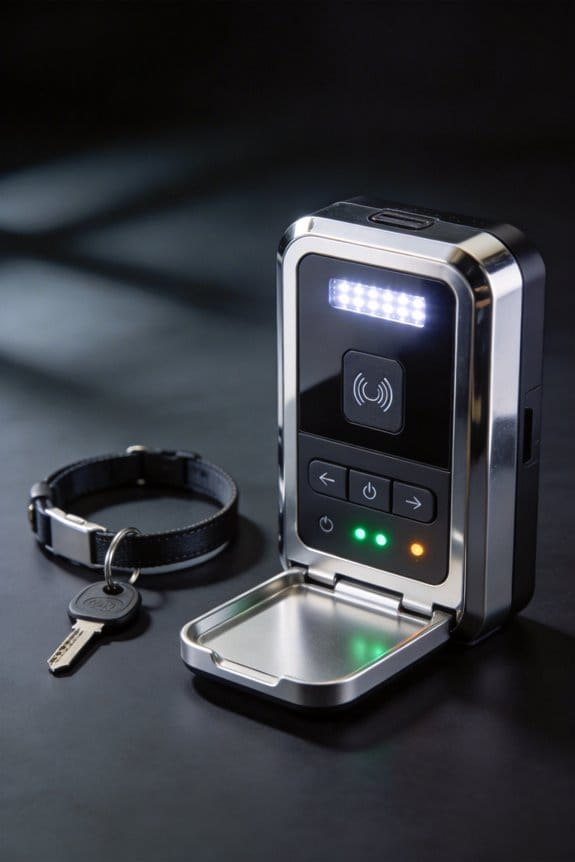
Microchip vs. Collar Keys: Which Access Method Is Right for Your Pet?
So you’re standing in front of your pet door options, wondering which one actually makes sense for your situation. The truth is, there’s no one-size-fits-all answer—it really comes down to what works for your specific pet and home setup.
Microchips: The permanent solution****
If you go with a microchip, you’re getting permanent ID that works with most major formats (FDX-B/15 Digit, FDX-A/10 Digit, AVID H, and AVID Encrypted). No batteries to worry about. No backup collar sitting in a drawer. The chip stays with your pet for life. Why does this matter? Because it means one less thing you’re managing day-to-day.
The catch? Medium-sized doors work best with implanted chips, so if you have a larger dog, you might hit some limitations.
Collar keys: More flexibility for certain situations
Collar-based systems give you options. RFID tags don’t need batteries at all and stay pretty compact. Battery-powered versions use ultrasonic activation, which some people prefer. PetSafe SmartDoor actually lets you use your existing collar with their Pet Door Key technology—handy if you’ve got multiple pets with different needs.
Honestly, collar systems handle larger animals way better than microchip doors do.
What actually matters for your choice
Think about three things: your pet’s size, whether they swim regularly, and how many pets you’re dealing with. A cat that stays indoors? Microchip makes sense. A big dog or a multi-pet household with varied sizes? Collar keys might save you headaches.
The best part is you don’t have to overthink this. Pick the one that fits your pet’s lifestyle, and you’ll be fine. Which setup sounds more realistic for your home right now?
Recommended Products

Perhaps, the Most Important Innovation in the History of Pet Doors: Revolutionary, new patented panel is strong and rigid when closed but its interlocking segments pivot so it may be rolled up into a small compartment in the stylish casing. This saves vertical space making the door easy to install in tight vertical spaces, under window sills, in external doors with transom glass, anywhere vertical space is limited. Power Pet Roll Up is the Ultimate in Quality and Performance.

Designed for use with genuine High Tech Pet MS-5 ultrasonic collars. Power Pet door performance warranty only applies when operated with authentic MS-5 transmitters.
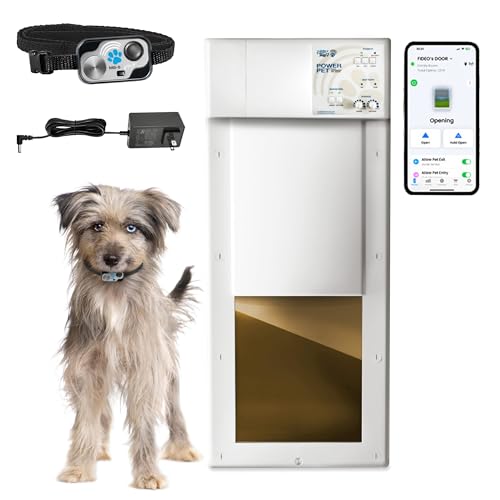
Designed for use with genuine High Tech Pet MS-5 ultrasonic collars. Power Pet door performance warranty only applies when operated with authentic MS-5 transmitters.
How Microchip Doors Work: Technology and Compatibility
Once you’ve picked out a microchip door for your pet, it’s worth taking a few minutes to understand how the thing actually works. Honestly, it’s not as complicated as it sounds.
The basic setup is pretty straightforward. Your pet has a microchip (either implanted or on a collar tag), and the door has a scanner. When your cat or dog approaches, the scanner reads the chip data in a few seconds and triggers a small electromagnetic lock that opens the door. That’s it.
Now, about compatibility—this is where things get a little tricky. The system works with several common microchip formats: FDX-B (15 digit), FDX-A (10 digit), AVID H, and AVID Encrypted. So why does this matter? Because not every door reads every format equally well. Before you buy, check which standards your pet’s current chip uses.
Here’s the thing about pet types: these doors work best for cats and small dogs. Medium-sized doors pair effectively with cat microchips, but if you’ve got a large breed dog? You’re looking at limited options. The good news is that the system can handle multiple microchips, so it’s actually solid for multi-pet households.
Try this: test the scanner’s range before installation. Most read chips within seconds, but placement matters. The door needs to be positioned so your pet’s chip passes close enough to trigger the scan.
Truth is, the reliability is consistent. In my experience, these systems perform well in standard home setups without constant glitches or false readings. That confidence comes from straightforward technology—no unnecessary bells and whistles.
Recommended Products

Designed for use with genuine High Tech Pet MS-5 ultrasonic collars. Power Pet door performance warranty only applies when operated with authentic MS-5 transmitters.

TEXTURED FROSTED FLAPS – By default, Hale Pet Doors come with textured, frosted-look flaps, not clear flaps. This offers added privacy, helps hide wear, and requires less maintenance. Screen models include a single flap, while Door and Wall models include double flaps.
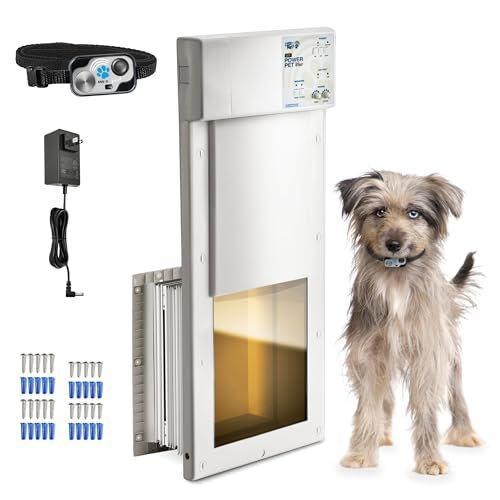
Designed for use with genuine High Tech Pet MS-5 ultrasonic collars. Power Pet door performance warranty only applies when operated with authentic MS-5 transmitters.
Keeping Wildlife Out: RFID and Microchip Security
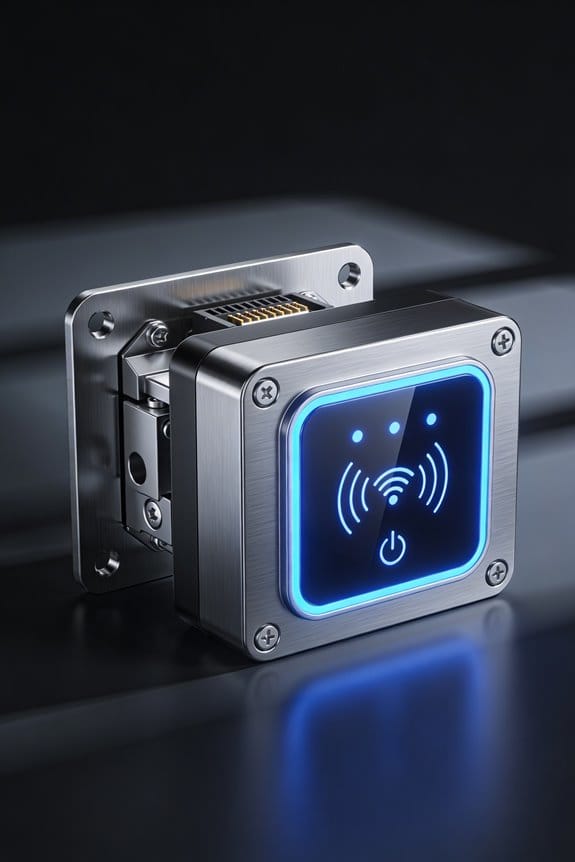
Keeping Wildlife Out: RFID and Microchip Security****
Tired of raccoons pushing through your pet door like they own the place? Traditional flaps don’t stand a chance against determined wildlife, but smart doors with microchip or RFID technology actually work. They lock out any animal that doesn’t have a registered chip or tag, so only your pets get through.
Here’s how it works: Microchip systems read the 15-digit or 10-digit codes implanted in your pet and deny entry to anything else. RFID collar tags do the same thing—when your cat or dog wearing the tag gets close to the sensor, the electromagnetic lock triggers and opens. So why does this matter? Because your pet gets the convenience of a pet door while you get real protection from strays and wildlife trying to sneak in.
Directional sensors add another layer of control. They’re set up so the door only opens toward the inside, which cuts down on false alarms from animals just passing by your door. It’s a small feature that makes a big difference in keeping unwanted visitors out.
The durability factor is worth mentioning too. Models like the Pawport have been tested against forced-entry attempts, and they hold up. You’re not dealing with a flimsy plastic door here—this is built to withstand repeated pressure from persistent intruders.
Honestly, the biggest advantage is ditching those mechanical flaps altogether. Raccoons and feral cats can pry them open or squeeze past them with enough effort. Microchip and RFID systems create a permanent barrier that wildlife can’t manipulate, no matter how smart they think they are.
Your registered pets come and go freely. Everything else stays out. That’s the real benefit.
Recommended Products

Designed for use with genuine High Tech Pet MS-5 ultrasonic collars. Power Pet door performance warranty only applies when operated with authentic MS-5 transmitters.

Smart app-controlled microchip pet door
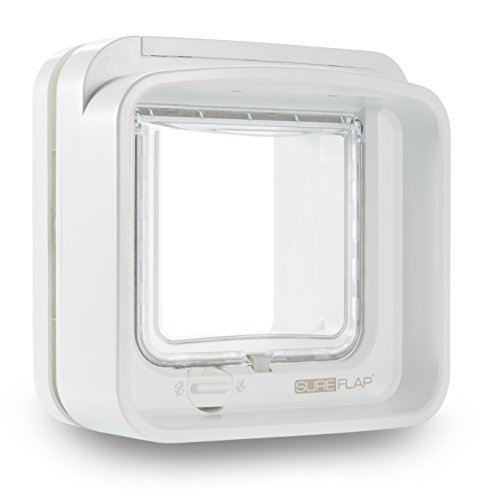
Compatible with all common microchips - works with your cat's existing microchip to keep out intruder cats and wildlife
Set Curfew Schedules and Monitor Your Pet Remotely
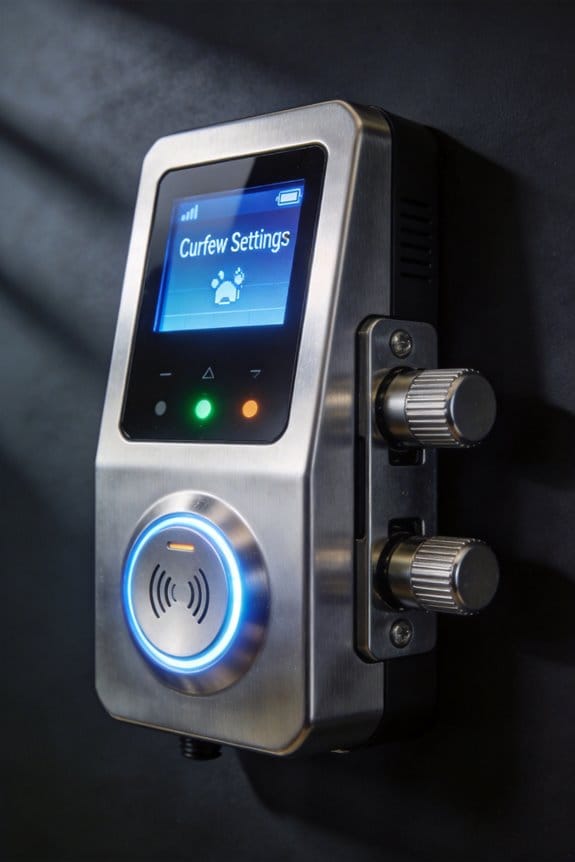
Set Curfew Schedules and Monitor Your Pet Remotely
Ever wonder what your pet’s doing while you’re at work? Or worry about them sneaking out at 2 AM? Smart pet doors solve both problems by letting you control when your pet can come and go—straight from your phone.
SureFlap’s system gives you real control over access. You can lock the door completely, allow only indoor time, let them out during the day, or set it to in-only mode at night. Think of it like a bouncer at your pet’s personal club—entry depends on the time and the rules you set. The Sure Petcare Hub app shows you exactly when your pet moves in and out, plus activity logs so you can spot patterns.
PetSafe SmartDoor works similarly with timed access built right in. What’s nice is you don’t need to be home to adjust things. If your schedule changes or the weather gets bad, you can lock or unlock the door instantly from anywhere. No more rushing home wondering if Fluffy got stuck outside.
Here’s the trick: these systems stop unwanted midnight adventures without actually caging your pet. Why does this matter? Because your cat or dog can still enjoy daytime freedom while you sleep soundly knowing they’re safely inside. The door automatically locks when animals it doesn’t recognize try to enter—so stray cats or raccoons stay out of your home.
Frankly, the app integration transforms a simple pet door into something smarter. You get behavioral insights, wildlife protection, and security all in one system based on actual data about who’s coming and going.
Recommended Products

REVOLUTIONARY NEW DESIGN: Features an ingenious new flap made of rigid segments that pivot to roll up into a beautiful compact housing. Mount nearly anywhere, even in areas with limited vertical space.

Revolutionary New Compact ROLL UP design. Panel Rolls Up and Disappears Behind the Unit to Provide Maximum Opening in Minimum Space. The Ultimate in Quality and Performance.

WITH WIFI RFID SENSOR AND TAGS FOR PETS,DISABLED:The automation door opener comes with smart wifi sensor and wireless tags,which can be wear or tied on pets,wheelchair,pocket,etc,When tags approaching sensor door opener,door open automatically.
Sizing, Battery Life, and Durability: What Lasts
Sizing, Battery Life, and Durability: What Lasts
Picking the right smart pet door means thinking about more than just whether it’ll recognize your cat’s chip. You’ve also got to consider the physical size, how long the batteries last, and whether the thing will actually hold up when your dog decides to test its limits.
Battery power depends on your door’s size. Medium doors typically need 4 C-cell batteries, while the bigger models run on 4 D-cells to keep things going longer. If standard batteries aren’t your thing, adaptor options exist so you can hook up alternative power sources instead.
Durability is where brands like SureFlap and PetSafe SmartDoor really prove themselves. Both have passed rigorous durability tests, including forced-entry scenarios that actually confirm their construction holds up. Pawport took it a step further—they published extreme security testing results that show how well they resist intrusion attempts. So, why does this matter? Because a smart pet door is only smart if it actually protects your home while letting your pet in and out freely.
Size compatibility spans from small cats to large dogs. If you’ve got a large cat or small dog, the SureFlap Microchip Pet Door Connect fits the bill. Battery life shifts based on how often the door gets used and what the weather’s like where you live. The best part is that electronic seals pull way less power than old-fashioned mechanical flaps, which means your batteries last longer and your bills stay lower while your home stays secure.
What matters most to you—battery life, durability, or perfect sizing for your pet?
Recommended Products

Seamless Crossing Over Door Tracks: Navigate through steps and door thresholds effortlessly. With the ProLeap system, L50 Ultra lifts its retractable legs to 6cm high, ensuring smooth and obstacle-free gliding.

Hands-Free Floor Care, Smarter Every Day: Meet the most advanced robot for large homes. X11 combines PowerBoost GaN fast charging, self-washing roller mops, bagless auto-emptying, and the YIKO Agent that learns your habits to clean smarter—so you never lift a finger.

Revolutionary New Compact ROLL UP design. Panel Rolls Up and Disappears Behind the Unit to Provide Maximum Opening in Minimum Space. The Ultimate in Quality and Performance.
Frequently Asked Questions
Can Microchip Pet Doors Work With Multiple Pets Having Different Microchip Formats?
I’ll tell you—just as your pets happen to wear different collar styles, microchip doors handle this perfectly. They’re compatible with multiple formats like FDX-B and AVID, supporting microchip compatibility across multi-pet households through generous memory capacity for several chips.
Do Collar-Based Pet Doors Work for Pets That Swim Frequently or Get Wet?
I’d recommend RFID collar tags over ultrasonic options for your swimming pets. RFID tags don’t need batteries and offer better waterproof technology, making them ideal for frequent swimmers. Ultrasonic collars require regular battery checks and aren’t suitable for water-loving pets.
What Happens if the Battery Dies on a Smart Pet Door?
Oh, you’ve discovered smart pet doors’ dirty little secret! When your battery dies, I’ll tell you—your pet’s locked out. Here’s what saves you: battery replacement options exist, and you’ll need emergency exit plans like manual overrides or backup power adapters.
Can Pawport Be Installed on Sliding Glass Doors or Window Openings?
I’d recommend checking Pawport’s specific installation options, as the knowledge provided states it mounts on existing doors but doesn’t explicitly confirm sliding glass door compatibility. You’ll want to contact the manufacturer directly about your sliding door or window opening plans.
How Often Should I Replace Batteries in Electronic Pet Door Systems?
I’d say your pet door’s “energy heartbeat” needs revitalizing roughly every 12 months. Most systems use C or D-cell batteries with a standard replacement schedule, though I’d recommend checking your battery life quarterly to guarantee uninterrupted access for your furry friend.