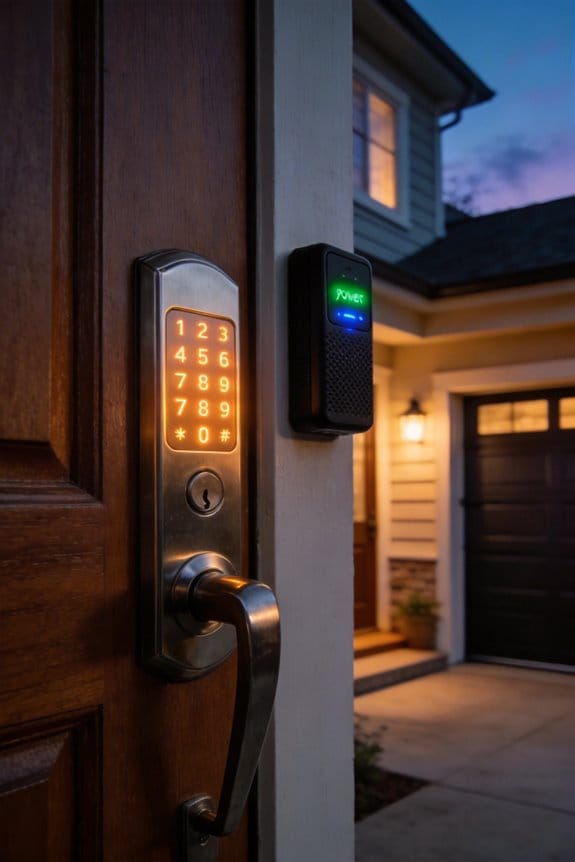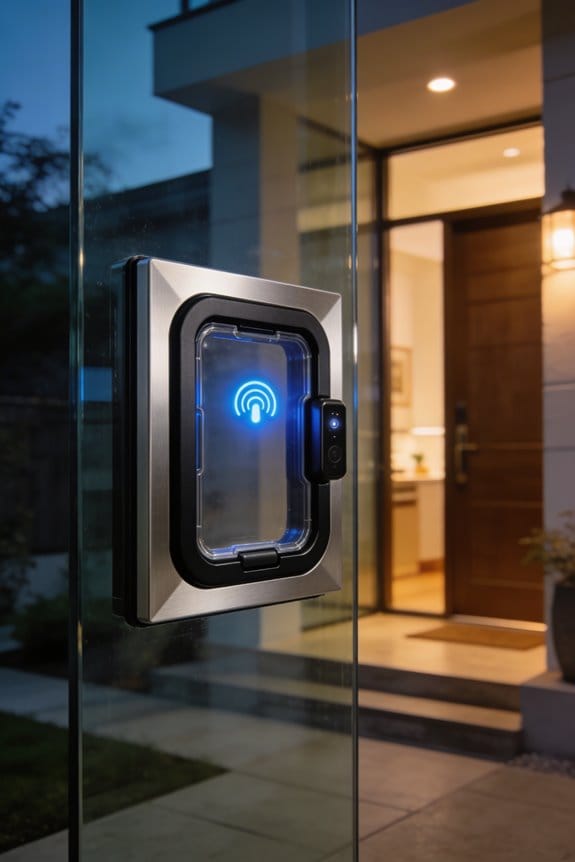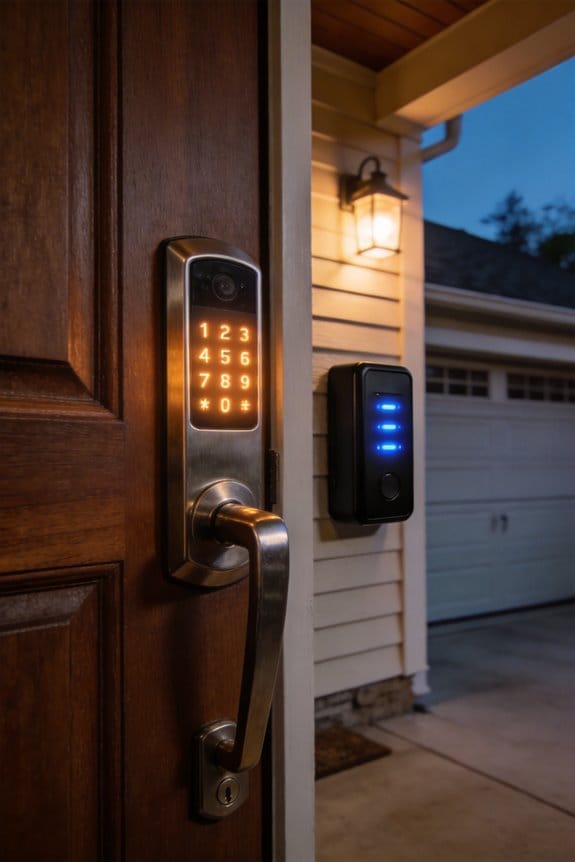
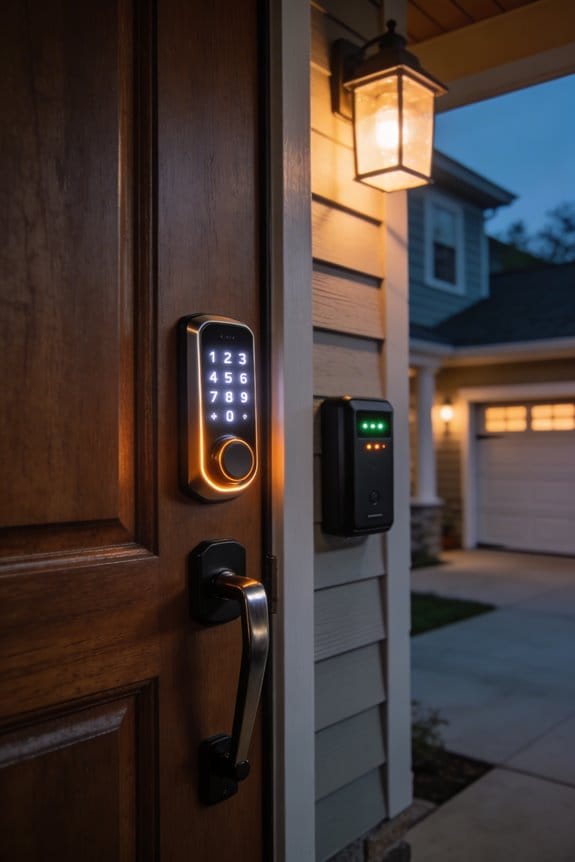

Retrofitting sliding glass doors with smart locks requires engineering around fundamentally incompatible mechanics: standard deadbolts rotate vertically, while sliding doors move horizontally, creating misalignment issues. Non-standard bolt hole spacing, typically 3-inch configurations, and structural frame differences demand specialized mechanisms like drop bolts or magnetic locks instead. Installation complexity varies—DIY retrofits take 30–60 minutes with proper tools, though professional installation adds $250 labor costs. Battery-powered systems last 6–12 months, requiring regular maintenance checks. Understanding these mechanical constraints reveals why drop bolts and magnetic locks dominate this application, and further exploration uncovers cost-effective solutions tailored specifically to your door type.
Key Takeaways
- Standard smart locks designed for rotating deadbolts misalign with sliding glass door mechanisms, requiring alternative systems like drop bolts or magnetic locks.
- Non-standard 3-inch bolt hole spacing on sliding glass doors complicates retrofit installation, often necessitating professional help costing around $250.
- Retrofit smart locks depend on rechargeable batteries lasting 6–12 months, requiring regular maintenance checks to ensure consistent functionality and security.
- WiFi connectivity dependency for remote access poses reliability concerns; Z-Wave or Zigbee protocols and hardwired options provide backup solutions for consistent operation.
- Installation complexity demands careful consideration of available space, power availability, and mechanical setup differences between sliding and hinged door systems.
Why Sliding Glass Doors Won’t Accept Standard Smart Locks
Thinking about upgrading to a smart lock but you’ve got sliding glass doors? Yeah, that’s where things get tricky.
Here’s what’s actually happening: sliding glass doors work completely differently than the hinged doors smart locks are built for. Instead of a rotating deadbolt, these doors slide horizontally, which means standard smart locks just won’t fit the way they’re designed. The bolt hole spacing, the frame width, the whole mechanical setup—it’s all different.
Manufacturers engineer smart locks around hinged door specifications because that’s the market. When you try to force a traditional smart lock onto a sliding glass door, you’re running into compatibility problems that go beyond just “it looks weird.” The hardware doesn’t line up. The mounting points don’t exist. It’s frustrating.
So what does a sliding glass door actually need? Think about it this way: these doors rely on drop bolts or magnetic locks with metal alignment strips to secure properly. Those components don’t show up in your standard smart lock. You’re dealing with a completely different system.
The good news? You’re not stuck with an unsecured door. Retrofit solutions exist that let you keep your existing exterior deadbolt while upgrading the interior components. Specialized options like the Smart Door Lock Slim are designed specifically for narrow frames and tight spaces where regular deadbolts can’t fit. Try this: have a professional take a look at your door’s specific setup first. Every sliding glass door is a little different, and you’ll want to know what you’re working with before you buy anything.
Honestly, it’s worth the extra step to get the right fit rather than forcing something that doesn’t belong.
Retrofit vs. Full Replacement: Which Option Solves Your Door?
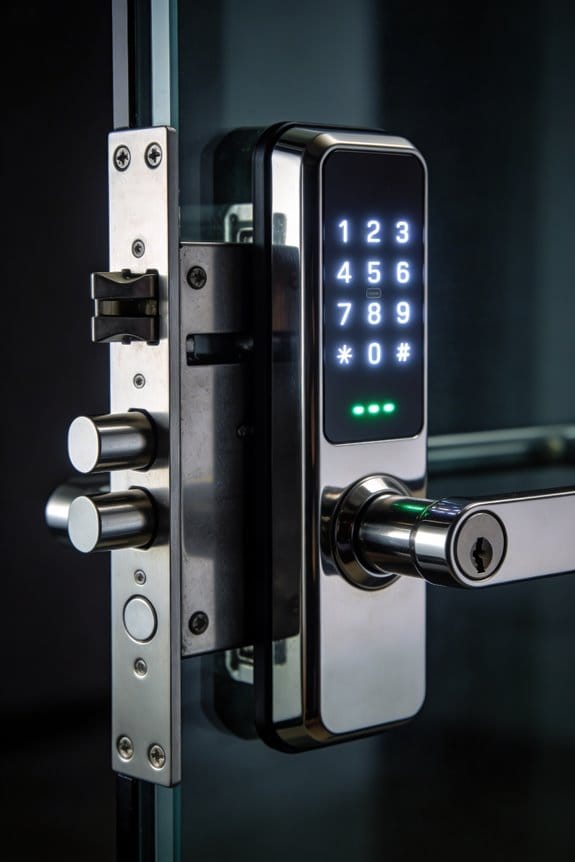
So you’ve checked everywhere, and your sliding glass door just won’t play nice with standard smart locks. Now you’re stuck deciding between two paths: upgrade what you’ve got or tear it all out and start fresh. Let me break down what actually matters here.
The Retrofit Route (The Budget-Friendly Pick)
Going the retrofit route means keeping your existing deadbolt on the outside and adding smart components on the inside—think of something like the Encode Plus. You’re looking at $150–$400 total, and if you’re handy, you can knock it out in 30 to 60 minutes yourself. The best part? You’re not drilling holes in your frame or making permanent changes. Honestly, this is why renters love this approach. You get smart lock benefits without landlord drama.
Full Replacement (The Nuclear Option)
Here’s where things get expensive and messy. Swapping out the entire door assembly means calling a professional, spending $2,000–$5,000, waiting days for installation, and potentially dealing with structural work around your frame. So, why does this matter? Because most people don’t realize what “structural modifications” actually means until the contractor shows up.
But—and this is important—replacement does solve everything at once. You won’t have compatibility headaches, frame limitations, or weird hardware workarounds. Any smart lock works. Period.
What Should You Actually Do?
For most homeowners, retrofit locks hit the sweet spot. You get affordability, a quick install, and the ability to change your mind later if you want something different.
Truth is, your door type dictates your best move. Pick the option that fits your budget and your life, and you’ll be fine.
Recommended Products

NO BATTERIES OR ELECTRONICS - 100% mechanical keypad lock with no wiring, apps, WiFi, batteries, or external power required. Reliable operation in rain, cold weather, and power outages without charging or maintenance.

6-in-1 Versatile Unlocking Methods: The sliding door lock can be unlocked with fingerprint, password, APP, RFID card, or backup key. Generate temporary passwords for guests, cleaners, or renters, all while tracking every entry in the app.

【5-in-1 Unlock + Built-in WiFi, No Hub】 Fingerprint / Password / NFC Card / App Remote / Key. Built-in WiFi gateway connects directly to Tuya app — control and share access from anywhere, no extra hub required. Create one-time, temporary, or scheduled access codes for guests, cleaners, or service staff in seconds.
Drop Bolts and Magnetic Locks: The Mechanisms Built for Sliding Doors
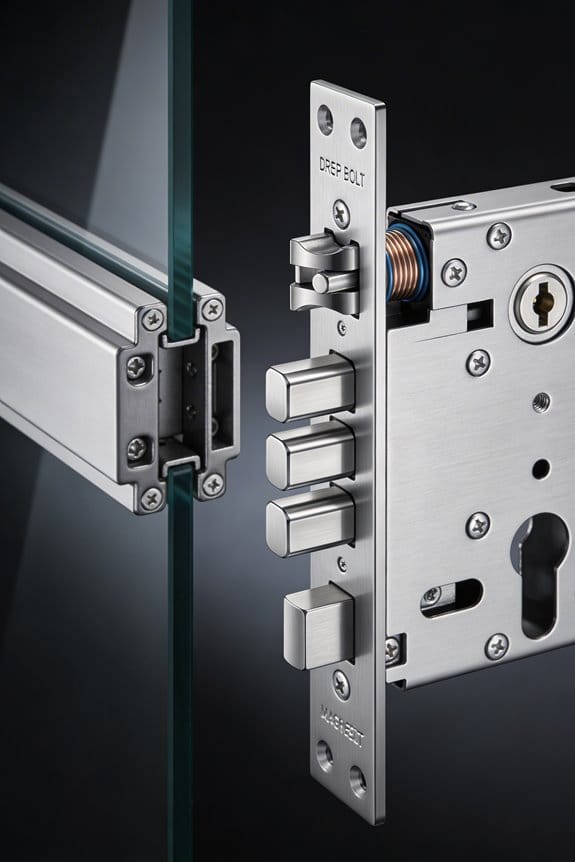
Got a sliding glass door that won’t lock properly? You’re not alone—standard deadbolts just don’t work with doors that slide horizontally instead of swinging. The good news is there are two solid options that actually do the job.
Drop bolts are probably the most straightforward solution. They work by extending down perpendicular to your door frame and catching on a strike plate installed in the floor when you activate them. Pretty simple mechanics, really. The downside? You need decent clearance underneath your door, and the floor has to be level enough for the bolt to engage properly.
Magnetic locks take a completely different approach. There’s no moving parts to wear out, they’re dead silent, and they handle temperature swings without complaint. Honestly, if you want a system that’ll just work without fussing with maintenance, these are hard to beat. The catch is they require a metal strip on the door frame for alignment, plus you need a 12V DC power adapter nearby.
So, why does this matter? Both options demand specific conditions that standard deadbolts don’t. Here’s what you actually need to know:
Drop bolts: Best if you’ve got floor space and your door sits at the right height.
Magnetic locks: Better choice when your frame is tight and you’ve got access to power.
Truth is, your final decision comes down to two things—what physical space you’re working with and whether you have power available near the door. Think about your actual setup before you buy anything.
What’s your current door situation, and do you already have power running to that area?
Recommended Products

🌞🏡Perfect Size: We’re excited to unveil Domi’s latest 10x14FT Sunroom, designed to offer the perfect blend of comfort and functionality. Whether as a cozy retreat, a garden tea room, or the ideal space for family gatherings, this new sunroom promises an unparalleled experience.

The Eagle-2000-FSC Slide Gate Operator is designed for commercial use. Its built for gates up to 45’ feet or 1000lbs. It is equipped with a heavy duty 20’ft of nickel-plated chain and a no-weld chain kit for easy installation

【Metal Folding Door】: This accordion door is made of aluminium alloy. It is strong, durable, stable, not easy to bend and break, and can be used for a long time.
Power, Connectivity, and Backup Systems for Retrofit Smart Locks
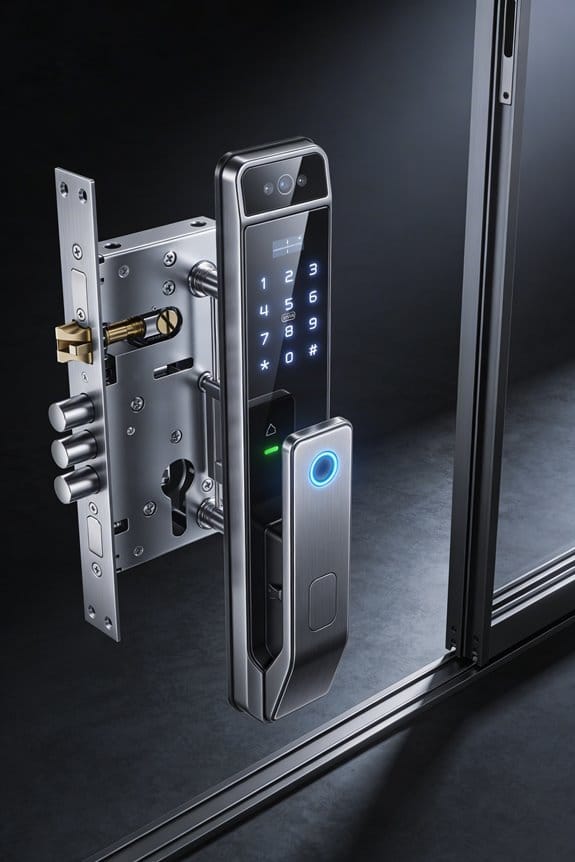
Power, Connectivity, and Backup Systems for Retrofit Smart Locks
So you’re thinking about adding a smart lock to your sliding glass door? Before you get excited about controlling it from your phone, let’s talk about the part nobody likes: what happens when the power dies or your WiFi craps out at 2 a.m.
Recommended Products
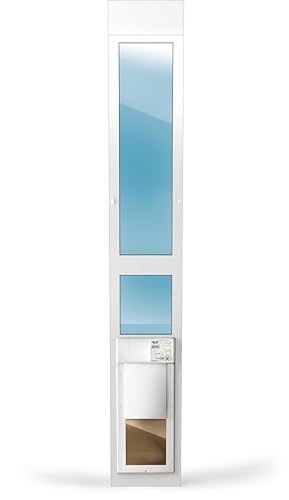
Designed for use with genuine High Tech Pet MS-5 ultrasonic collars. Power Pet door performance warranty only applies when operated with authentic MS-5 transmitters. SMART COLLAR TECHNOLOGY: Comes with a small, lightweight, water-resistant MS-5 collar that’s comfortable for pets of all sizes and built to withstand daily outdoor use.

🔒 【Smart Lock with Children Proof Deadbolt】 This smart lock includes a unique childproof interior deadbolt—just push up the thumbturn and the door is fully secured. It keeps children safely indoors while preventing forced entry from outside, offering extra protection for families and working perfectly as a reliable front door lock.

3D Face Recognition Even in Total Darkness: Unlock in under 1 second using AI-powered facial recognition. Works with glasses, masks, and in zero-light conditions. Your face becomes the key
The Battery Reality Check
Most retrofit smart locks run on rechargeable batteries that’ll last anywhere from 6 to 12 months between charges. That’s actually pretty solid—but only if you remember to charge them. The trick is treating battery checks like you’d treat checking your car’s oil: make it a habit, not an afterthought.
WiFi: Your Biggest Headache
Here’s the thing about WiFi dependency—when your internet goes down, so does your remote access. Want to unlock your door from across town? Not happening unless you’ve already invested in a $79 WiFi adapter. Honestly, that stings when you realize it wasn’t included in the box.
This is where Z-Wave or Zigbee protocols come into play. Pair these with a SmartThings hub, and you’ve got a backup that doesn’t rely on your home WiFi. So, why does this matter? Because redundancy is what separates a frustrating system from one you actually trust.
Hardwired Options for Peace of Mind
If you want to stop worrying about batteries altogether, consider a 12V DC adapter setup. These power electronic drop bolts or magnetic locks and keep everything running without needing a charge. You’re basically trading flexibility (battery-powered) for reliability (always on).
Recommended Products

AOUSK 48 volt lithium battery is made of new grade EVE A cells with UL certification.Available in complete for various cart, this battery is ideal for custom installations due to its compact size( (L x W x H) 15.35in x 12.40in x 9.25in) and unique center Thru-Hole mounting tunnel. With a 105Ah storage capacity, it’s the perfect upgrade for 48V carts.

Flexible Dual Zone & Bluetooth Controlled - APL55 12v refrigerator comes with a removable divider that automatically senses installation and removal, flexibly switches between single and dual zones, and provides two independent physical digital controls.Dual zones allow for both freezing and refrigeration needs. Car freezer also features Bluetooth connectivity for remote control via a mobile app.

Items Included: 1 x PTZOptics Move SE SDI/HDMI/USB/IP PTZ Camera with 12x Optical Zoom (Gray)
Your Backup Layers
The best part is you don’t have to choose just one solution. Stack them:
- Manual key backups
- Tamper alarms to alert you to problems
- Battery packs as a secondary power source
- Mechanical overrides on your lock itself
Truth is, the systems that work best combine multiple safeguards. When you layer battery backup, hardwired power, and manual options, your door stays accessible even when things go wrong.
The bottom line: don’t let power and connectivity scare you away. Just plan for failure before it happens. What backup system makes the most sense for how you actually use your door?
Installation: DIY Complexity vs. Professional Cost ($250 Labor Savings)
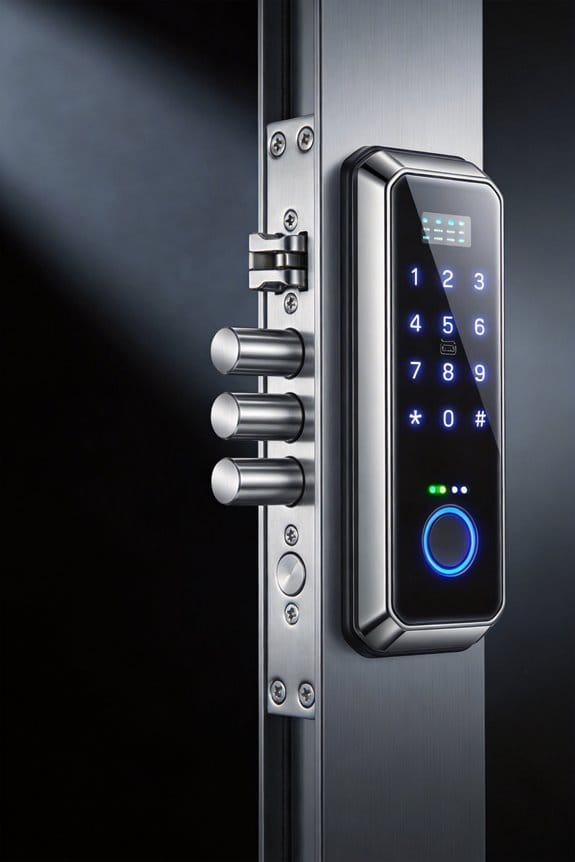
Sliding glass door locks are a pain to install—mainly because they don’t follow standard sizing. You’re dealing with non-standard 3-inch holes instead of the usual deadbolt spacing, which means if you mess up, you’re looking at plugging holes, redrilling, and waiting for epoxy to cure. That’s not a 30-minute job anymore; that’s multiple days of work.
So, why does this matter? Because the gap between DIY and professional installation is pretty significant. If you’re handy, you might tackle it yourself in 30-60 minutes—but you’ve got to nail the spindle insertion and get those locking pins in exactly right. One small alignment issue, and your handle won’t feel right or won’t lock properly.
Here’s the thing about going pro: Yeah, you’ll pay about $250 in labor costs, but you’re buying peace of mind. No epoxy mess, no second-guessing your measurements, no late-night YouTube videos trying to figure out what went wrong.
Try this if you’re going the DIY route:
Measure your door’s hole spacing twice before you buy anything. Seriously—this single step prevents the biggest headaches down the line. Grab quality epoxy, not the cheap stuff. You’re filling holes in your door; durability matters here. Take your time with the spindle alignment; rushing this part is where most people trip up.
Frankly, if you’re not confident with a drill or measuring tape, the $250 is worth it. But if you’ve done similar projects before, you can absolutely handle this yourself.
What matters most to you—saving time or saving money?
Recommended Products

✔️ SET INCLUDES- white grain door with strips, trims, pocket frames, door hangers, tracks, floor guide, round pocket pulls, screws. Door with all pocket hardware included. Recommended opening: 65" x 88 1/2" inches.

Safe: Automatically re-open door if black automatic door notices an object in the closing path,make sure safety of the people in the door way,If used for disabled access, it is recommended to install a optional motion safety scanner to extend the re-opening opening time

【Large Reptile Habitat Enclosure】: With spacious dimensions of 44"x20"x20" and an equivalent capacity of 76 gallons, Toxirium reptile habitat offers ample room for reptiles to explore, hide, rest, and feel secure. The generous feeding area allows you to craft a comfortable and enriching environment for your reptile companion.
How Retrofit Smart Locks Perform Against Industry Security Standards
Wondering if a smart lock can really protect your home as well as a traditional deadbolt? Retrofit smart locks like the Encode Plus go through some serious testing to prove their worth—but they’re not perfect.
Consumer Reports runs a brutal test using a 100-pound battering ram dropped from eight different heights. It’s a solid baseline for what these locks can handle. The good news? Retrofit models do a decent job resisting kick-ins and drilling. You won’t easily break through those vulnerabilities.
Picking, though—that’s the weak spot. These locks struggle against picking techniques in ways that traditional deadbolts don’t. So why does this matter? Because a determined person with the right tools can bypass your smart lock more easily than they’d expect.
The fix isn’t complicated. You’ve got options:
- Install a reinforced strike plate to strengthen the door frame
- Add tamper alarms to alert you immediately if someone fiddles with the lock
- Check your access logs regularly—they show you exactly who entered and when
Then there’s the digital side. Encryption and two-factor authentication take care of most hacking risks. If someone tries to crack your lock remotely, these layers catch them before they get anywhere.
Frankly, the best part is combining defenses. Auto-locking mechanisms prevent you from forgetting to lock up. Real-time notifications tell you instantly if someone tries to get in without permission. Together, these features protect you despite retrofit limitations.
The bottom line: no single lock is bulletproof, but you can get pretty close with the right setup. Are you willing to add a few extra security measures to feel genuinely safe?
Total Cost Breakdown: Smart Locks vs. Retrofit Hardware vs. Full Replacement
Trying to figure out what to do about your sliding glass doors? The cost varies wildly depending on whether you go with a smart lock, retrofit hardware, or bite the bullet on a full replacement. Let me break down what you’re actually looking at spending.
Smart Locks vs. Everything Else
Smart locks typically run you $150–$400. That’s the premium option if you want keyless entry and remote access. Retrofit options, though? They’re way cheaper since you’re keeping your existing exterior deadbolt intact. This matters if you’re renting or just don’t want to deal with major door modifications.
So, why does this matter to your wallet? Because retrofit locks let renters upgrade security without losing their security deposit, while homeowners avoid the headache of full replacement costs.
What Installation Actually Costs
If you’re going the DIY route, you’ll need Z-Wave plugs, keypads, weatherproof enclosures, and 12V DC adapters—all told, under $300 in materials. Professional installation runs an extra $250 on top of that. Commercial sliding locks sit around $298.
Here’s the trick: non-standard hole spacing complicates things. You might be looking at multi-day epoxy drying periods, which stretches labor costs and your timeline.
The Real Talk
Frankly, retrofit solutions are your best bet if you’re balancing security upgrades with a tight budget. You get better protection without the installation complexity that comes with full replacements. The question is—how much are you willing to spend for peace of mind?
Frequently Asked Questions
Can I Use My Existing Exterior Deadbolt Key With a Retrofit Smart Lock System?
No, you can’t use your existing exterior deadbolt key with retrofit smart locks. These systems replace only the interior side, creating key compatibility challenges. However, retrofit lock options let you keep your exterior deadbolt while adding smart access through apps, codes, or biometrics instead.
What Smartphone Compatibility Issues Arise With Older Smart Home Hubs Like Smartthings?
Like trying to fit a modern key into an antique lock, I’ve found that smartphone limitations clash with older SmartThings hubs—they’ll struggle supporting newer protocols. You’ll need Z-Wave or Zigbee adapters for hub compatibility, adding complexity and cost to your setup.
How Do Weather Conditions Affect Battery Life in Outdoor Retrofit Lock Keypads?
I’ve found that cold weather impact notably drains your outdoor keypad’s battery performance. Freezing temperatures reduce chemical reaction rates in batteries, forcing you to replace them more frequently. I’d recommend weatherproof enclosures and monthly battery checks during winter months.
Are Picking Vulnerabilities in Retrofit Locks Worse Than Traditional Deadbolts?
I’ll tell you straight: retrofit locks aren’t inherently worse. Like comparing two doors to the same room, both can be picked if you’re skilled enough. However, retrofit locks’ simpler mechanics make picking techniques easier than traditional deadbolts’ security complexity.
Can Renters Easily Remove Retrofit Locks Without Damaging the Door Frame?
Yes, I can tell you that retrofit locks are designed for easy removal—they replace only the interior side, so you won’t damage your door frame. Standard removal methods involve unscrewing the interior mechanism, preserving the frame’s integrity perfectly for your security deposit.