
California’s SB 969 mandate, effective July 1, 2019, requires all new garage door opener installations to include battery backup systems. These systems must operate independently during power outages, enabling vehicle access and emergency egress when electricity fails. Each garage door requires its dedicated backup unit with runtime capabilities of 10-20 cycles per charge, depending on battery type—lithium-ion or lead-acid. Non-compliance carries $1,000 civil penalties. Understanding compatibility requirements, manufacturer specifications, and documentation before purchase protects you from regulatory violations and guarantees family safety during emergencies.
Key Takeaways
- California’s SB 969 mandates battery backup systems for all new garage door opener installations effective July 1, 2019, nationwide compliance varies.
- Battery backup systems must operate independently during power outages, enabling garage door function without electrical service for emergency access.
- Non-compliance incurs $1,000 civil penalties per unit, with enforcement targeting manufacturers, sellers, and installers for accountability.
- Each garage door requires dedicated battery backup; verify manufacturer compatibility specifications and documentation before purchase completion.
- Battery backup runtime typically ranges 10-20 cycles per charge; lithium-ion and lead-acid types offer different maintenance and replacement considerations.
Why California Requires Battery Backup Openers
Why California Requires Battery Backup Openers
Picture this: wildfires are spreading, the power’s out, and you can’t get your garage door open to grab your car and evacuate. That’s exactly what happened to thousands of California residents during the devastating fires of 2017 and 2018. It sounds like a worst-case scenario, but it was real for people trying to escape danger.
Those fires exposed a major safety problem. When the power went down, automatic garage door openers stopped working entirely—leaving families trapped or unable to access their vehicles when seconds mattered most. People with mobility issues or homes where the garage was the only practical exit faced especially scary situations.
So, why does this matter to you today? California lawmakers decided this gap was unacceptable. They didn’t just hope things would improve on their own—they mandated change.
Starting July 1, 2019, all new garage door opener installations in California must include battery backup systems. Here’s what that actually means:
- Your opener keeps working even if the grid goes down
- You can get out of your home during emergencies
- Families with limited mobility options get a real safety net
- You’re covered during storms, wildfires, or routine power maintenance
Honestly, it’s a straightforward fix that solves a real problem. Battery backup doesn’t require any complicated setup on your end—it’s built right into modern openers. When the power cuts out, the backup kicks in automatically.
The best part? This protects you whether you’re dealing with a natural disaster or just a downed power line in your neighborhood. Do you have elderly relatives living with you or anyone who relies on that garage exit?
California got this one right. Emergency preparedness shouldn’t depend on whether the electric company’s lines are working.
Recommended Products

Features a DC motor for ultra quiet operation

The Genie B6172H wall mount garage door opener has a compact design measuring 6.8 in. wide x 14.5 in. tall x 9 in. deep making it the smallest available. It requires a standard outlet within 6 ft. for installation.

Space saving compact Genie wall mount garage door opener directly mounts to garage door tube spring to lift 850lb doors, paired with Genie belt drive opener for ultra quiet operation perfect for garages attached to bedrooms.
Who Must Comply With SB 969 (And by When)?
Who Must Comply With SB 969 (And by When)?
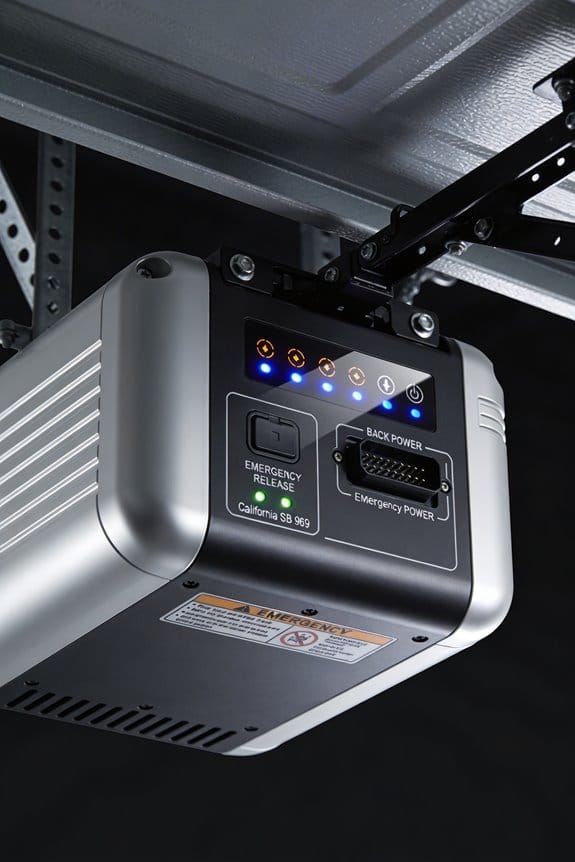
California passed SB 969 back in 2019, and if you’re thinking about installing a new garage door opener or swapping out an old one, you need to know what this actually means for you. The law took effect on July 1, 2019—so we’re talking about something that’s already been in place for a while now.
The rule is pretty simple: if you’re a homeowner, landlord, or property owner installing a new garage door opener in a California residence, this applies to you. Manufacturers, sellers, and installers all face $1,000 civil penalties for each unit that doesn’t meet the requirements. So yeah, people take this seriously.
Here’s what you actually have to do. Any new opener you install must have integrated battery backup built in. That’s it—no exceptions. But here’s the good news: you don’t need to worry about replacing openers that are already working fine in your garage. The mandate only kicks in when you’re buying and installing something new after that July 1 deadline.
Why does this matter? Because a garage door opener with battery backup keeps your door working even when the power goes out. It’s a safety and convenience thing rolled into one.
One thing people get wrong: they think they need to retrofit every older opener in sight. You don’t. This requirement applies uniformly across all California residential buildings, but only for new installations and sales. If your garage door opener is doing its job, leave it alone.
Honestly, the takeaway is straightforward—plan ahead if you’re replacing an opener, make sure the new one has battery backup, and you’ll be compliant. Any questions about whether your specific situation triggers the requirement?
What SB 969 Requires: The Core Mandate

What SB 969 Requires: The Core Mandate
Your garage door opener needs to work when the power goes out. That’s the bottom line with SB 969. If you’ve bought, installed, or replaced a residential garage door opener after July 1, 2019, the law says it must have battery backup technology built in.
Why does this matter? Because when you lose power during a storm or an outage, you’re stuck. You can’t get your car out. You can’t secure your garage. With this mandate, your opener keeps functioning, letting you operate the door manually until your electricity comes back.
Here’s the thing—and I want to be clear about this—the battery backup system works completely separately from your regular electrical service. It’s not tapping into your home’s power at all. When the lights go out, the battery kicks in automatically, giving you reliable access during emergencies.
The practical side:
- If you’ve got multiple garage doors, each one needs its own separate backup unit
- The system integrates with your existing safety features (automatic reverse devices and other mechanisms)
- You don’t need major installation work or operational changes to make it happen
Honestly, the best part is that this doesn’t complicate your life. The backup technology slides right into your current setup without requiring you to learn new habits or spend weeks on installation. It’s just there, working quietly in the background until you need it.
Recommended Products

Two Free Microfiber Towels Included with purchase

Space-Saving: Wall mounted design frees up ceiling space and reduces noise and vibrations in living spaces near the garage

Space-Saving: Wall mounted design frees up ceiling space and reduces noise and vibrations in living spaces near the garage
Penalties and Enforcement: What You Risk

Penalties and Enforcement: What You Risk
So you’re thinking about installing a new garage door opener in California, or maybe replacing an old one. Before you do, you should know what happens if you don’t follow SB 969. The state isn’t messing around with this one.
California hits you with $1,000 in civil penalties for each non-compliant opener that’s actually installed and running. That applies to manufacturers, sellers, and installers—basically anyone in the chain who puts in a garage door opener without battery backup after July 1, 2019. Why does this matter? Because these aren’t theoretical fines. Enforcement teams actively look for installations that skipped the battery backup requirement.
The good news? Staying compliant is honestly pretty simple. You’ve got solid options:
- Chamberlain openers with built-in batteries
- Overhead Door Legacy 920 models
- Other certified products that meet the standard
The tricky part comes when you’re replacing a garage door but your existing opener doesn’t have battery backup. Frankly, the rules don’t allow you to install a new door paired with a non-compliant opener. It’s an all-or-nothing situation.
Understanding how enforcement actually works helps you make decisions without stress. You’re not dealing with surprise inspections—the focus is on new installations and replacements that happen after the law took effect. Knowing these rules upfront means you won’t end up paying thousands in penalties down the road.
What’s your next step—are you planning a full door replacement or just swapping the opener?
Recommended Products

Space-Saving: Wall mounted design frees up ceiling space and reduces noise and vibrations in living spaces near the garage

Built-in camera: 130⁰ wide angle camera lets you see and hear what’s happening in your garage through the myQ app .Controller type: Iphone, Android
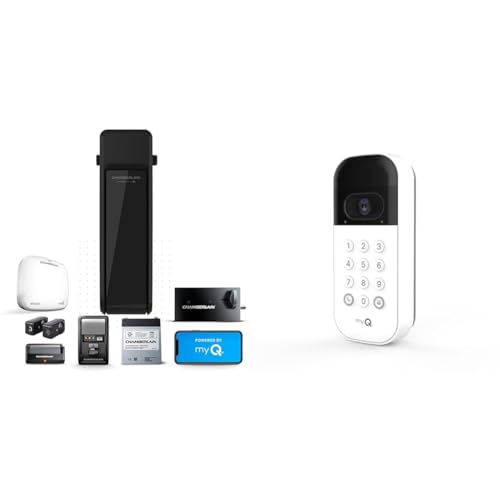
Space-Saving Design: Wall mount garage door opener from trusted Chamberlain brand frees up valuable ceiling space while delivering ultra-quiet operation that reduces noise and vibrations in living areas adjacent to your garage
How to Choose a Battery Backup Garage Door Opener
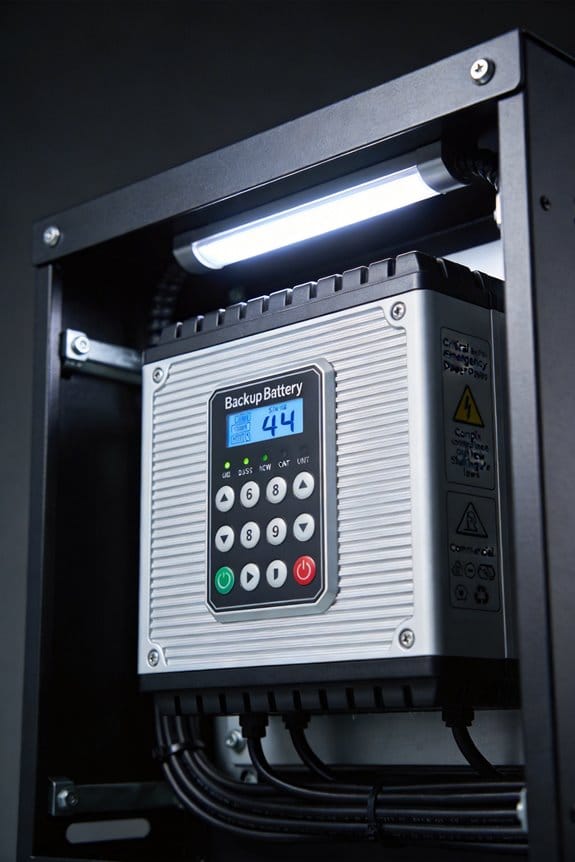
When the power goes out, can you still get your car out of the garage? That’s the question that matters, and it’s why California’s SB 969 requires battery backup on most garage door openers installed after a certain date. If you’re shopping for a compliant opener, you need to understand what you’re actually buying.
Battery type makes a real difference. Lithium-ion and lead-acid both work, but they’re pretty different animals. Lithium-ion batteries are lighter and handle temperature swings better, while lead-acid units tend to last through more charge cycles before wearing out. Think about where you live and how often you expect to use the backup—that’ll shape which one makes sense for your situation.
Here’s what to focus on when comparing models:
- Backup runtime (usually 10-20 cycles per charge—that’s 10-20 door openings)
- Smartphone control options
- How easy it is to swap the battery when the time comes
- Warranty coverage on the battery itself
Chamberlain’s newer models come with built-in batteries that last about two years before you need to replace them. Overhead Door’s Legacy 920 lets you open and close through your phone, which is handy when the power’s down. Honestly, both are solid choices—it just depends on what features matter to you.
Before you buy, verify that whatever opener you pick will actually work with your current door. Each system needs its own battery backup, and compatibility isn’t always obvious. Pull up the manufacturer specs and double-check against your door’s age and type.
The good news? You don’t need to be tech-savvy to figure this out. Makers publish all the runtime details and maintenance steps right in the manual. Spend 20 minutes reading through the specs, and you’ll know exactly what you’re getting into.
Recommended Products

Right or left no longer required for order

LIFTMASTER 8500W 2-893MAX remotes JACKSHAFT GARAGE DOOR OPENER MYQ ENABLED WIFI AND BATTERY INSTALLED

POWERFUL: 2000W continuous, 6000W surge for 20 seconds, 48VDC, 16 amps, 120VAC pure sine clean power, low frequency, auto transfer switch and 20A smart battery charger for 8 different battery technologies including Lead, Gel, AGM, LiFePO4 and more.
Which Products Meet California Standards?
Which Products Meet California Standards?
So you’ve figured out what features you actually want in a garage door opener. Now comes the part nobody enjoys—making sure it’s legal in California. SB 969 isn’t just a suggestion; it’s a real requirement, and buying the wrong opener can cost you $1,000 per unit if you get it wrong.
Chamberlain openers come with built-in batteries that meet the post-2019 requirements. Overhead Door’s Legacy 920 is another solid option if you want smartphone control without sacrificing battery backup. Both of these brands have done the work to stay compliant, so you’re not gambling on whether they’ll pass inspection.
Here’s the thing that matters most: your opener *must* have dedicated battery backup designed specifically for power outages. This isn’t optional. When your power goes out, your backup system needs to get your door open so you can get your car out. Why does this matter? Because California regulators want to make sure you’re not trapped in your garage when the grid fails.
Try this: Before you buy anything, pull up the manufacturer’s product page and look for the words “California SB 969 compliant” in black and white. Don’t rely on a salesperson’s promise or assume it’s included. If you’re replacing an old opener with a new door, the new opener has to have this technology built in—there’s no workaround.
Truth is, compatibility isn’t your problem here. Your real problem is making sure the documentation proves compliance before you hand over your money.
Double-check the paperwork, confirm compliance, and you’ll avoid the penalty and the headache.
Recommended Products

Features a DC motor for ultra quiet operation

The built-in Aladdin Connect technology allows you to monitor, open and close your garage door from anywhere with your smartphone. Works with Smart Home Automation platforms Amazon In-Garage Delivery, Alexa, Google Assistant, SmartThings, and many more

SPACE SAVING: The Genie wall mount garage door opener clears up ceiling space by eliminating rail & powerhead from the ceiling, mounts to the side of the garage doors torsion spring. You can use the freed-up space for extra storage or just enjoy the clean, uncluttered look.
Frequently Asked Questions
Do Existing Garage Door Openers Installed Before July 1, 2019 Need Battery Backup?
No, your existing garage door opener installed before July 1, 2019 doesn’t need battery backup unless you replace it. I’d say understanding these garage door regulations helps you avoid compliance challenges if you’re planning upgrades.
Can I Install a New Door With My Current Non-Compliant Opener After the Effective Date?
No, you can’t pair your non-compliant opener with a new door after July 1, 2019—have you considered what this means for your current opener compatibility? California law prohibits new door installation with non-compliant openers, so you’ll need a battery backup replacement.
If I Have Multiple Garage Doors, Does Each One Require Its Own Battery Backup Opener?
Yes, you’ll need separate battery backup openers for each garage door you have. California’s law requires every door to have its own backup power system for garage door safety. This guarantees you’ve got reliable access during outages, regardless of how many doors you operate.
How Long Does Battery Backup Typically Operate During a Power Outage Before Depleting?
I’d tell you that most battery backup systems typically operate your garage door for about 24-48 hours during a power outage, though battery duration depends on usage frequency. You’ll want to check your opener’s specifications for exact battery duration details.
Are Rental Properties Subject to the Same Battery Backup Requirements as Owner-Occupied Homes?
Yes, rental properties face the same requirements as owner-occupied homes. Like a captain steering all vessels through identical waters, I’ll tell you that landlords and property owners can’t escape their rental compliance obligations—they’re bound by California SB 969’s property owner obligations just equally.