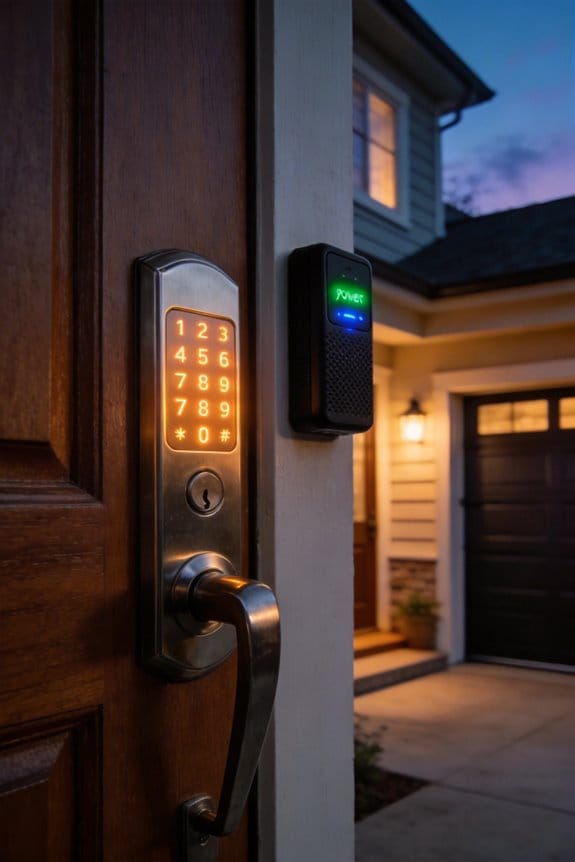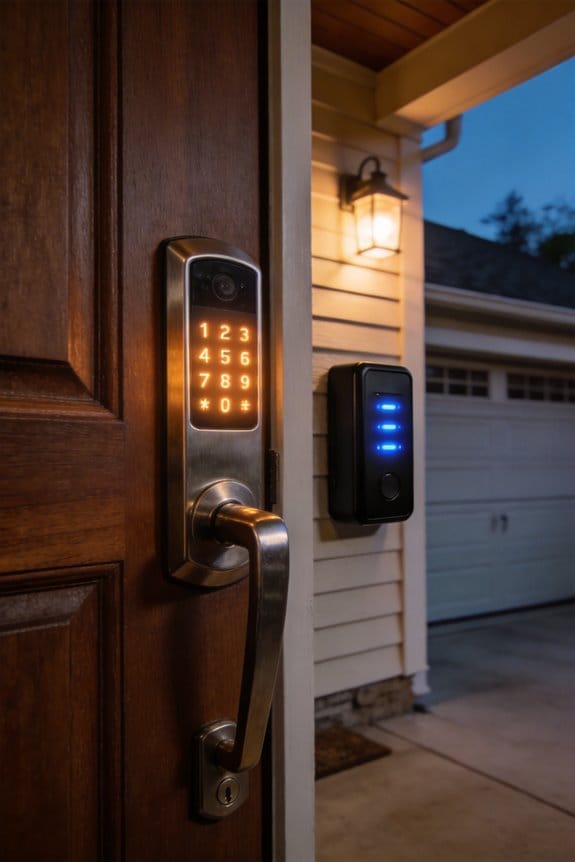
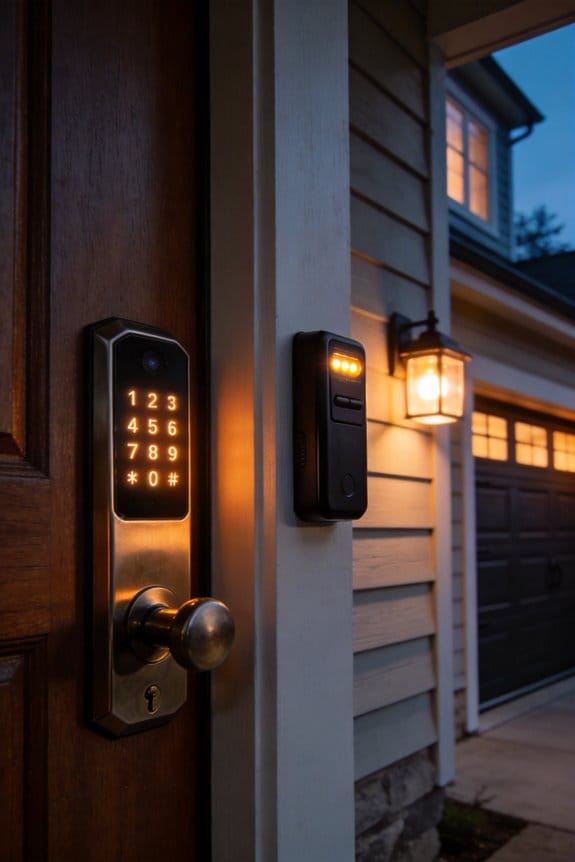

Smart lock chimes defaulting to 80–90 decibels violate most municipal noise ordinances, which cap daytime limits at 55–70 decibels and quiet hours at 45–55 decibels (typically 10 PM–7 AM). You can reduce disruption to 60–70 decibels through volume adjustments, silent modes, and app-based notifications instead of audio alerts. EU Regulation 2026/1028 requires compliance documentation by May 2026. Keypad-only and smartphone entry systems eliminate chime noise entirely while maintaining security. Configuring access windows, dampening mechanisms, and acoustic insulation keeps you compliant with local regulations and neighbor relations intact. The specifics of implementation vary greatly by jurisdiction.
Key Takeaways
- Smart locks default to 80-90 decibels, exceeding local noise ordinances (45-70 decibels) and creating neighbor disturbances in shared buildings.
- Local noise regulations vary by city and zoning, with quiet hours typically 10 PM-7 AM requiring 45-55 decibel compliance limits.
- Adjusting smart lock volume to 60-70 decibels or enabling silent mode with app notifications reduces regulatory violations and complaints.
- Keypad and app-based entry systems eliminate noise from key rattling and deadbolt slamming, operating at zero decibels during access.
- EU Regulation 2026/1028 requires monthly compliance data submission starting May 2026, making noise documentation and management essential for operators.
Why Keyless Entry Chimes Trigger Noise Complaints
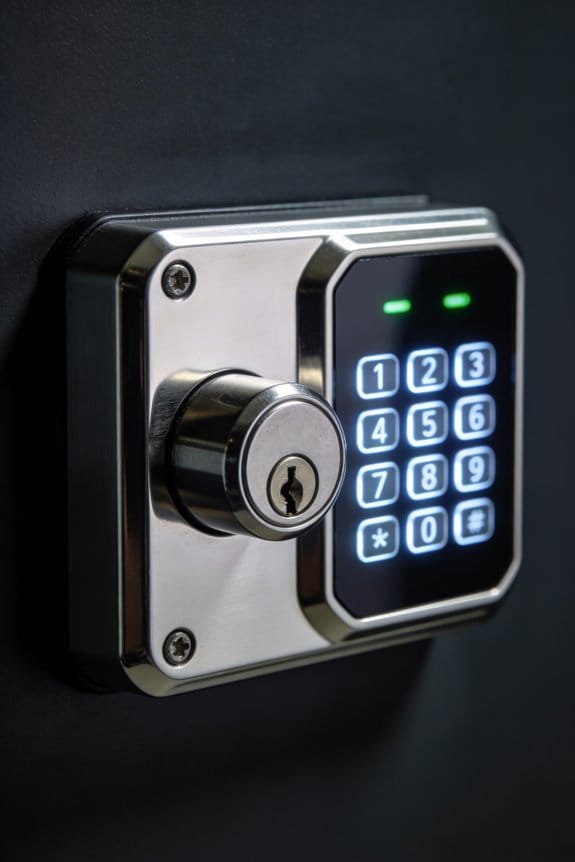
Why Keyless Entry Chimes Trigger Noise Complaints
Your guests arrive at 11 PM, punch in their code, and suddenly—BEEP BEEP BEEP—the smart lock announces their arrival at full blast. Sound familiar? If you manage a short-term rental in an apartment complex or townhome, you’ve probably heard from annoyed neighbors already.
The problem is straightforward: most smart locks ship with the volume cranked to maximum. We’re talking 80-90 decibels here—that’s roughly the noise level of heavy traffic sitting outside someone’s bedroom window. In shared buildings, that sound travels straight through walls and into adjacent units. Late-night check-ins? Early morning departures? Yeah, those hit different when your neighbor’s in bed.
So why does this matter so much? Noise complaints don’t just annoy people—they can damage your rental reputation, lead to lease violations, or worse, get your property flagged by management. One frustrated tenant can tank your rating faster than you’d expect.
The fix is simpler than you think. Adjusting your smart lock’s chime sensitivity cuts the output down to 60-70 decibels. That’s a major difference—your guests still hear confirmation their code worked, but neighbors won’t be jolted awake.
Here’s the thing: not every guest wants the same notification setup. Some people need that loud beep to feel confident they’ve entered correctly. Others would rather get a silent phone alert instead. The best smart locks let you customize this.
Try this approach:
- Enable silent mode as your default
- Offer guests a smartphone notification option instead
- Keep audible chimes available for guests who request them
- Test your volume settings during daytime hours first
Frankly, the locks that give you real control—customizable tones, adjustable volume, full silent mode—are worth the investment. You keep guests happy with reliable entry confirmation, neighbors stay peaceful, and your complaint inbox stays lighter.
The bottom line: small adjustments to your smart lock settings prevent big headaches down the road. Are you ready to tweak yours this week?
Decibel Limits and Quiet Hours in STR Noise Codes
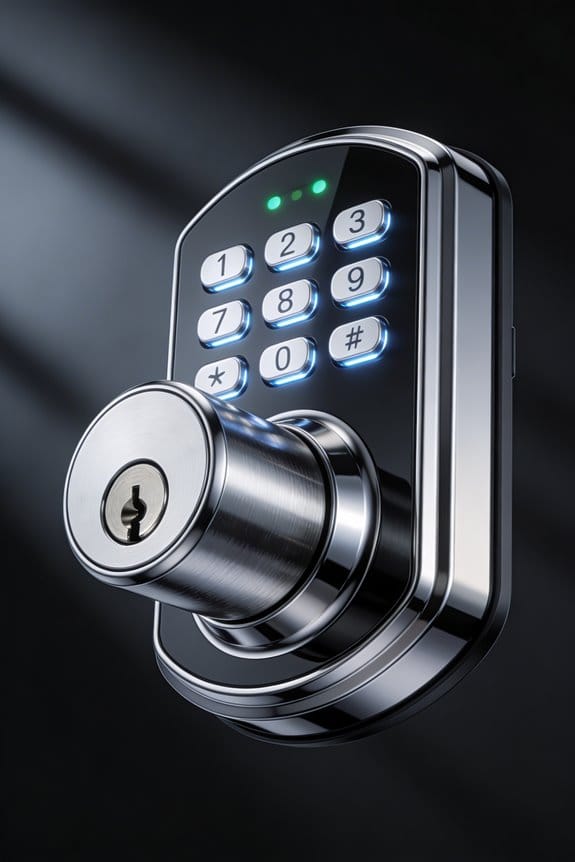
Decibel Limits and Quiet Hours in STR Noise Codes
If you’re running a short-term rental, you’ve probably already dealt with at least one noise complaint from neighbors. Truth is, noise ordinances are becoming just as important as your rental agreement itself—and they directly affect how you set up your smart locks and manage guest access.
Most cities have pretty specific rules about how loud things can be. During the day, you’re usually looking at 55-70 decibels. Once quiet hours kick in (usually 10 PM to 7 AM), that drops to 45-55 decibels. So here’s the thing: your smart lock chime can’t just beep as loud as it wants. It needs to play nice with local regulations.
The good news? Modern keyless entry systems let you actually control this stuff. You can adjust volume settings, turn on silent notification modes, or send alerts straight to your phone instead of blasting a chime through the walls. Honestly, this flexibility makes compliance way less painful than it sounds.
But here’s where you need to pay attention: decibel limits vary wildly depending on where you’re located and what kind of zoning your property sits in. Residential areas are stricter. Mixed-use neighborhoods might be more lenient. You can’t just assume one smart lock setup will work everywhere.
Try this: Pull up your local noise ordinance online or call your city planning department. Write down the exact decibel limits for your zone and quiet hours. Then, when you’re choosing a smart lock system, ask the manufacturer if they can hit those numbers.
Why does this matter? Because fines add up, and neighbor disputes can tank your rental rating. Keep documentation of your smart lock’s specifications and any adjustments you’ve made. If a citation ever comes your way, you’ll have proof that you tried to comply.
The bottom line is simple: your guests need to get in smoothly, but your neighbors deserve peace and quiet too. Have you checked what your city actually requires?
What EU and Local Noise Rules Mean for Your Lock
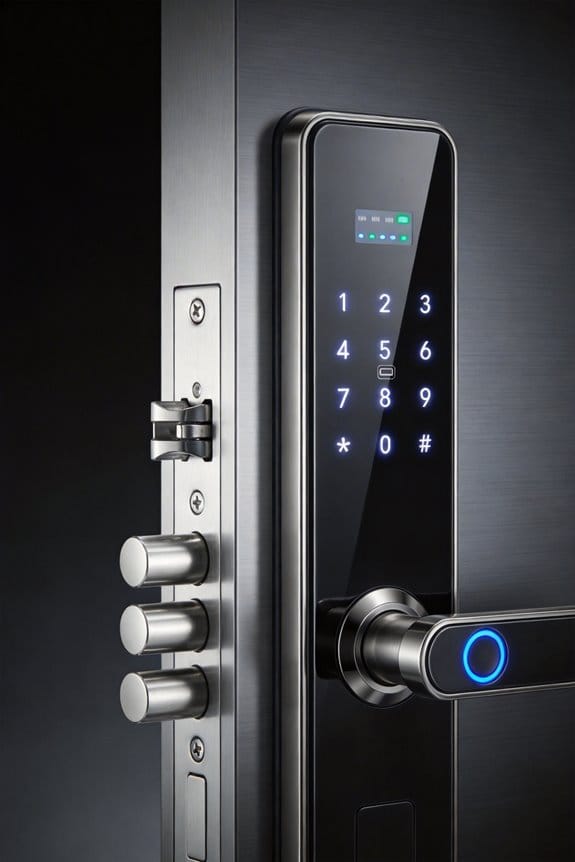
If you’re running a short-term rental in the EU, you’re dealing with way more than just keeping your guests happy—there’s a whole layer of regulations that’ll affect how your property operates. Starting in May 2026, EU Regulation 2026/1028 kicks in, and it requires you to send monthly activity data for each listing to your country’s digital entry system. Sounds bureaucratic, right? But here’s where it gets real: this regulation directly connects to noise management and how your smart lock functions.
So, why does this matter? Because your lock isn’t just about convenience anymore—it’s part of your compliance toolkit. If noise ordinances are tight in your area (and let’s be honest, they often are in Europe), you need to think seriously about how your guests get in without disturbing neighbors.
Skip the beeping and buzzing. Silent notification options like visual alerts or vibration-based messages let guests know the door’s unlocked without creating noise complaints. These alternatives work especially well if you’re in a building with shared walls or in a neighborhood with strict quiet hours.
Smart locks with built-in noise monitoring are worth considering too. They log entry events without making a sound, which gives you documentation for compliance purposes and keeps the peace with your neighbors. Honestly, having that paper trail—or digital trail—also protects you if disputes ever come up.
The real win? When you tie all this together in your property management system, you’re hitting two birds with one stone: meeting those EU requirements while respecting local noise limits. You won’t be scrambling last-minute to figure out compliance.
Does your current setup already handle quiet notifications, or is it time to upgrade?
How Keypad and App-Only Entry Reduces Noise
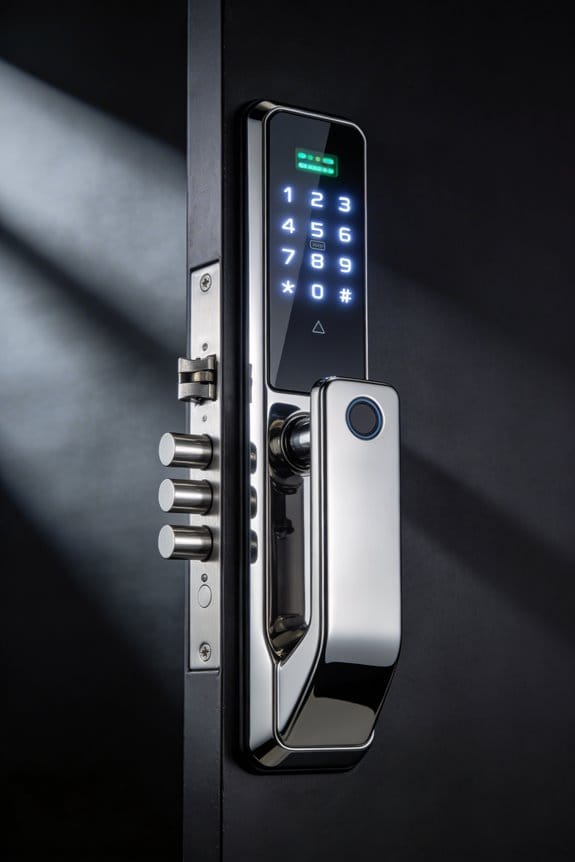
How Keypad and App-Only Entry Reduces Noise
Ever had neighbors bang on your door at 2 AM because they heard the deadbolt slam? Or watched guests fumble with keys while you’re trying to sleep? Keypad and app-based entry systems actually solve this problem—they’re just quiet.
Why silence matters more than you’d think
Honestly, most people don’t realize how much noise traditional locks create. Every time someone uses a physical key, you’re hearing metal scraping metal. Then there’s the deadbolt engaging—that heavy *click-clack* that echoes through thin walls. Keypad entries? Completely silent. You just punch in numbers or open an app. Zero sound.
The numbers back this up:
- Traditional locks: 60–75 decibels during operation
- Keypad/app entry: 0 decibels
What actually happens when you use these systems
When a guest arrives, they don’t announce themselves by rattling keys or knocking. They enter a code or tap their phone. The door opens quietly. At checkout, the code simply stops working—no repeated attempts, no frustrated key-turning sounds that wake the whole building.
Remote code management means you’re not standing at the door explaining how to work the lock or physically handing over keys. That eliminates the talking, the demonstration, the whole disruption.
The practical benefit for apartment living
Here’s the trick: these systems work within EU noise regulations and local quiet-hour rules. DoorSense sensors confirm the door is locked without needing an audible beep or confirmation sound. So even the system itself stays quiet.
Truth is, if you’re managing a rental property or just tired of noise complaints, switching to keypad or app entry is one of the simplest changes you can make. Your neighbors will notice. You will too.
Do you know how much time guests waste waiting for keyless entry to work—compared to fumbling with a lock?
Customize Alerts to Stay Compliant
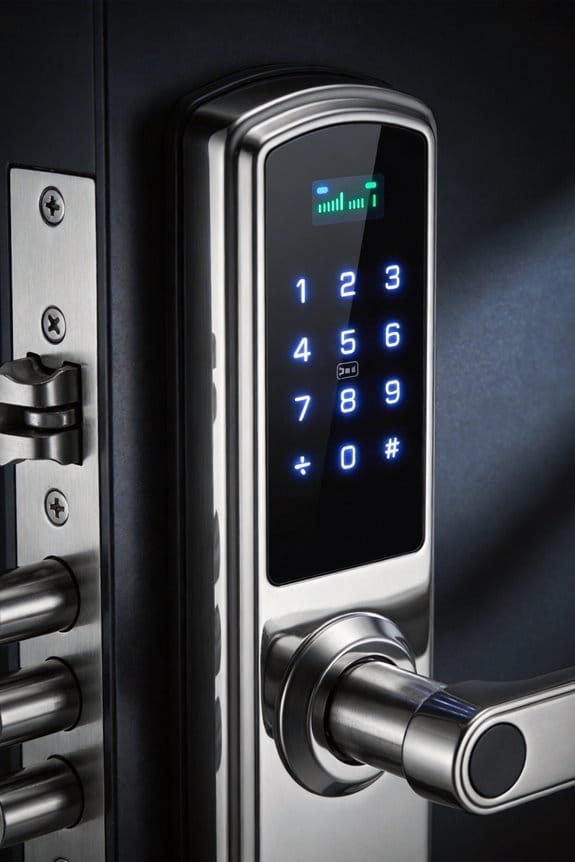
Customize Alerts to Stay Compliant
You know that sinking feeling when a compliance violation shows up during an audit? The difference between catching it early and scrambling to explain it later often comes down to one thing: whether you’ve set up smart alerts.
Setting up customizable notifications in your smart lock system isn’t just nice to have—it’s how you stay ahead of regulatory issues. When you configure alerts for specific access attempts, you get notified in real-time about unauthorized entries or after-hours activity that might violate local noise ordinances or lease agreements. That immediate heads-up lets you respond before it becomes a problem.
Here’s the trick: pair your door sensors with customizable alerts that confirm actual closure. Why does this matter? Unsecured doors don’t just create security risks—they can lead to guest disturbances and documented violations you’d rather avoid.
Try this approach to lock down compliance:
- Set specific access windows and get alerts when someone enters outside those times
- Keep a log of all notifications and how you responded to them
- Review your alert patterns monthly to spot recurring issues
Honestly, regulators notice when you have documented proof that you caught and fixed problems yourself. That paper trail—showing you were monitoring, alert, and responsive—demonstrates real management. It transforms potential violations into resolved incidents with a clear timeline, which is exactly what authorities want to see.
Prevent Access Noise in Shared Buildings
Living in a shared building with short-term rental guests? You’ve probably noticed those 2 a.m. beeping sounds from keypads, the clunk of deadbolts, and doors slamming shut. These noises travel through walls faster than you’d think, and they’re driving your neighbors crazy.
Let’s talk about what’s actually happening. When guests enter units, you’re dealing with three main culprits: keypad beeping during code entry, deadbolt mechanisms engaging, and door frames taking impact when they close. So, why does this matter? Because noise complaints pile up fast, and then you’re stuck dealing with angry residents or even lease violations.
The quick wins:
Start with silent keypads—they eliminate those entry alerts completely. It’s a straightforward swap that costs way less than dealing with conflict. Dampening mechanisms on your locks absorb vibration energy, which cuts deadbolt noise significantly. Add door sweeps and acoustic seals, and you’re already solving most of the problem.
If you’re planning renovations or building new, go bigger. Resilient channels, mass-loaded vinyl barriers, and acoustic caulk make a serious difference when installed during construction. Retrofitting works too, but it’s messier and pricier. Try this: position locks away from shared walls whenever possible. It sounds simple, but it actually stops sound transmission through the building’s structure.
Honestly, these fixes aren’t complicated, and they won’t compromise guest access. Your guests still get in easily, your neighbors sleep peacefully, and you avoid the headache of conflict. That’s worth the effort.
What’s the biggest noise complaint you’re hearing right now in your building?
Quiet Lock Features That Meet Regulations
Quiet Lock Features That Meet Regulations
Got noisy neighbors complaints after installing a smart lock? You’re not alone. In multi-unit buildings, especially those with short-term rentals, noise from locks during entry can actually violate local codes. That’s where quiet locks come in—they’re not just nice to have, they’re often required.
Most modern smart locks use motorized mechanisms with dampening tech that keeps sounds below 60 decibels when you’re entering. Think of it like this: the solenoid (the part that moves the bolt) is cushioned with acoustic insulation, and the bolt itself sits in rubber-lined housing. Why does this matter? Because sound travels through shared walls, and your 2 a.m. entry shouldn’t wake someone in the unit next door.
Here’s the trick: you don’t have to sacrifice anything for this quiet operation. You still get instant code verification, real-time access logs, and all the security features you’d expect. The lock responds the moment you punch in your code—there’s no lag time just because it’s running quietly.
Honestly, if you’re dealing with noise ordinances or living in a building with strict shared-wall construction standards, check your local building codes first. Some places have specific sound requirements you need to meet. Premium models handle all of this without breaking a sweat, keeping both your neighbors and your landlord happy.
The best part? Quiet operation and strong security work together, not against each other. You’re getting compliance and peace of mind in the same package.
Frequently Asked Questions
Can I Install a Smart Lock in a Rental Property With Noise Restrictions?
Yes, you can install a smart lock in your rental property with noise restrictions. I’d recommend choosing models without audible chimes—they’re like silent sentries. Verify local building codes first, then opt for smart lock installation with noise monitoring features that alert you digitally, keeping your property compliant.
What Happens if My Keyless Entry System Violates Local Noise Ordinances?
If your keyless entry system violates local noise ordinances, you’ll face fines and potential legal action. I’d recommend disabling chimes, choosing silent entry modes, or upgrading to quieter smart locks that comply with your area’s noise restrictions.
Are Keypad Chimes Required for Fire Safety and Building Code Compliance?
No, keypad chimes aren’t mandated for fire safety requirements or building code standards. Like puzzle pieces fitting differently, your property must meet smoke alarms, fire extinguishers, and gas/electrical safety checks—but audible entry notifications aren’t legally required components.
How Do I Integrate Quiet Locks With My Property Management System?
I’d recommend checking your system’s API compatibility first. Most modern smart locks integrate seamlessly through keyless integration protocols, letting you manage access quietly. You’ll want to disable notification chimes in your lock’s settings for noise management while maintaining full remote control capabilities.
Do EU Noise Regulations Apply Differently to Hotels Versus Short-Term Rentals?
EU noise regulations don’t discriminate—they’re a level playing field for both sectors. While hotels typically invest heavily in hotel soundproofing, I’d recommend you establish clear rental noise policies for your STR to meet the same compliance standards and keep neighbors happy.