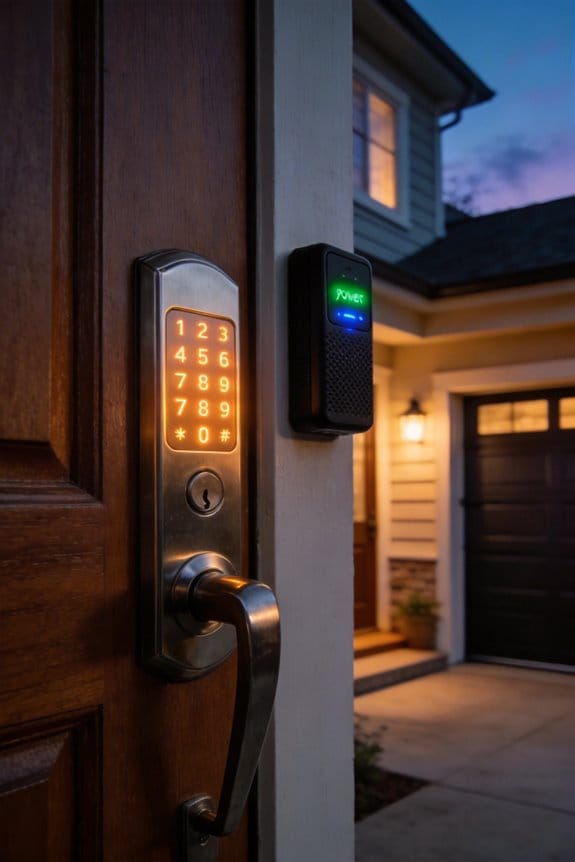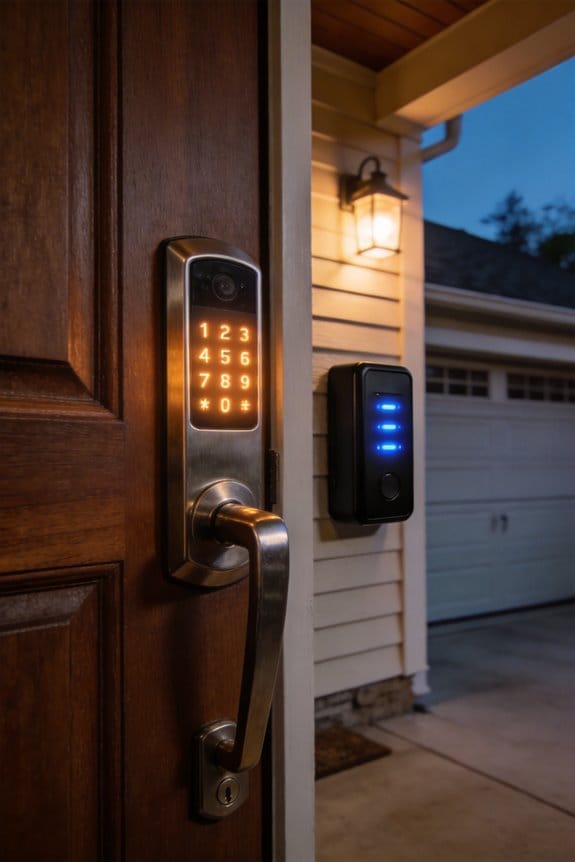


Solar-powered smart padlocks deliver real-time monitoring for remote agricultural gates through IP66-rated, weatherproof designs operating reliably from -40°C to 70°C. These devices eliminate manual patrol checks—reducing security costs by 60-70%—while providing GPS tracking, complete audit logs, and instant tampering alerts. Battery health monitoring runs continuously, ensuring ideal functionality without maintenance. Fixed wireless or LoRaWAN connectivity options support immediate notifications or long-range anomaly detection. Insurance premiums typically drop 15-25% with documented monitoring systems in place. Understanding installation requirements, connectivity trade-offs, and phased deployment strategies reveals substantial asset protection advantages.
Key Takeaways
- Solar panels charge padlocks during daylight; effective for remote areas without electrical infrastructure or power access.
- Real-time alerts notify you of unauthorized gate access and tampering with complete audit logs of all events.
- GPS integration flags unauthorized padlock movement and confirms location hourly, enabling instant theft detection on properties.
- Weatherproof IP66-rated design operates in extreme temperatures (-40°C to 70°C) for durability in harsh agricultural environments.
- Automated monitoring reduces patrol trips by 60-70% and may lower insurance premiums by 15-25%, improving cost efficiency.
Why Remote Agricultural Gates Need Smart Padlock Solutions
Why Remote Agricultural Gates Need Smart Padlock Solutions
Got a sprawling property with gates scattered across miles of land? Traditional padlocks force you to physically drive out to each one to check if they’re still locked. That’s not just annoying—it’s a real security risk.
Smart padlocks change things. They send you notifications the moment someone accesses a gate, so you don’t have to wonder if something’s wrong. You’ll get alerts if someone tries to tamper with a lock, and you can review exactly who went through which gate and when.
Here’s what makes these systems worth considering:
- Real-time alerts mean you catch problems before they become disasters
- Tamper notifications give you peace of mind when you’re not on-site
- Complete audit logs let you track every single access event
- No more guessing whether gates got locked at the end of the day
The best part is that solar-powered versions work fine in remote areas without electrical hookups. That’s huge if your property doesn’t have power lines running through the back forty.
So, why does GPS integration matter? Because if someone’s planning to steal equipment or livestock, you want to know the second something starts moving. These systems can flag unauthorized movement automatically.
If you’re already using technology to monitor your herd or check weather data, connecting your gates to that same network makes sense. Everything talks to everything else, giving you a complete picture of what’s happening across your operation without leaving the house.
Honestly, the biggest advantage is saving yourself hours of driving. You get better security and more time to actually run your farm. What could you accomplish if you weren’t spending half your day doing gate checks?
Solar Smart Padlocks: Battery Maintenance You’ll Never Do Again
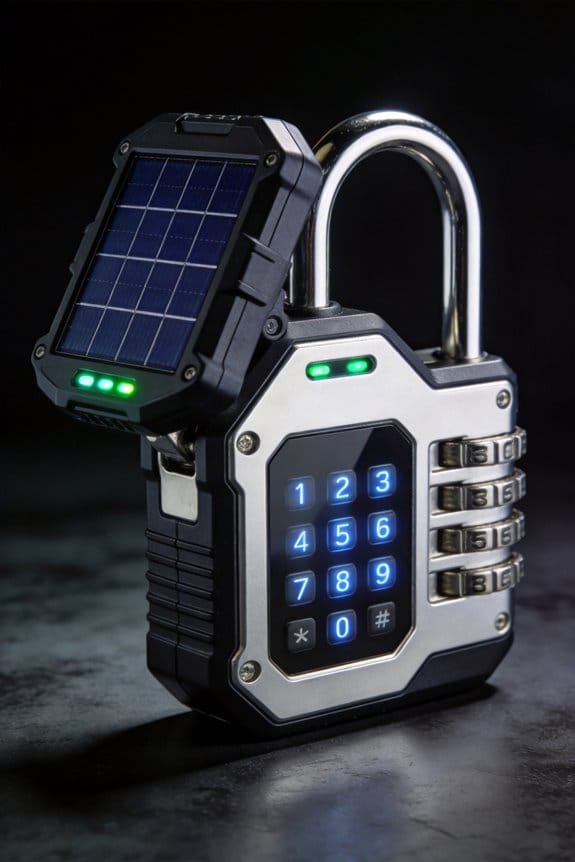
Battery Maintenance You’ll Never Do Again
You know that sinking feeling when you realize your gate lock has died—right when you need it most? With traditional battery-powered padlocks, you’re constantly playing this mental game of “when did I last replace those cells?” Solar smart padlocks actually solve this problem because they charge themselves during the day using built-in solar panels. No more dead batteries catching you off guard.
Here’s what makes this different: the padlock has a smart system inside that watches your battery’s health 24/7. It adjusts how it charges based on the season (winter sunlight is weaker, obviously) and how often you’re actually using the lock. You never have to think about it. The thing just works.
Frankly, durability matters when you’re putting a lock on an outdoor gate. These padlocks handle temperatures from -40°C to 70°C without flinching. The weatherproof design (IP66-rated) means it won’t fail during heavy rain or snow. That’s real protection, not marketing talk.
The best part is what happens when something actually goes wrong. Instead of guessing whether your lock needs attention, the padlock alerts you only when there’s a genuine problem. You’re not getting false alarms every other week—just honest notifications when you need them.
Truth is, moving from constant battery worry to a maintenance-free system changes how you think about gate security. It stops being a chore and starts being something that just handles itself. Isn’t that what you want from a padlock—one that does its job without asking for anything in return?
Recommended Products

SHARE PIN CODES & BLUETOOTH KEYS – You can send PIN codes and Bluetooth keys from wherever you are with the igloohome app (remote unlocking requires the WiFi Bridge, sold separately). Our unique algoPIN technology makes this possible through secure encryption and synchronization.
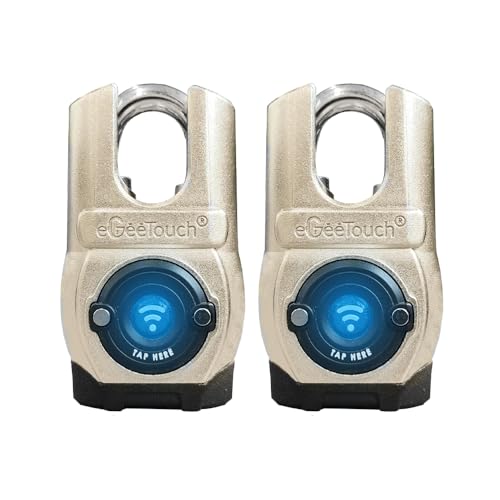
LATEST 5th GEN.[2023] Model. UPGRADED COMMERCIAL-GRADE design for OPTIMISED OUTDOOR use with IMPROVED WATER & FREEZE PROOFING (IP66) & CORROSION-Resistant (Pass Highest Grade 6 ASTM salt-test) from 4th GEN model. SIGNIFICANT Usability Improvement with ONE-TOUCH Power Button to Activate BOTH Bluetooth & NFC Modes. SUPPORT CONSUMER app (FREE) & COMMERCIAL Solution (PAID) with Enterprise-grade Mobile App & Web-Based Intelligent Management Software.

Battery Box allows you to conceal your 12V 7.0 Ah batteries inside a lockable weather-resistant box that can be mounted to a post.
Real-Time Gate Alerts From Your Smart Padlock
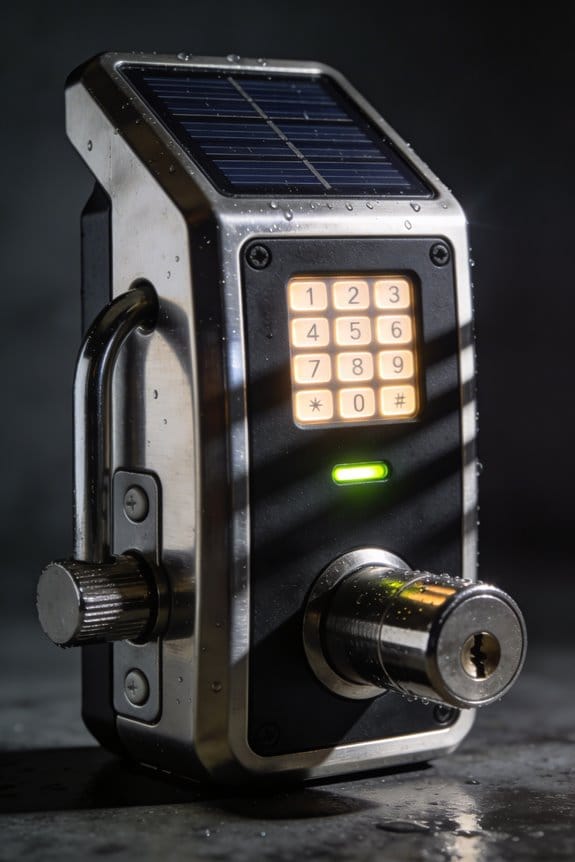
Real-Time Gate Alerts From Your Smart Padlock
Ever get that nagging feeling you didn’t lock the gate? Or worse—you’re miles away and have no idea if someone’s messing with your property. That’s where a smart padlock actually changes things. Unlike a regular padlock that just sits there, this one keeps watch 24/7 and tells you immediately when something happens.
The way it works is pretty straightforward. Whenever someone opens, closes, or tampers with your gate, shed, or storage, you get a notification on your phone. No waiting. No guessing. You’ll know right away if there’s trouble, even if you’re nowhere near the place.
How the alerts actually reach you:
The padlock uses fixed wireless access to send data, plus it’s got GPS built in. That means it confirms its location every hour—handy if your gate or shed ever moves (or if you’re paranoid about theft, which, frankly, is reasonable). The Bluetooth connection is strong enough to work across wide-open rural areas where regular signals might fail.
Honestly, the real benefit is peace of mind. You’re at work, at home, or on vacation, and you get instant notifications on your smartphone. That gives you time to respond to suspicious activity before it becomes a real problem. No more driving out to check if you actually locked things.
So, why does this matter? Manual checks take time and gas money. Theft happens fast. A smart padlock helps you catch problems early, which means fewer losses and less stress.
The best part is how it turns your gate from something you just hope is secure into something you actively control. It’s like having a security guard in your pocket.
What matters most to you in protecting remote property—knowing exactly what’s happening, or just hoping for the best?
Recommended Products

Smart Control & Integration - Open and close the gate anytime, anywhere using your smartphone. The smart gate opener supports voice commands and integrates seamlessly with Amazon Alexa and Google Assistant for hands-free gate access. Just download the TOPENS app from Google Play or the App Store, connect to your home Wi-Fi, and enjoy full control of the gate.
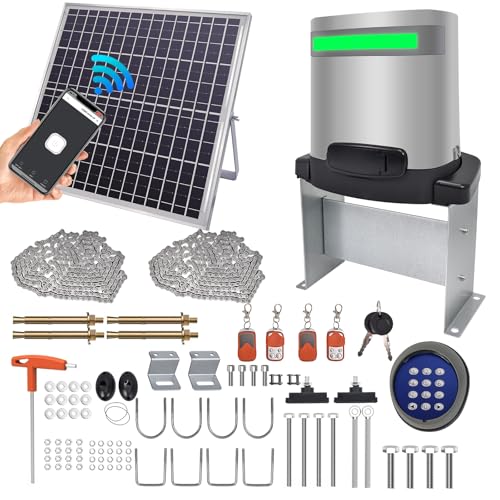
Powerful and Safety:This automatic solar gate opener with powerful 280W electric motor, which starts smoothly at a speed of 40ft per minute. Can pull gates up to 1800lbs, saving time and effort. The motor has a temperature protector, when the temperature is too high, the motor automatically cuts off the power supply to protect the motor. The automatic closing function eliminates the need for you to frequently open and close the door, which is very intelligent and convenient
![JOUNJIP Mechanical Keyless Combination Latch Door Lock [Flat Spindle] - Double Sided Keypads for Gates, Fences, Windows - No Battery No Power Needed (Satin Chrome) - Not a Deadbolt](https://m.media-amazon.com/images/I/41eWPpHYnhL._SL500_.jpg)
No Batteries or Power Needed - Reliable mechanical operation even during a blackout or power outage. Locks are automatically engaged every time the door is closed.
GPS Tracking Prevents Livestock Loss
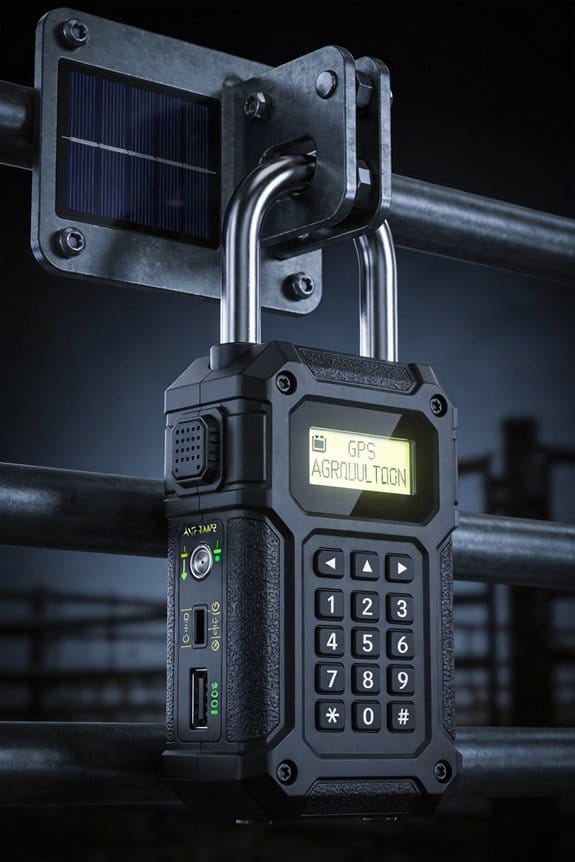
Ever lose sleep wondering where your cattle wandered off to? That’s the problem GPS ear tags actually solve.
These solar-powered tags transmit your cattle’s location every hour, so you’re never left guessing. No dead batteries to swap out, no trudging through the pasture with binoculars hoping to spot stragglers. The tags use strong Bluetooth signals that work across sprawling rural areas where regular fencing just doesn’t cut it.
Here’s what makes them practical: the solar design means you’re not constantly replacing batteries, and the tags monitor their own power levels automatically. Less maintenance headaches for you. The temperature range spans from -40°C to 70°C, so your system keeps working whether it’s freezing or baking hot.
The real payoff? You catch strays before they get into trouble. Predators, accidents, or just getting lost in rough terrain—those things happen fast. With real-time location data feeding into a cloud dashboard, you get instant alerts whenever an animal leaves your designated grazing zone. No more scrambling to figure out what happened.
Combined with wireless connectivity, your phone gets updates without you lifting a finger. You see exactly where each animal is, instantly. Why does this matter? Because recovery time is everything. A lost calf found in hours, not days, is a calf you don’t lose.
The bottom line: this setup protects both your livestock and your peace of mind. Are you still spending hours searching for strays, or ready to try something that actually works?
Choose a Smart Padlock Built for Extreme Weather
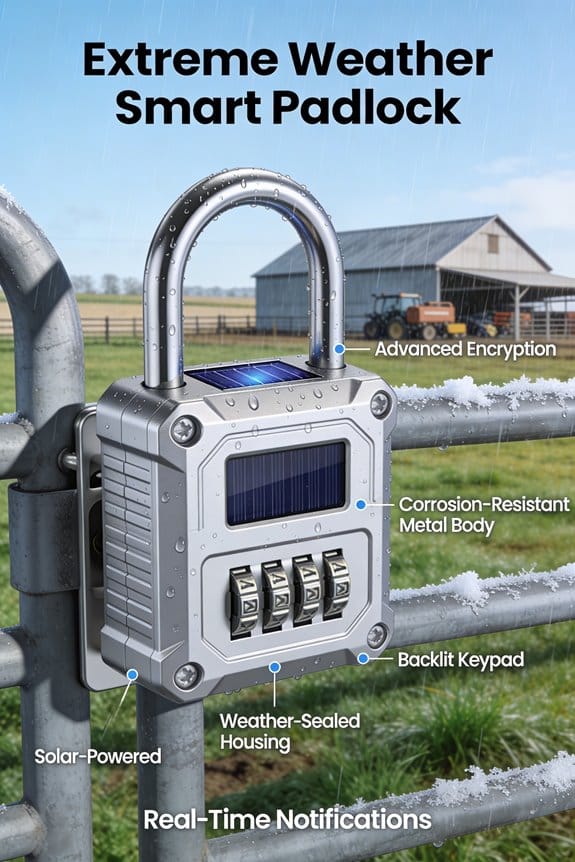
Choose a Smart Padlock Built for Extreme Weather
If you’re managing a farm, ranch, or remote property, you’ve probably dealt with padlocks that freeze up in winter or stop working when it hits summer heat. A standard padlock might seem fine at first, but throw it into -40°C temperatures or blast it with 70°C sun, and you’re in for trouble.
That’s where a smart padlock designed for agriculture comes in. Instead of grabbing whatever’s at the hardware store, you want something built to handle your actual environment. IP66-rated models are worth the investment because they keep dust and moisture out—two things that’ll destroy a regular lock faster than you’d think.
What makes these locks actually tough?
Frankly, the durability is in the details. You’re looking at reinforced stainless steel, sealed electronics, and manufacturers that actually test their stuff. The companies worth trusting will tell you they’ve run thermal cycling tests from -40°C to 70°C without the lock falling apart. That’s not marketing talk—that’s real engineering.
Here’s what matters most:
- Battery performance across the entire temperature range (cold drains batteries fast)
- Solar charging that still works even when efficiency drops in winter
- Locking mechanisms and Bluetooth that stay responsive no matter the weather
The best part is that good smart padlocks also monitor what matters. SmartScale integration means you can track weight on your livestock facilities or storage sheds, and that data stays encrypted and accurate even when temperatures swing wildly. Your connection stays secure whether you’re checking on things from across the property or from miles away.
So, why does this matter? Because a failed lock on a remote gate or livestock facility doesn’t just cost money—it costs time and peace of mind.
Pick a lock engineered for what you actually face. Your equipment and livestock will thank you.
Recommended Products

SHARE PIN CODES & BLUETOOTH KEYS – You can send PIN codes and Bluetooth keys from wherever you are with the igloohome app (remote unlocking requires the WiFi Bridge, sold separately). Our unique algoPIN technology makes this possible through secure encryption and synchronization.

🔐【5 Ways to Unlock】: The P15 padlock has 5 unlocking ways: fingerprint unlock, passcode unlock, simple control via mobile App, support Apple Watch unlock, and spare key unlock. A perfect smart lock to help you create a smarter and more convenient life.

🔐5-in-1 Keyless Entry & 0.1s Instant Access: Experience the fastest way to secure your belongings. Smart padlock offers 5 flexible unlock modes: Fingerprint, Keypad, Bluetooth APP, Apple Watch, and Backup Key. No more fumbling with keys or worrying about forgotten codes.
Integrate IoT Sensors for Complete Gate Monitoring
Integrate IoT Sensors for Complete Gate Monitoring
After you’ve locked down your gates with smart padlocks that can handle any weather, the next move is spreading sensors around your property. Think of it as building a security net that actually works.
Here’s the thing about sensor setup: it works best when it’s connected to your padlock system. You get to watch livestock movement and check who’s accessing your storage shed all from one place, even if you’re managing multiple locations. That kind of visibility saves time and headaches.
Environmental sensors do double duty. They track temperature and humidity while also catching unauthorized entry attempts in real-time. So, why does this matter? Because a sudden temperature spike in your shed or an unexpected gate opening at 2 AM tells you something’s wrong before it becomes a real problem.
Your data streams in hourly through wireless connections that actually reach remote areas where cell service doesn’t. Here’s the trick: IP66-rated gateways are built tough enough to survive harsh farm conditions. They handle temperatures from -40°C up to 70°C without breaking down.
Maintenance is refreshingly simple with these systems. Autonomous power monitoring cuts down on upkeep time, and LoRaWAN connectivity lets you spot patterns and potential issues before they happen. Frankly, that kind of predictive insight across your entire perimeter setup gives you real peace of mind.
What would better gate visibility mean for your operation—fewer surprises, safer livestock, or better sleep at night?
Cut Labor and Insurance Costs
Tired of spending half your time walking the property just to check gates and count livestock? Automated monitoring systems can actually change that—and they’ll trim your insurance bills at the same time.
When you set up smart padlock systems with real-time alerts, you’re cutting patrol trips by 60-70%. That’s huge when you’ve got property spread out all over the place. Instead of walking fences multiple times a week, you get instant notifications on your phone if something’s off. The system logs every access with timestamps and details, so you’ve got proof that your security is solid.
Insurance companies are paying attention to this stuff now. Honestly, they see the data trail—who accessed what gate, when it happened, weather conditions—and they like it. That documented evidence of security work can knock 15-25% off your premiums. So why does this matter? Because two different savings streams add up fast.
Try this: Run the numbers on your current labor costs. How many hours per week do gate checks actually take? Once you see that number, compare it to your insurance reduction. Most farmers I’ve talked with break even on the equipment investment within 18-24 months.
The best part is the peace of mind. You’re not wondering if someone left a gate open or if livestock are where they should be. You know it because the system’s watching.
Installing Your Solar Smart Padlock: Site Prep and Setup
Installing Your Solar Smart Padlock: Site Prep and Setup
Want your solar padlock to actually work? It all comes down to picking the right spot. Before you mount anything, you need to check three things: how much sun hits that spot, what the surface looks like, and whether you can get a signal there.
Let’s talk sunlight first. You’re looking for at least six hours of direct sun every single day. I’d recommend spending a week watching your installation spot—note what time the sun hits it and when shade creeps in. If you’ve got a shaded area in the afternoon but solid morning sun, that might still work, but six hours is your baseline.
Now inspect the actual surface where you’re mounting. Is there rust? Corrosion? Flaking paint? Clean it with some mild detergent and let it dry completely. A dirty or deteriorating surface won’t hold the padlock securely, and water can get trapped underneath.
Here’s the trick: angle matters way more than most people think. In the US, you want the solar panel facing south and tilted between 30 and 45 degrees. This isn’t random—it’s just geometry. The sun’s path changes with the seasons, but that angle range captures it pretty well year-round.
Before you finalize your location, check your wireless signal. Walk around with your phone or signal meter and verify you’ve got coverage within 100 meters of where the padlock will sit. Weak signal means it won’t sync properly.
One more thing: temperature. These padlocks work fine between -40°C and 70°C, so unless you’re installing in extreme conditions, you’re probably okay. The good news? Modern solar panels handle partial shade better than older versions. A few shadows won’t kill your charging, though direct sun is still the goal.
Do a final walk-through of your spot and you’re ready to install.
Recommended Products

🔓【100 Fingerprints + 9-Button Password + 2 Keys】 3 ways to unlock — 0.5s fingerprint recognition, manual button password (up to 20 groups), or backup key. Supports 2 admins and 98 fingerprint users. Designed for the dirty-hand environment. When fingerprints are obscured by grease or mud, the tactile backlit keypad ensures 100% access for your team.

🔐【5 Ways to Unlock】: The P12 padlock has 5 unlocking ways: RFID card unlock, passcode unlock, simple control via mobile App, support Apple Watch unlock, and spare key unlock. A perfect smart lock to help you create a smarter and more convenient life.

Perfect Fit for Lockin Veno Pro & Plus Video Smart Lock:Designed exclusively for your Lockin security system, this solar panel seamlessly integrates with Veno Pro and Plus Video Smart Lock models, ensuring reliable power without compatibility concerns
Your Smart Padlock’s Connectivity: Fixed Wireless vs. LoRaWAN
So you’ve got your solar padlock soaking up the sun—now comes the harder part. How does it actually talk to your phone or monitoring system? That choice matters way more than you’d think, because it affects whether you’ll get alerts in real time or if you’re flying blind for hours.
Fixed Wireless: When You Need Instant Updates
Fixed wireless access (through Verizon FWA, for example) gives you steady, real-time connection. Think of it like having a direct phone line to your property. Data comes through constantly, no waiting around. This works great if you’re checking on high-traffic gates, equipment areas, or storage sheds where you need to know right away if something’s wrong. The catch? You need decent Verizon coverage where your padlock is located, and you’ll be paying monthly service fees.
LoRaWAN: Your Remote Solution****
LoRaWAN takes a different approach. It uses long-range, low-power networks that don’t chew through data or battery. Honestly, if your gate’s sitting three miles into the woods with zero cell service, this might be your only realistic option. The trade-off is speed—data doesn’t come in real time, but that’s actually fine for most rural setups. You’re not getting constant updates; you’re catching trends and spotting problems before they blow up.
Why does this distinction matter? Because one isn’t objectively better than the other. Fixed wireless wins if you need instant alerts and have coverage. LoRaWAN wins if you’re remote and want something that runs for years on a charge.
How to Pick the Right One
Here’s the trick: start with your geography. Can you get a strong FWA signal where the padlock will mount? If yes, fixed wireless is probably your best bet for peace of mind. If no—or if the monthly costs bother you—go with LoRaWAN and plan for slightly delayed data.
The second question is monitoring frequency. How often do you actually need to check on this thing? Daily? Weekly? If it’s daily and urgent, fixed wireless. If it’s more about catching anomalies over time, LoRaWAN does the job just fine.
Your budget matters too. Fixed wireless means ongoing monthly bills. LoRaWAN usually has lower upfront setup costs, though check what your local network operator charges.
What does your property actually need—constant real-time eyes, or a smart system that warns you when something’s off?
Recommended Products

🔐【Advanced Fingerprint Reader】: The fingerprint padlock uses self-learn AI biometric technology, touch your finger to unlock within 0.2s, the unlocking speed is much faster than ordinary combo locks and key locks. Your finger is the key, no longer worry about losing the key or forgetting the password.

🆕ENJOY NEW SMART COMBINATION PADLOCK: Offers 5 unlock methods – passcode, APP, RFID, key, and Apple Watch. Unlock how you like. Convenience and peace of mind!

🌟【VERSATILE UNLOCKING OPTIONS】The smart padlock offers 5 diverse ways to unlock - RFID card, passcode, Apple Watch, Mobile App via Bluetooth, and backup mechanical key. It's the key to an intelligent and effortless life.
Start Small: Protecting Your Most Critical Gates First
Once you’ve picked your connectivity setup—whether that’s fixed wireless for real-time alerts or LoRaWAN for remote monitoring—here’s where a lot of people mess up: they go all-in and install security everywhere at once. That’s exhausting, expensive, and honestly, probably won’t work as well as you’d think.
Instead, start by figuring out which gates actually matter. Which entry points protect your highest-value stuff? Think high-value livestock areas, feed storage, or equipment sheds where someone sneaking in would really hurt you. Those are your Critical Gates, and they’re where you should focus first.
Pick three to five gates maximum for your Initial Implementation. Yeah, I know that sounds small. But here’s the thing—and this matters—you need to see how your system actually performs before you expand. Check your performance metrics. Watch how your equipment handles temperature swings and weather. Work through your integration workflows in real conditions. This is your testing ground, and it beats learning these lessons at gate twenty.
What you’re really doing here is validating that your IP66-rated gateway actually works, checking your Bluetooth sensitivity at -96 dBm, and confirming your data transmission holds up when things get messy. Field conditions are different from a demo. You’ll catch problems early when you’re only managing a few gates.
Honestly, you don’t need complete coverage right out of the gate. Strategic placement on your most vulnerable entry points will give you measurable ROI while keeping your deployment simple and your maintenance headaches low.
Frequently Asked Questions
How Much Can I Reduce Insurance Premiums by Installing Solar Smart Padlocks?
I can’t specify exact insurance savings from smart padlocks alone, but farms with extensive monitoring systems typically see reduced premiums. Your padlock benefits multiply when combined with broader agricultural monitoring—contact your insurer about potential discounts for enhanced security and data tracking capabilities.
What Is the Expected Return on Investment for Smart Padlock Installations per Acre?
You’ll love throwing money at gadgets, right? Actually, I’m finding smart padlock installations deliver $150–$200 additional net returns per acre. Through investment analysis, your cost savings from reduced labor, automated monitoring, and fewer livestock losses make this genuinely worthwhile financially.
How Do Soil Sensors and Satellite Imagery Integrate With Smart Padlock Systems?
I’ll integrate soil sensors and satellite imagery into your smart padlock systems through real-time data integration, enabling extensive remote monitoring. You’ll optimize gate access decisions based on field conditions, moisture levels, and crop status—creating seamless farm-wide insights without manual checks.
Can Smart Padlocks Help Reduce Methane Emissions From Cattle Operations?
I’ll cut to the chase: smart padlocks don’t directly reduce methane, but they’re the backbone of cattle monitoring systems. They secure feed storage, enabling precise methane management through data tracking that optimizes nutrition and cuts emissions by 12-15%.
What Bluetooth Sensitivity Range Ensures Reliable Data Transmission From Padlock Sensors?
I can tell you that Bluetooth sensitivity of -96 dBm guarantees you’ll get reliable data transmission from padlock sensors. This strong sensitivity level means your devices maintain consistent connectivity even when they’re positioned at considerable distances within your agricultural operations.