
As homes shrink from 2,455 to 2,155 square feet, garages now function as extended living spaces rather than storage repositories. Over 70% of homeowners plan garage makeovers by 2026, converting these areas into workshops, gyms, and offices. Smart systems—priced $800–$1,200—integrate motion-sensor lighting, climate control, and inventory management. Modular shelving (61% of storage solutions) and motorized ceiling lifts ($600–$900) maximize vertical space while maintaining organizational flexibility. Well-executed renovations yield approximately 65% ROI. Understanding how to strategically allocate your budget across storage, technology, and structural improvements determines your garage’s transformation success.
Key Takeaways
- Garages evolve from vehicle storage to functional living spaces like workshops, gyms, and craft rooms as homes shrink.
- Over 70% of homeowners plan garage makeovers by 2026, viewing garages as valuable “free real estate” for optimization.
- Smart technology and modular storage enable flexible, multi-purpose garage designs that adapt to changing household needs throughout the day.
- Motion-sensor lighting, automated systems, and app controls enhance safety, efficiency, and seamless transitions between diverse garage functions.
- Garage renovations yield approximately 65% ROI, making strategic investments in storage and technology financially viable for homeowners.
From Parking Spot to Living Room: Why Garages Are Reshaping Home Life
Your house feels cramped. You’ve got kids, hobbies, workout gear, and nowhere to put any of it. Sound familiar? That’s the reality for most of us right now—new homes are getting smaller, dropping from 2,455 square feet in 2015 down to 2,155 square feet in 2026. But here’s what I’ve noticed: instead of just accepting tiny living spaces, smart homeowners are looking at what they already have and asking, “What if we used that garage for more than just parking?”
Over 70% of homeowners are planning garage makeovers by 2026, and it’s not because garages are trendy. It’s because they work. That empty space attached to your house is basically free real estate.
Why Your Garage Is Prime Real Estate****
Think about what your garage *could* be. A workshop where you actually finish projects. A home gym so you don’t have to pay for a membership. A craft room. Extra storage that doesn’t eat into your bedroom closet. The trick is treating it like a real room instead of a dumping ground.
Frankly, the garage is the easiest space to transform because it’s already there. You’re not knocking down walls or dealing with permits. You’re just being intentional about how you use it.
Making It Actually Work
The best part is that you don’t need a huge budget. Smart layouts and modular furniture do the heavy lifting. Try this: map out what you actually need. Do you need space for your car *and* a workspace? Can you park outside sometimes to free up room? What takes up the most mental energy in your life right now—fitness, hobbies, storage?
Here’s the trick to maximizing every inch: keep things movable. Use wall-mounted shelving, fold-away tables, and storage that doubles as seating. This way, your space adjusts to what you need on any given day.
So, why does this matter? Because when you reclaim your garage, you’re not just gaining square footage—you’re gaining breathing room in your actual home. And honestly, that has real value. Homeowners report about a 65% return on investment with garage upgrades, which means you’re also making a smart financial move.
Your garage won’t feel like wasted potential anymore. Instead, it becomes the hardest-working room in your house. What would you do with an extra room right now?
Why Smaller Homes Mean Bigger Garages

Why Smaller Homes Mean Bigger Garages
Got a smaller house but still need space for your stuff? You’re not alone. Over the past decade, homes have shrunk by about 300 square feet, but here’s what’s interesting—garages are actually getting more attention and better use.
Builders and homeowners aren’t just parking cars in these spaces anymore. Your garage is becoming a workshop, a gym, a storage hub, maybe even a hobby zone. It’s the multipurpose room that actually fits in your home.
The numbers back this up. About 70% of homeowners are planning garage upgrades by 2026 to get more use out of them. Why? Because when your house is tight on space, your garage becomes real estate that matters.
Making every inch count
Honestly, the trick is smart storage. Modular shelving, wall-mounted racks, and enclosed cabinets now make up over 61% of garage storage solutions. These aren’t just trendy—they actually work. By going vertical instead of sprawling out, you keep your floor clear while storing way more stuff.
Try this: look at your garage walls. Most people waste them. A few well-placed shelves and racks can transform an empty wall into functional storage without eating up your workspace.
Why invest in your garage?
So, why does this matter to your wallet? A smart garage renovation gives you about a 65% return on investment. That’s real money back if you ever sell. But more importantly, you get a space that actually serves your life today.
You don’t need to spend a fortune to make it work. Start small with one organizational system, see how it fits your routine, then add more as needed. Your garage doesn’t have to be fancy—it just has to be useful.
Recommended Products

Ideal storage for sensitive rack-mounted equipment that needs extra protection from harsh conditions

ANTI-THEFT ONE-PIECE DESIGN: Deter theft with a solid, one-piece construction that ships fully assembled and requires zero installation, unlike competitor racks with multiple components that need assembly, making them vulnerable to disassembly and bike theft.

INCLUDES: Power rack with dual pullup bars, 1.25 inch standard and 2 inch fat-grip, AB-3000 incline/decline bench, lat/row attachment, dip attachment, and weight storage
Work, Play, Lift, Store: The Four Functions Reshaping Modern Garages

Your garage probably doesn’t look like it did five years ago. What started as a simple place to park your car has become this weird hybrid space where you’re trying to squeeze in a workshop, store seasonal stuff, maybe a home gym, and—oh yeah—actually park something. Sound familiar?
The truth is, your garage needs to do multiple jobs now. You’re working on projects, storing things you can’t fit inside, lifting heavy equipment, and sometimes just wanting space to move around. That’s the reality most of us are dealing with.
Making Your Workspace Actually Work
If you use your garage for hobbies or side projects, you already know how quickly things get messy. Modular shelving and wall-mounted racks are your best friends here—they keep tools and supplies off the floor and organized by category. Custom workstations with built-in power outlets mean you don’t have to run extension cords everywhere or hunt for outlets when you need them.
Going Vertical With Storage and Lifting
Honestly, the smartest move I’ve seen people make is using their ceiling space. Motorized ceiling lifts (like the E-Z Garage Storage Lift) can handle up to 700 lbs, which means you’re not stacking boxes in dark corners anymore. You’re using the space above your head where it’s out of the way but still accessible.
Garage cabinets dominate the storage world for a reason—they command 61% of the market because they actually work. You get:
- Closed storage that hides clutter
- Space you can customize for different needs
- Smooth transitions between your workshop mode and fitness zone mode
The Tech That Makes It Easier
Motion-sensor lighting means you’re not fumbling for a switch when your hands are full. App-controlled garage doors and smart access let you check on things from your phone. It sounds fancy, but it’s really just convenient.
At the end of the day, your garage doesn’t have to choose what it wants to be anymore. Parking, storage, work, and play can all share the same space—you just need layouts and tools that actually fit how you live. So what’s your garage’s biggest pain point right now? Start there, and build from it.
Recommended Products

Retractable Garage Storage: Drill-operated system with a 9’ drop, perfect for 10–11’ ceilings.

Double Safety Protection for Overhead Garage Storage Rack: Designed with a reinforced mechanical safety lock and heavy-duty steel cables, this overhead garage storage rack ensures stable, secure lifting every time. The dual safety system prevents accidental drops and keeps your items protected, making it ideal for garage ceiling storage racks and hanging garage storage rack applications, perfect for modern garage storage solutions.

Smart Technology That Actually Solves Multipurpose Problems

Smart Technology That Actually Solves Multipurpose Problems
Ever looked at your garage and thought, “I need this space to do three different jobs at once”? That’s the reality for a lot of us. You’ve got storage needs, a workspace tucked in the corner, and maybe a spot where you want to work out. The problem? Most garage setups force you to pick one purpose and stick with it.
That’s where smarter systems come in. You don’t need technology that makes you choose between functions—you need tools that shift as your day shifts. The E-Z Garage Storage Lift is a solid example. It lifts 700 pounds up to your ceiling, which means your floor stays clear for whatever you’re doing that day. Whether you’re parking the car, setting up a workbench, or rolling out a yoga mat, you’ve got the room.
Automated systems that actually work for you
App-controlled storage and lighting aren’t just convenient—they solve real problems. Try this: set up motion-sensor lighting in your garage, and you won’t fumble around in the dark when you’re switching activities. The lights come on when you need them and turn off when you don’t, which cuts your energy bill without any effort on your part. Meanwhile, remote inventory management means you can check what’s stored overhead before you even get home from work. So, why does this matter? Because you spend less time hunting for stuff and more time actually using your space.
Smart garage doors with video feeds and auto-close features give you peace of mind during travel. You can verify the door’s shut from anywhere, which beats driving back home wondering if you left it open.
The real benefit: everything works together****
Honestly, the best part isn’t any single tool—it’s how they coordinate. Your lighting schedules align with when you use different zones. Climate control kicks in when you’re working. Storage systems integrate with your routine. These interconnected systems handle the logistics so you don’t have to. You just walk in and your garage is ready for whatever comes next.
The multipurpose garage isn’t a luxury anymore—it’s practical. What would you use your garage for if the space actually adapted to your needs?
Recommended Products

SMOOTH CRANK-DOWN MECHANISM: Effortlessly raise and lower the 4x8 ft platform with a simple turn of the handle. No complex pulleys—just easy, ladder-free access to your stored items whenever you need them.

Classic Design, Structurally Stable: FERO ceiling garage storage rack features a classic structural design that has been tested and proven over ten years for long-lasting durability and trusted performance. The top is built with an H-shaped steel frame that delivers better load distribution and greater overall stability than typical four-point over head garage storage racks commonly seen on the market. A manual safety lock is also included for added security, making it a reliable heavy duty garage ceiling rack for safer

Reinforced Frame Design for Long-Term Stability: Designed with a reinforced H-style steel structure, this garage ceiling storage system offers enhanced durability and balanced weight distribution compared to common four-corner setups. Built to last with added safety lock for peace of mind when storing overhead.
Design Patterns: Modular, Vertical, and Hybrid Layouts

Design Patterns: Modular, Vertical, and Hybrid Layouts****
Your garage is shrinking, but your stuff isn’t. So how do you actually fit everything without turning the space into a disaster zone?
The answer is thinking vertically and modularly. Modular designs—think interconnected shelving units, wall-mounted racks, and storage systems you can rearrange—work with whatever space you’ve got. You don’t need to install anything permanently, which means you can adjust things as your needs change. It’s flexible, and that matters when you’re trying to use every inch.
Vertical storage is honestly one of the smartest moves you can make. By using your walls instead of your floor, you free up space for actual movement and reduce clutter that creates tripping hazards. That’s especially important if your garage does double duty—say, parking your car and working on projects.
Here’s where hybrid layouts come in. You combine different zones: parking area, workout equipment, workbench with shelving, hobby corner, climate-controlled storage. They all live together without getting in each other’s way. A motorized ceiling lift like the E-Z Garage Storage Lift (which handles 700 lbs) shows how smart integration works—it gets bulky stuff up and out of the picture without eating into your actual working area.
And about those aesthetic concerns? Enclosed modular cabinets keep everything looking put-together while your tools and equipment stay organized and accessible.
Think about what you actually *do* in your garage. Once you know that, the layout almost designs itself.
Recommended Products

High-strength steel slat wall backsplash adds style and utility to your cabinet set

Set Includes: 4x Multi-Use Lockers, 2x Rolling Tool Drawer Cabinets, 2x Two-Door Base Cabinets, 4x Wall Cabinets, 2x 48" Bamboo Worktops, 2x 48" Backsplash Kits, 1x LED Lights with Power Adapter and 3x LED Lights with Connector Cable
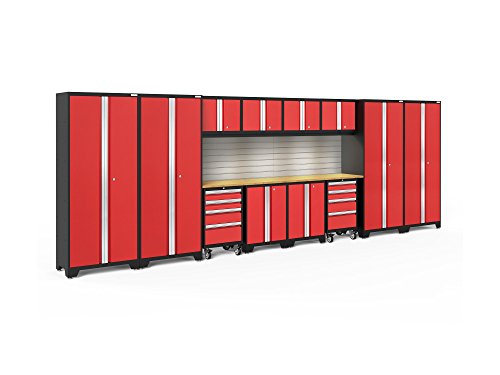
Set Includes: 4x Multi-Use Lockers, 2x Rolling Tool Drawer Cabinets, 2x Two-Door Base Cabinets, 4x Wall Cabinets, 2x 48 in. Bamboo Worktops, 2x 48 in. Backsplash Kits, 1x LED lights with power adapter and 3x LED Lights with Connector Cable
Calculate Your ROI and Budget Your Garage Transformation
Calculate Your ROI and Budget Your Garage Transformation
So you’re thinking about tackling a garage renovation? The smart move is knowing that most well-done projects return about 65% of what you spend—which means you need to be intentional about where your money goes.
Here’s the thing: not all upgrades are created equal. Smart garage door systems with built-in cameras run $800–$1,200 and give you real security plus convenience. Motorized ceiling lifts (like the E-Z Garage Storage Lift that holds 700 pounds) cost $600–$900 and instantly open up floor space. Then there’s modular shelving at $1,500–$3,000—it’s flexible and looks clean. These three categories should eat up most of your budget.
How to split your spending:
- Storage solutions: 40%
- Smart technology: 35%
- Structural work: 25%
Why does this breakdown matter? Because you want immediate, visible improvements without breaking the bank on stuff you won’t use.
The best part is you don’t have to do everything at once. Phasing your upgrades means lower upfront costs while you still gain real functionality. Start with wall-mounted racks ($400–$800) and motion-sensor lights ($300–$500)—both are affordable and useful right away.
Now, if you want something that looks finished and polished, enclosed cabinets are what most people end up choosing (they’ve got about 61% of the market for a reason). Expect to pay $2,000–$5,000 depending on what they’re made of and how big they are. They lock things up, reduce clutter, and make your garage feel intentional.
Frankly, the key is being realistic about what you’ll actually use and building from there. What matters most to you in your garage—security, storage, or just getting your space organized?
Recommended Products

[CONVENIENCE]- Answer and view callers at your door remotely via your mobile iOS or Android device, whether you are at home or abroad. The smart video doorbell intercom system sends a push-notification to your smart phones and you could watch, talk and remotely unlock your gate through your smart mobile devices. Never miss a delivery or visitor again.

【Humans & vehicles Detection】With the advanced algorithms, the Smart C800 camera senses humans & vehicles and timely push snapshots only about humans & vehicles recognition to you, reducing up to 99% false alarms triggered by waving trees, falling leaves, raindrops, changing lighting, etc.

Wide field of view in full 4K At the core of this camera is an 8MP image sensor. 8MP means there are more than 8 million pixels, which results in exceptionally sharp 4K video, realistic color representation, and superior digital zoom capabilities. The 108° field-of-view also allows your camera to monitor a broader area so you see more and detect motion earlier
Frequently Asked Questions
How Do Smart Garage Systems Integrate With Existing Home Automation Platforms and Security Networks?
I’d say smart garage systems connect seamlessly to your home automation platform through app-based controls and phone integration. You’ll get real-time notifications, automated lighting schedules, and remote access that work alongside your existing security network for complete garage oversight.
What Are the Long-Term Maintenance Costs and Software Updates for Motorized Storage Solutions?
I’d say motorized storage like the E-Z Garage Lift requires annual maintenance (around $100-300) and occasional software updates for app functionality. You’ll want to budget for part replacements long-term, though software longevity typically spans 5-7 years before compatibility issues arise.
How Do Multipurpose Garages Affect Property Resale Value in Different Regional Markets?
I’d argue multipurpose garages are practically printing money for your resale value. You’re tapping into massive market demand across regions—property appraisals consistently reflect this, especially where residential segments dominate. It’s a game-changer that’ll boost your home’s worth considerably.
What Permits or Zoning Regulations Apply to Converting Garages Into Permanent Living Spaces?
I’d recommend you check your local zoning laws first—they’re typically the biggest hurdle. Most areas require permits before converting garages into permanent living spaces. You’ll need to contact your city’s planning department about specific permitting process requirements for your region.
How Do Smart Garage Technologies Protect Against Hacking and Unauthorized Remote Access Attempts?
I’ll be honest—your smart garage’s security is like a fortress with multiple locks. Modern systems employ robust encryption protocols and multi-factor user authentication, ensuring I can’t grant access without verifying your identity. They’re designed to keep hackers out while keeping you in control.